





















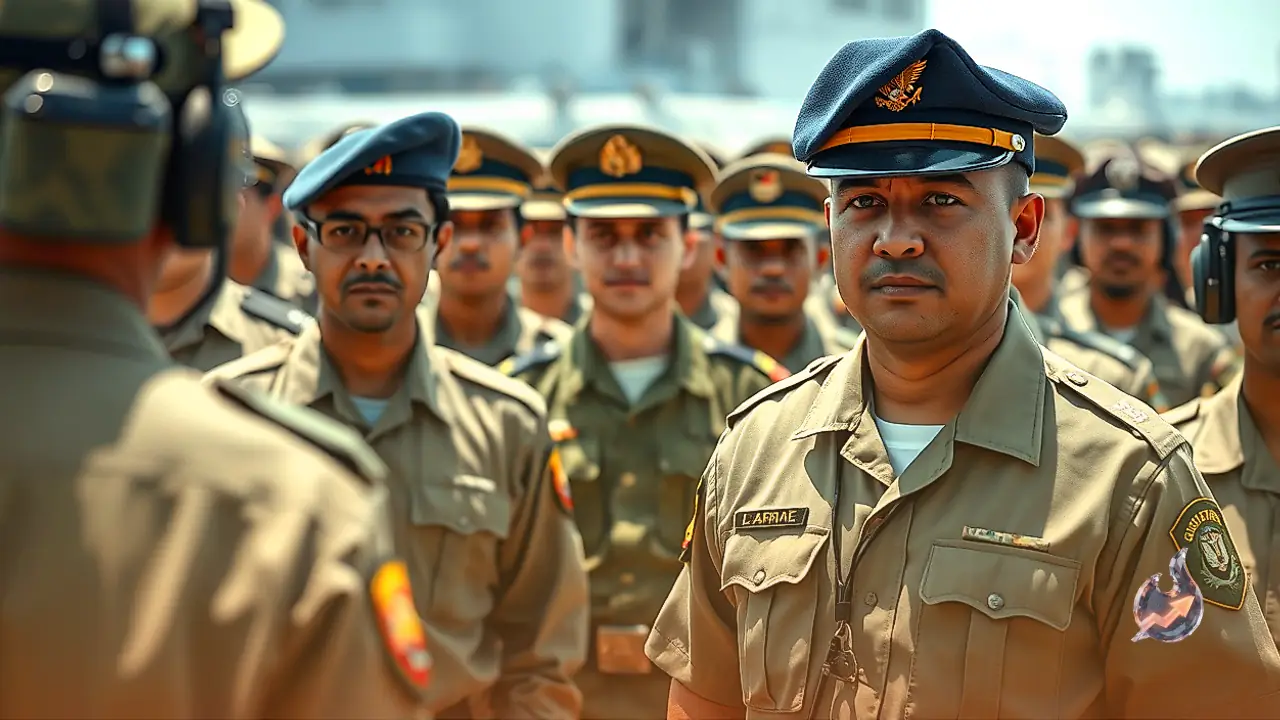

When conversations turn to the Union Public Service Commission, public attention almost immediately gravitates toward the Indian Administrative Service, the Indian Police Service, and the picturesque campus of the Lal Bahadur Shastri National Academy of Administration in Mussoorie. Managing the country's most competitive civil services selection process naturally gives the body an immense administrative profile. However, its mandate extends well past generalist bureaucracy, encompassing critical leadership pathways across defense forces, border security, specialized engineering networks, and premier government hospitals.
Constitutional Foundation and Institutional Roots
Designed as the bedrock of merit-based public appointments, the commission owes its current constitutional authority to Article 315. Its lineage predates the Indian Constitution itself, tracing back to the establishment of the original Public Service Commission on October 1, 1926. With the formal enactment of the Constitution on January 26, 1950, the body was reconstituted under its current designation as the Union Public Service Commission. The core mission behind its inception was straightforward: insulate key government recruitments from political interference, nepotism, and arbitrary favoritism, ensuring that senior public roles are staffed purely on individual merit and rigorous competence.
Civil Services Examination: The Core Bureaucratic Gateway
The Civil Services Examination remains the commission's most celebrated and competitive flagship examination. Through this exhaustive annual cycle, candidates are chosen for premier roles such as the Indian Administrative Service, Indian Police Service, Indian Revenue Service, and Indian Foreign Service. Hundreds of thousands of aspirants take part in this multi-tiered examination every year, competing for positions that place them directly at the center of national governance, public administration, and strategic policy execution across the republic.
Commissioning Officers Directly After School: NDA and NA
For students eager to serve in uniform right after their secondary education, the commission conducts the joint National Defence Academy and Naval Academy examination. Open to candidates who have completed the twelfth grade, this channel offers an early entry route into military service. Successful candidates secure permanent commissioned officer positions in the Army, Navy, and Air Force at an exceptionally young age, beginning structured officer training right after school.
Post-Graduation Pathways into the Armed Forces: CDS
Graduates seeking military commissions outside the school-leaver pipeline compete through the Combined Defence Services examination. This evaluation serves as the primary gateway into the Indian Military Academy, Naval Academy, Air Force Academy, and the Officers Training Academy. It remains a premier choice for young graduates aspiring to lead personnel across all three traditional branches of the armed forces.
Paramilitary Leadership: CAPF Assistant Commandant Entry
The commission's security footprint extends deeply into border protection and internal peacekeeping. Through the Central Armed Police Forces examination, it directly selects gazetted officers for the position of Assistant Commandant. Successful candidates enter the leadership ranks of key paramilitary formations, including the Border Security Force, Central Reserve Police Force, Central Industrial Security Force, Indo-Tibetan Border Police, and Sashastra Seema Bal, stepping immediately into frontline supervisory and operational commands.
Specialized Technical and Healthcare Recruitment: IES and CMS
Recognizing the requirement for deep technical expertise, the commission conducts the Indian Engineering Services examination. This channel feeds specialized engineers into critical infrastructure, technical departments, and the vast operations of the Indian Railways. On the healthcare front, the Combined Medical Services examination identifies qualified doctors and medical specialists to serve across government hospitals, municipal bodies, and state health facilities, ensuring that public medical systems remain staffed by vetted clinical professionals.
The Broader Transformative Impact of Preparation
The demanding preparation required across these varied syllabi carries long-term intellectual value that transcends examination outcomes. Immersing oneself in national history, geography, economic structures, and social frameworks fosters sharp critical thinking, analytical clarity, and acute civic awareness. The journey broadens perspectives, shaping well-rounded, socially conscious individuals who carry these analytical abilities into whichever professional sphere they ultimately choose.