























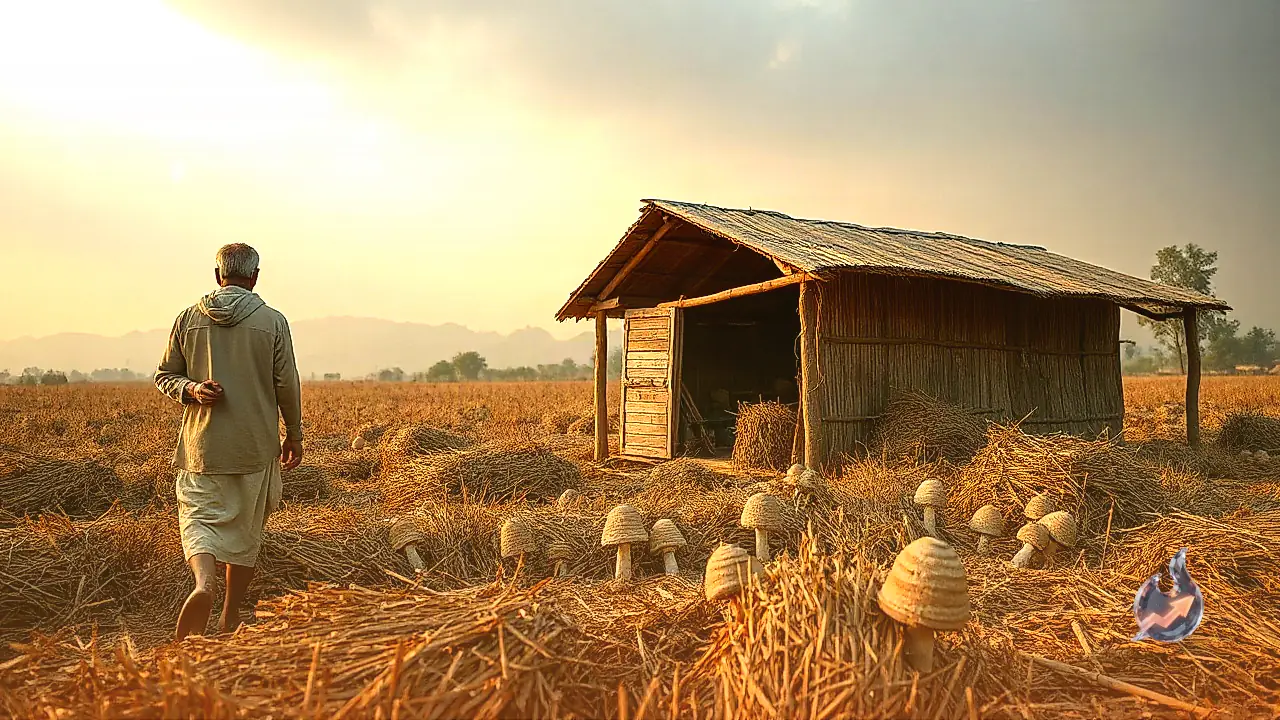

Bastar's climate provides ideal conditions for oyster mushroom cultivation, offering local farmers a high-yield opportunity with minimal investment. Growing demand in regional restaurants, hotels, and vegetable markets has turned mushroom farming into an attractive alternative for agricultural income. Expert guidance highlights that this enterprise presents limited risk while requiring very basic infrastructure.
Step-by-Step Cultivation Technique
The farming process relies on readily available agricultural waste, specifically wheat or paddy straw. To begin, the straw is soaked in clean water overnight to ensure full hydration. The following day, excess water is thoroughly drained until the moisture level settles at approximately 70 percent. This precise balance is critical to prevent mold while ensuring proper spore germination.
Once the correct moisture level is reached, the straw is mixed with mushroom spawn and tightly packed into polythene bags. These bags are then stored in a cool, shaded environment. Fungal mycelium slowly spreads throughout the bag over the next few weeks. Fresh oyster mushrooms become fully ready for harvest within 25 to 30 days of setup.
Temperature Management and Disease Control
Maintaining proper climate parameters is vital for a successful crop. The optimal growth temperature ranges between 25 and 26 degrees Celsius, though ambient conditions between 25 and 30 degrees Celsius remain acceptable. Maintaining cleanliness during bag preparation is essential to guard against Trichoderma, a harmful green mold that can spoil bags if sterilization and moisture handling are neglected.
Agricultural scientist Prahlad Netam emphasizes that beginner farmers do not need to make heavy financial commitments. A trial setup can begin with just two to three kilograms of straw, allowing growers to master the technique before scaling up production.
Affordable Spawn Sourcing and Market Reach
High-quality seed material is locally available to support growers. Farmers can purchase mushroom spawn directly from Shaheed Gundadhur Agricultural University at an affordable rate of approximately 30 rupees per pau (250 grams). This accessible supply chain keeps initial setup costs remarkably low.
Spatial requirements are equally minimal. Oyster mushroom farming does not require open agricultural land, making it suitable for smallholders with limited space. A vacant room, small shed, or shaded indoor corner is sufficient to start cultivation. Farmers can harvest fresh yields regularly and supply them directly to neighborhood vegetable markets, roadside eateries, and commercial kitchens for steady supplementary earnings.