



















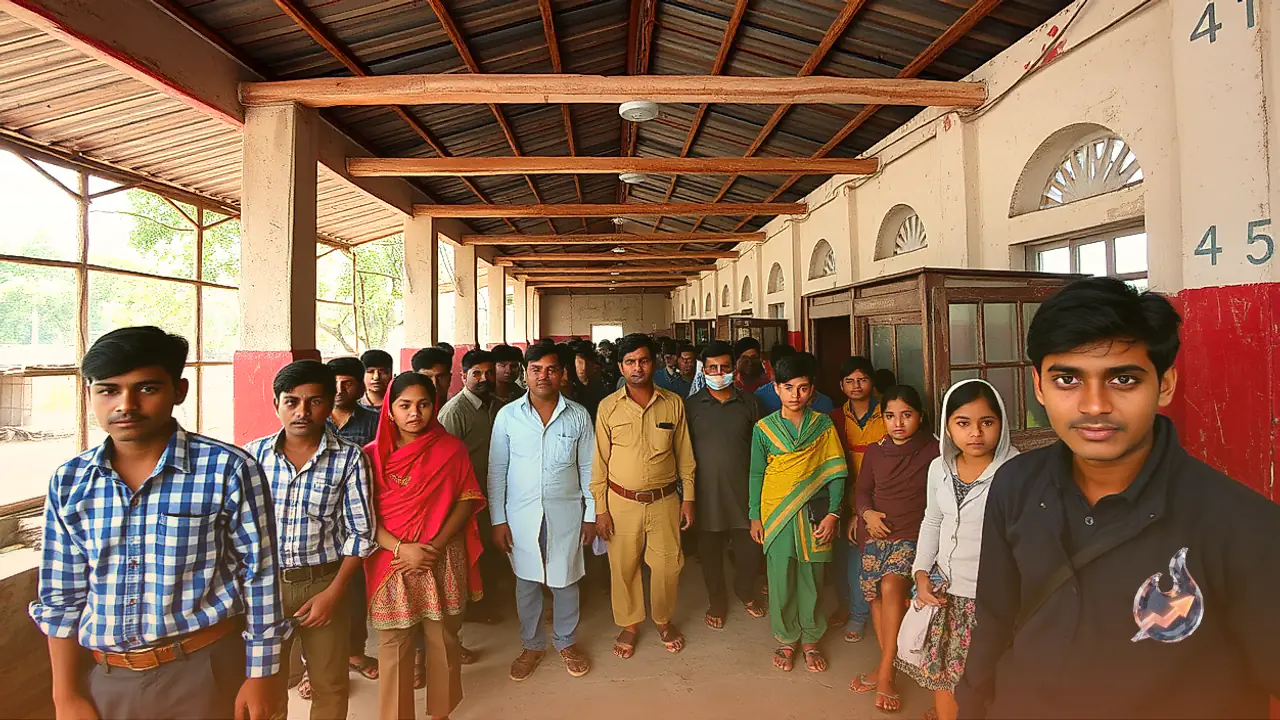

A compound in the Bastar division that once served as a frontline operating base for security forces against Maoist insurgents is now bustling with students preparing for their academic journeys. Around 15 years ago, authorities established a security outpost at Bhatpal in Chhattisgarh's Narayanpur district. Beginning in August, the barracks once occupied by paramilitary personnel began housing tribal students arriving from nearby conflict-affected villages. Two distinct residential hostels are currently running inside the Bhatpal facility: a pre-matric hostel and a post-matric hostel, both exclusively accommodating boys from the Scheduled Tribe community.
Safe Living Facilities for Remote Tribal Students
Administrative authorities noted that the primary objective behind this repurposing is to provide secure accommodation so that indigenous boys from remote villages can pursue their schooling and college education without disruption. According to Narayanpur Collector Namrata Jain, the Bhatpal pocket previously lacked any post-matric hostel accommodation for boys. As a result, students traveling from far-flung rural interiors consistently faced severe logistical challenges regarding both lodging and staying enrolled. The introduction of the post-matric hostel marks the first time these young men have a secure base in the area, helping them continue their studies and access broader opportunities. The Collector also visited the premises recently to inspect the kitchen and evaluate the quality of the meals provided to the residents.
Enrolment Crosses 150 as Kurushnar Readies Hostel for Girls
Student enrolment at Bhatpal has already exceeded 150. The pre-matric wing hosts students from classes 6 through 10; while its sanctioned intake capacity is 100, it currently accommodates 114 students. The post-matric facility caters to students in classes 11 and 12, housing 39 boys against its approved capacity of 50. Encouraged by the strong response and high intake demand, local authorities are preparing to replicate this model at other former outposts across the region.
The administration is currently building the next hostel at Kurushnar, situated at what is considered the entrance to Abujhmad, locally known as Mad, on the Narayanpur route. This upcoming facility will specifically serve female students. In 2011, when a residential school was constructed in that very area, Maoists had imposed strict restrictions on its architecture, barring contractors from building a concrete ceiling or high boundary walls to prevent security forces from turning it into a garrison. Following a significant retreat in rebel influence, authorities are converting the decommissioned security base at Kurushnar into a dedicated girls hostel, with completion expected soon.
Rebuilding Bastar with a 100 Crore Rupee Budget
The Bhatpal hostels draw students from an array of surrounding rural settlements, including Kohkameta, Madmanar, Orchha, Nelwad, Chhote Dongar, Korenda, Chimdi, Remawand, and Benur. For decades, Abujhmad remained synonymous with dense insurgent activity. However, over the past two years, security operations have led to the deaths of more than 100 Maoists in this zone, while dozens of others have surrendered to authorities. Amid this shifting ground reality, administrative initiatives are underway to transform conflict pockets like Mad and Jagargunda into modern hubs of learning. Earlier this year, a budget of 100 crore rupees was allocated to develop both localities, with security camps turning into classrooms serving as a clear marker of the transition.