
















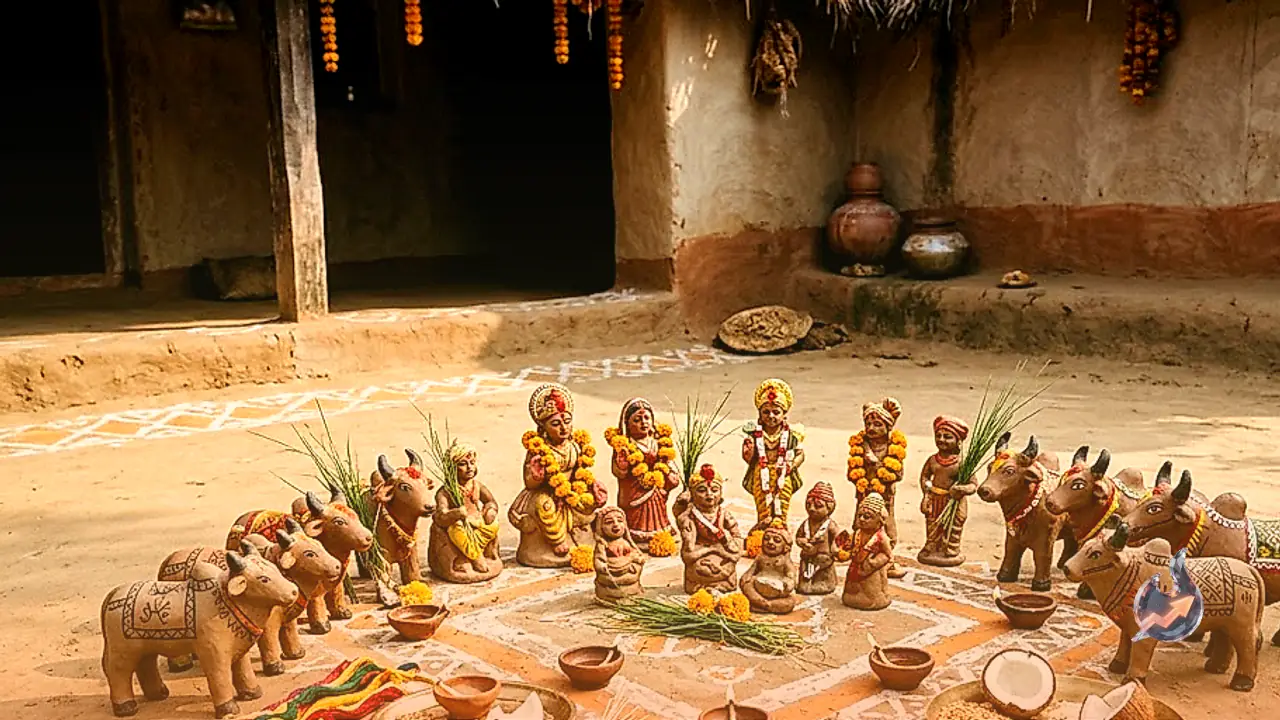

In Chhattisgarh, widely celebrated as the rice bowl of India, the festival of Diwali extends far beyond illuminating oil lamps and worshiping the goddess of wealth. The regional observance is deeply anchored in pastoral life, soil veneration, and age-old agrarian customs. Known in regional parlance as Surhutti Diwali or Suhai Diwali, this two-day celebration brings alive the folk essence of both rural hamlets and urban neighborhoods. From lighting earthen lamps at the sacred Tulsi square and installing handcrafted clay idols of Gwalin to offering seasonal harvest delicacies and observing Govardhan Puja, the festival reflects a living dialogue between human communities and nature.
The Sacred Installation and Rituals of the Clay Gwalin
The first day of the festival centers on the veneration of Devari Mata, highlighted by the installation of an earthen idol of Gwalin, the symbolic milkmaid. Handcrafted by local potters from native clay, this idol embodies the pastoral lifestyle and traditional agrarian beliefs of the countryside. Women prepare regional culinary delicacies at home and present them as sacred offerings to the deity. Lamps are simultaneously lit before the sacred Tulsi mound in household courtyards to invoke peace and prosperity. Following the completion of rites, these traditional festive dishes are shared among family members, relatives, and neighbors, reinforcing communal warmth.
Govardhan Worship, Harvest Porridge, and Gratitude to Cattle
The festivities transition on the second day to Govardhan Puja, a ritual dedicated to expressing gratitude toward agricultural resources and livestock. In farming hamlets, villagers shape symbolic representations of Mount Govardhan using fresh cow dung and perform formal worship. Because agriculture is the backbone of Chhattisgarh, freshly harvested paddy from the autumn fields holds sacred importance. Rice milled from the new crop is cooked with jaggery to prepare a traditional sweet porridge for the offering. Following this ceremony, cows, buffaloes, and bullocks are washed, adorned, and reverently worshiped. Farmers use this occasion to acknowledge the tireless contribution of their livestock to the cultivation cycle.
Yadav Community Traditions and the Protective Suhai Rite
A distinctive feature of the festive calendar is the Suhai tying practice carried out by the Yadav pastoral community. Herdsmen visit households throughout the village to tie protective bands, known as Suhai, crafted from wild fibers and forest materials, around the necks and horns of cows, buffaloes, and working oxen. As they tie these bands, the herdsmen chant traditional folk verses and blessings intended to safeguard the animals from illness and ensure their well-being. Grateful cattle owners reciprocate by offering the herders gifts, grain, cash, clothing, or festive treats. This custom highlights the shared economic interdependence and cultural identity that define rural ties.
Emotional Expression of Rural Women Through the Suwa Dance
With the onset of the festive season, the countryside resonates with the rhythmic cadences of the Suwa dance, a celebrated folk performance by women. Taking its name from the parrot, which serves as a symbolic winged messenger, the performance centers on a clay or carved parrot placed inside a bamboo basket. Women assemble in circular formations around the basket, clapping rhythmically while singing traditional folk melodies. The lyrics poignantly narrate the lived realities, joys, seasonal separations, and emotional experiences of rural life. Commencing around Diwali, this expressive folk dance transforms rural courtyards into vibrant centers of community artistry.
Martial Spirit and Rhythm in the Raut Nacha Performance
Complementing the festive atmosphere is the energetic Raut Nacha, a celebrated folk dance performed by members of the Yadav community. Dressed in striking traditional regalia adorned with cowrie shells, colorful waistbands, and turbans, performers move in disciplined groups carrying decorated wooden sticks. The dance radiates heroic sentiment, drawing upon folk ballads and heroic couplets that celebrate ancient lineage and valor. The synchronized clash of sticks paired with spirited vocal calls creates an electrifying presence across regional towns and villages during the Diwali period.
Gaura-Gauri Worship Honoring the Divine Union of Shiva and Parvati
The spiritual dimension of this regional Diwali is further enriched by the Gaura-Gauri festival. Dedicated to Lord Shiva and Goddess Parvati, devotees fashion sacred idols of the divine couple using natural riverbed clay. These images are consecrated in domestic courtyards or communal village platforms, where night-long hymns and prayers are conducted. Traditional customs dictate that the worship continues over periods of one, three, or five days, after which the clay sculptures are taken in ceremonial processions for immersion in nearby rivers or ponds. Bilaspur-based folk scholar Dr. Somnath Yadav notes that Surhutti Diwali functions not as a generic ritual, but as an integrated celebration of farming cycles, domestic cattle preservation, and ancestral performance arts that bind the community to its cultural heritage.