






















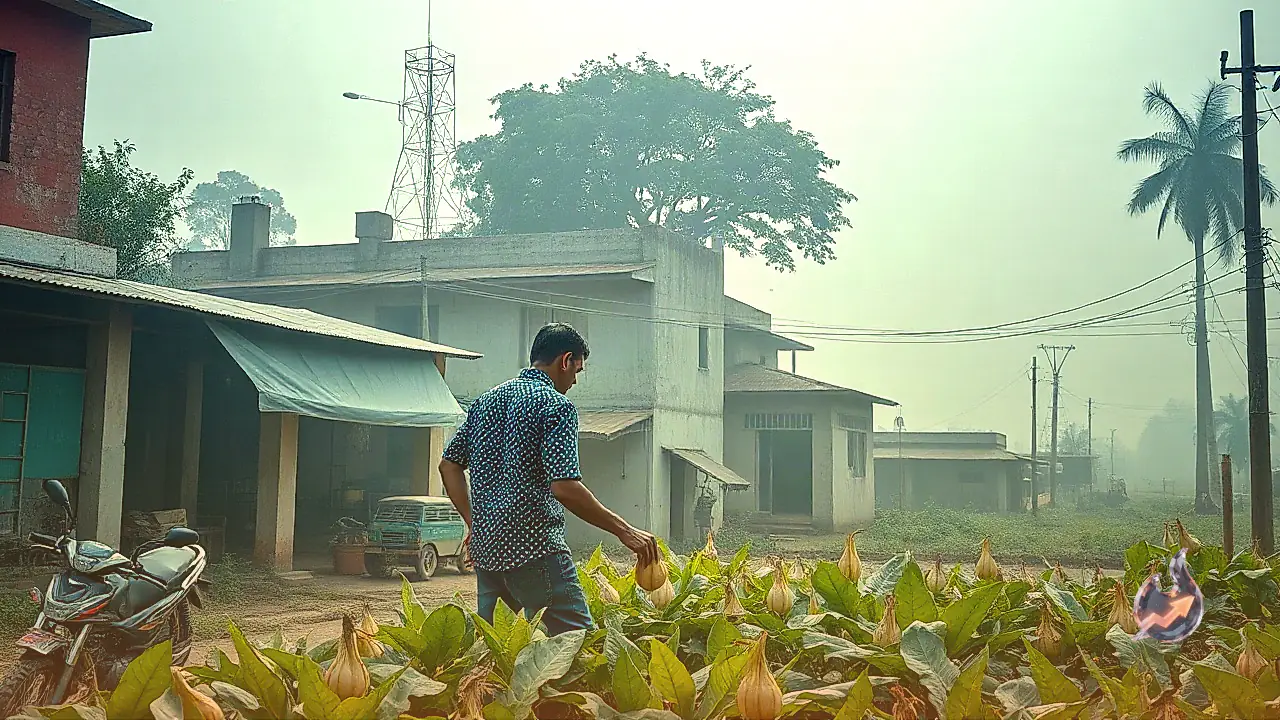

The agricultural landscape in the Bastar region is witnessing a positive shift as farmers increasingly transition from traditional paddy cultivation to vegetable farming. Embracing modern and high-tech agricultural methods, local growers are successfully generating impressive financial returns. Bitter gourd farming, in particular, offers low investment costs coupled with high-profit potential when managed with advanced techniques.
Cultivation on Forty Decimals of Land
Jagdip Nagvanshi, a farmer based in Bastar, has been cultivating bitter gourd on forty decimals of land for the past three years. Explaining the crop cycle, he noted that the bitter gourd crop has a total lifespan of five to six months and starts bearing fruit within just two months of planting. For the current season, he anticipates a total production of up to two and a half tons.
Modern Techniques and Field Preparation
Proper land preparation forms the foundation of this high-yield farming. Jagdip Nagvanshi tilled the field three to four times before creating systematic raised beds. The distance between two beds was maintained at four and a half feet, while the distance from one plant to another was set at thirty meters. To maximize efficiency, he utilizes quality bitter gourd seeds along with modern installations like mulch films and drip irrigation systems.
Nutrient Management and Pest Control
To ensure optimal nourishment, farmyard manure was initially applied as a basal dose to the soil. This was followed by the application of fertilizers including DAP, urea, potash, zinc, fipronil-based products, and superphosphate to support robust plant growth. Bitter gourd crops are frequently vulnerable to sap-sucking caterpillars, which requires timely spraying of specific pesticides to protect the yield from damage.
Expenses, Weather Impact, and Net Profit
The overall expenditure incurred for this farming venture amounts to roughly forty thousand rupees. Although adverse weather conditions and excess rainfall caused minor damage to a portion of the crop, the farmer remains optimistic about securing a profit of up to one lakh rupees this season. To support the growth of the crop, wooden stakes and ropes are tied across the field to provide structural support for the creeping vines.