


















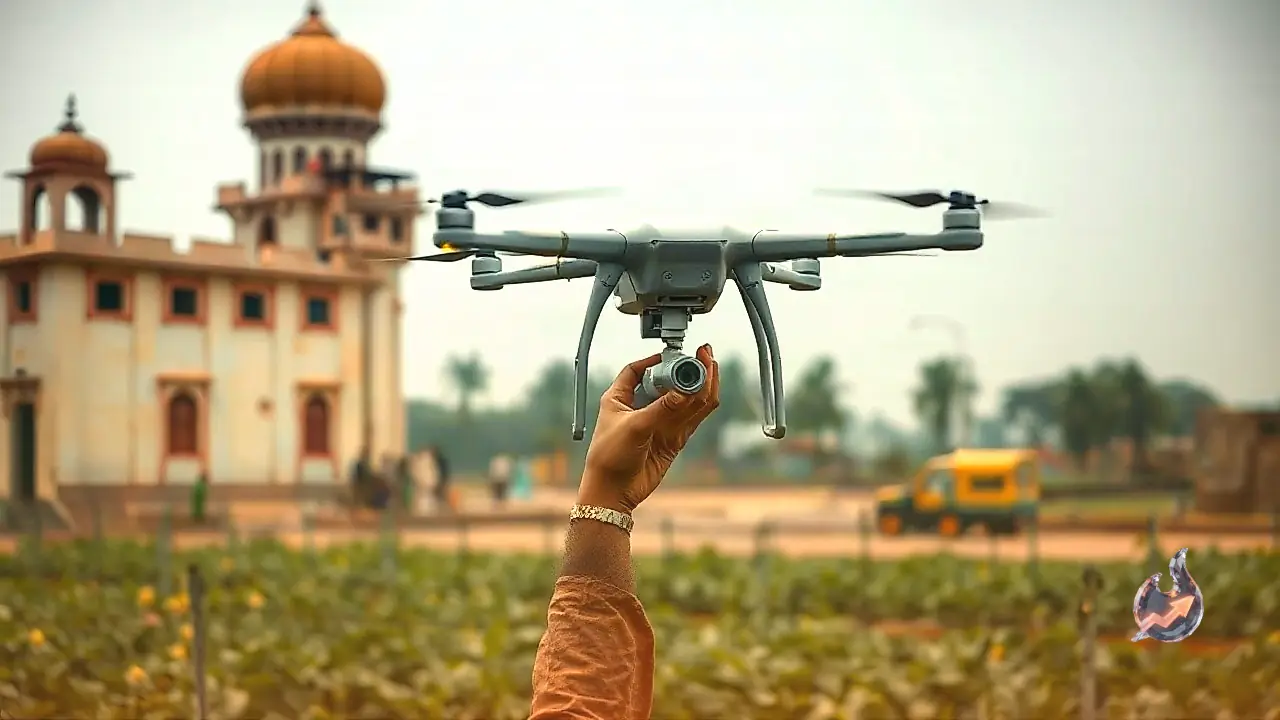

Moving past the limitations of traditional agricultural routines, Pratima Vastrakar has embraced airborne technology to build an independent financial future. By enrolling in the Namo Drone Didi initiative, she turned drone operation into a viable rural career. Following an intensive 15-day operational training program in Gwalior, she now visits agricultural fields across her locality to carry out precise pesticide and nutrient spraying. This mechanical leap has not only optimized crop treatment schedules for local farmers but has also visibly strengthened Pratima's household finances. Farmers who once depended on grueling manual labor are embracing the change, as airborne sprayers cut operational hours drastically while delivering uniform coverage across standing crops.
Fifteen Days in Gwalior That Reshaped Her Path
Pratima Vastrakar's transition toward technological self-reliance began when she registered under the government's Namo Drone Didi program. In 2022, she was selected to travel to Gwalior for structured technical instruction. The comprehensive 15-day course covered flight controls, automated route planning, safe chemical handling, and practical field deployment. Rather than merely learning conceptual mechanics, she engaged directly with flight simulators and live agricultural trials. Armed with the operational expertise needed to navigate farm canopies safely, she returned home prepared to offer professional spraying services directly to village cultivators who lacked access to modern mechanized tools.
Swift Field Coverage Brings Relief to Local Farmers
Equipped with flight skills, Pratima stepped directly into agricultural fields to assist regional growers. Manual pesticide spraying has long been a labor-intensive and hazardous chore, requiring farmhands to haul heavy liquid tanks on their backs for entire days. By contrast, Pratima deploys her drone across acreage in a fraction of the traditional timeframe. The airborne system produces a uniform mist that settles evenly over foliage, reducing wastage while shielding workers from close chemical exposure. Pratima notes that farmers are delighted with the rapid turnaround and the effectiveness of the treatment, making them eager adopters of modern aerial farming services.
Steady Earnings and Financial Independence
Operating an agricultural drone has evolved far beyond a community service for Pratima; it has grown into a reliable, dignified income stream. She explains that taking on spraying assignments across multiple farms generates healthy operational revenues that have tangibly improved her economic stability. The steady influx of service fees has provided her with the autonomy to support herself and plan ahead with confidence. Her progress demonstrates how specialized technical schooling can transform rural livelihoods, turning enthusiastic learners into commercial service providers who command respect within their agricultural clusters.
Strengthening Agricultural Resilience Through Technology
Reflecting on her journey, Pratima points out that state-backed welfare programs can create reciprocal benefits for both service operators and cultivators. While she gained an active professional vocation, growers gained access to speed, efficiency, and resource conservation that traditional methods could never deliver. She emphasizes that expanding such technological interventions holds the potential to uplift the broader agrarian economy, trimming operational expenditures while shielding yield potential. In her assessment, linking rural communities with technological advancements safeguards the long-term prospects of farming.
A Working Blueprint for Rural Empowerment
The journey of Pratima Vastrakar stands as a compelling model of female empowerment intersecting with modern agronomy. A targeted 15-day instructional course provided her with the tools to master an advanced device and transform it into a regular commercial trade. Today, she navigates both her economic self-reliance and the technological modernization of surrounding village farmlands. Her lived experience shows that when public development programs deliver accessible technical training, rural women can actively pioneer progress across core production sectors.