























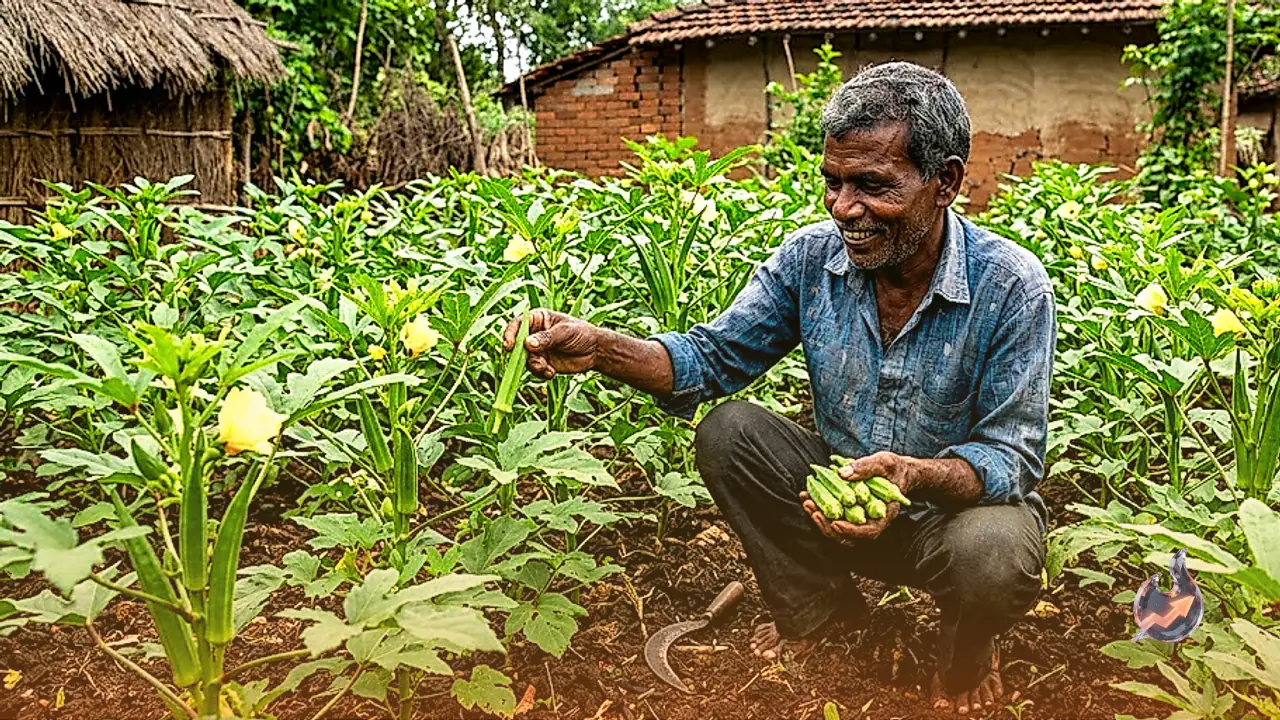

Transforming domestic backyards into productive kitchen gardens is gaining ground as an effective way to secure fresh, homegrown vegetables. In the rural belt of Bastar, Chetan Singh has demonstrated how modest household plots can become dependable food sources. By planting okra in his backyard patch, he consistently harvests between two to three kilograms of fresh okra every three to four days. While planting kitchen gardens during the rainy season remains a long-standing tradition across rural Bastar, planned cultivation turns underutilized land into a steady domestic supply.
Soil Preparation and Planting Method
Careful groundwork forms the foundation of this cultivation technique. Chetan Singh points out that the soil must first undergo thorough tilling using a spade to break hard clumps and ensure proper aeration. Small hollows or pits are then fashioned across the soil bed. The seeds are placed directly into these pits alongside aged cow dung manure, providing rich organic nutrition for germination. To foster balanced vegetative development and fruit set, a measured application of potash is introduced into the soil beds several days after sowing.
Growth Cycle and Regular Harvesting
A total of 40 okra plants were planted across Chetan Singh's domestic plot. Under regular care, these plants begin producing fruit within about one and a half months of sowing, maintaining an active harvest window that spans nearly two months. Picking occurs steadily every three days, consistently yielding two to three kilograms per harvest. Natural monsoon showers fulfill the moisture requirements, largely eliminating the need for routine manual watering and reducing maintenance effort.
Crop Care and Pest Management
Natural resilience against seasonal diseases makes monsoon okra an accessible option for home growers. The crop generally encounters very few pest pressures under these conditions. Nonetheless, occasional leaf-borer infestations can emerge, requiring targeted pesticide spraying when damage appears. This straightforward setup is not limited to farmland or spacious plots; urban gardeners can replicate the same steps using household containers, pots, or courtyard corners.