























Raipur turns to cameras at 160 sites as littering fines can reach ₹25,000Chhattisgarh
18 Sept 2026, 12:07 pm (1 day ago)· 2

Raipur turns to cameras at 160 sites as littering fines can reach ₹25,000

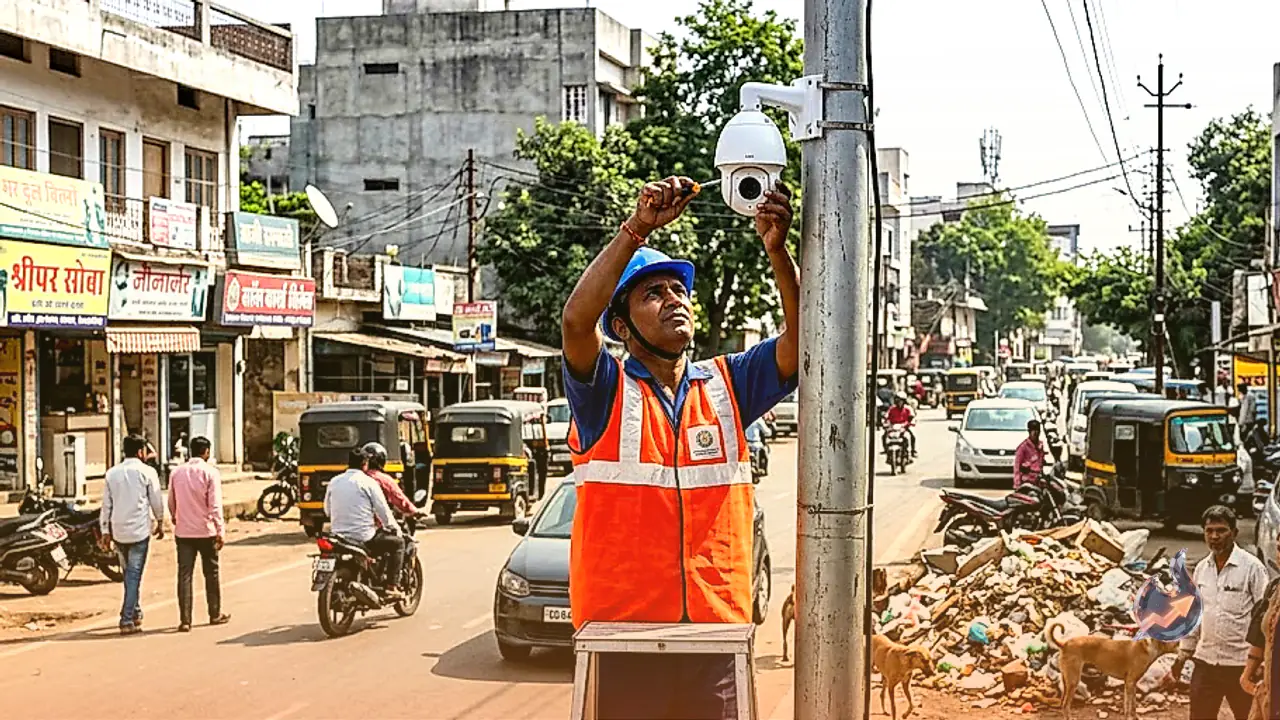
Raipur Municipal Corporation is preparing to install CCTV cameras at 160 major locations to identify people who dump garbage in public spaces or spread filth from vehicles. Violations can bring fines of ₹200 to ₹25,000, with footage retained for 30 days.

Chhattisgarh's capital, Raipur, is moving to camera-backed enforcement against people who dump garbage in public spaces or along roads. The Raipur Municipal Corporation has prepared a plan to install advanced CCTV cameras at 160 key locations across the city. The cameras will identify pedestrians who throw waste onto the road as well as people spreading filth from two-wheelers or four-wheelers. Depending on the seriousness of the violation, the fine can range from ₹200 to ₹25,000.

Surveillance at 160 identified locations

The cameras will be placed at intersections and areas where garbage is repeatedly dumped or public cleanliness complaints are common. Shastri Market, Maudhapara, Amapara, Pandri, the area around the railway station, Kalibadi Chowk and Navin Market are among the 160 points selected. The aim is not only to watch the streets, but to identify offenders and strengthen challan proceedings.

Also read

From footage to a challan

If someone dumps garbage from a two-wheeler or four-wheeler and drives away, the camera will record the vehicle number. Information from the RTO will then be used to identify the owner. The footage will be sent to the health officer of the relevant zone, who will move the challan process forward. The penalty will be set according to the seriousness of the offense, ranging from ₹200 to ₹25,000. The recorded number provides the link needed to trace the vehicle even when the person leaves the spot.

Markets frequently receive complaints about garbage being dumped at corners after shops close in the evening. When questioned, people often deny doing it. The CCTV recording will now serve as legal evidence. To keep that evidence available for enforcement, the footage will be stored securely for one month, or 30 days.

Tender, control room and maintenance

The municipal corporation has issued a tender of around ₹90 lakh for operating and maintaining the surveillance system. The company that receives the contract will handle camera care, technical fault repairs and data recharge for the next three years. Live monitoring of the footage will take place from a special control room being set up at the old Smart City office. This arrangement keeps the equipment and its data connection under one maintenance responsibility.

Installation and shifting of cameras

Vinod Pandey, the additional commissioner of the municipal corporation, said that the selected company has been issued a work order after the tender process was completed. Installation work on the ground will begin soon. If a camera stops the practice of dumping at one location, it will be shifted to another problem site in the city. The corporation expects the initiative to improve Raipur's cleanliness ranking and provide lasting relief from garbage points that reappear after cleaning. The cameras can therefore be redeployed as the pattern of dumping changes.


Questions & Answers

Where will the CCTV cameras be installed in Raipur?
The municipal corporation has selected 160 major locations. Shastri Market, Maudhapara, Amapara, Pandri, the area around the railway station, Kalibadi Chowk and Navin Market are included.
How much will the fine be for dumping garbage?
The fine will range from ₹200 to ₹25,000 depending on the seriousness of the violation.
How will people dumping garbage from vehicles be identified?
The camera will record the vehicle number, and RTO information will be used to identify the owner.
How long will the footage be kept secure?
The recording will be kept secure for one month, or 30 days.
Who will move the challan proceedings forward?
The footage will be sent to the health officer of the relevant zone, and the action will proceed from there.
What is the cost and duration of the project?
The municipal corporation has issued a tender of around ₹90 lakh. The company getting the contract will handle maintenance for the next three years.
What happens after the cameras are installed?
The tender process is complete and the selected company has received the work order. The cameras will be installed soon.
What if dumping stops at a camera location?
The camera will be shifted to another problem site in the city.

Comments 5

Dr. Aditya Sharma@aditya-sharma·1d ago

Integrating digital surveillance with time-bound data archiving represents a structured approach toward restoring spatial order and civic discipline in urban spaces. Just as mathematical precision governs systemic equilibrium, maintaining clean public environments requires consistent oversight and measurable accountability. The evidence-backed digital cataloguing across designated hotspots bridges the gap between civic regulations and public behavior. If the planned dynamic reallocation of cameras based on data patterns is executed effectively, this initiative can systematically shift habits and create a sustainable sanitation framework.

Ravikash Gupta@ravikash·1d ago

Combining surveillance technology with steep penalties creates a strong economic deterrent to drive civic compliance. The dynamic camera relocation strategy under the ₹90-lakh contract ensures optimal capital utilization and operational efficiency. If the integration between surveillance footage and RTO databases is executed seamlessly, this tech-driven enforcement mechanism could become a scalable model for smart urban governance across emerging cities.

Arjun Mehta@arjun-mehta·1d ago

Building on Ravikash's insight, from a policy and administrative governance perspective, the ultimate success of this initiative will depend on seamless inter-departmental coordination. The integration of CCTV monitoring with RTO databases and zonal health officers must function efficiently to avoid bureaucratic delays in issuing challans. Additionally, the provision to dynamically relocate cameras once a location improves reflects adaptive policy implementation and smart resource management. If executed with legal clarity and operational transparency, this framework can set a strong benchmark for technology-driven civic governance and administrative accountability in urban centers.

Rohan Verma@rohan-verma·1d ago

Leveraging technology for urban cleanliness and civic compliance is a pragmatic policy measure. Evidence-based challan enforcement will create a strong deterrent against open littering while giving authorities undeniable legal proof. However, the ultimate success of this initiative hinges on ground execution—specifically, how efficiently zonal health officers process footage, coordinate with RTO data, and issue penalties without administrative delays. Furthermore, dynamically shifting cameras to new hotspots once compliance is achieved is a smart resource-management strategy that can prevent recurring dumping grounds.

Karan Malhotra@karan-malhotra·1d ago

Building on Rohan's point from a legal and enforcement perspective, utilizing CCTV footage as primary evidence is a strong step. However, for these penalties to withstand legal scrutiny, maintaining a foolproof chain of custody for the digital evidence during the 30-day storage period is critical. When tracing offenders via RTO records, clear procedures are needed to handle ownership and identity disputes without procedural lapses. Zonal officers must adhere to strict processing timelines so that evidence-backed challans remain legally robust and enforceable.

Citizen journalism

Become a TrendKia journalist

Voice of the people

Share news, photos and videos from your area with TrendKia and let your voice reach the nation. Every citizen a journalist.

Join now
CH 01 LIVE
TrendKia TV ON AIR
Chamar no WhatsApp