























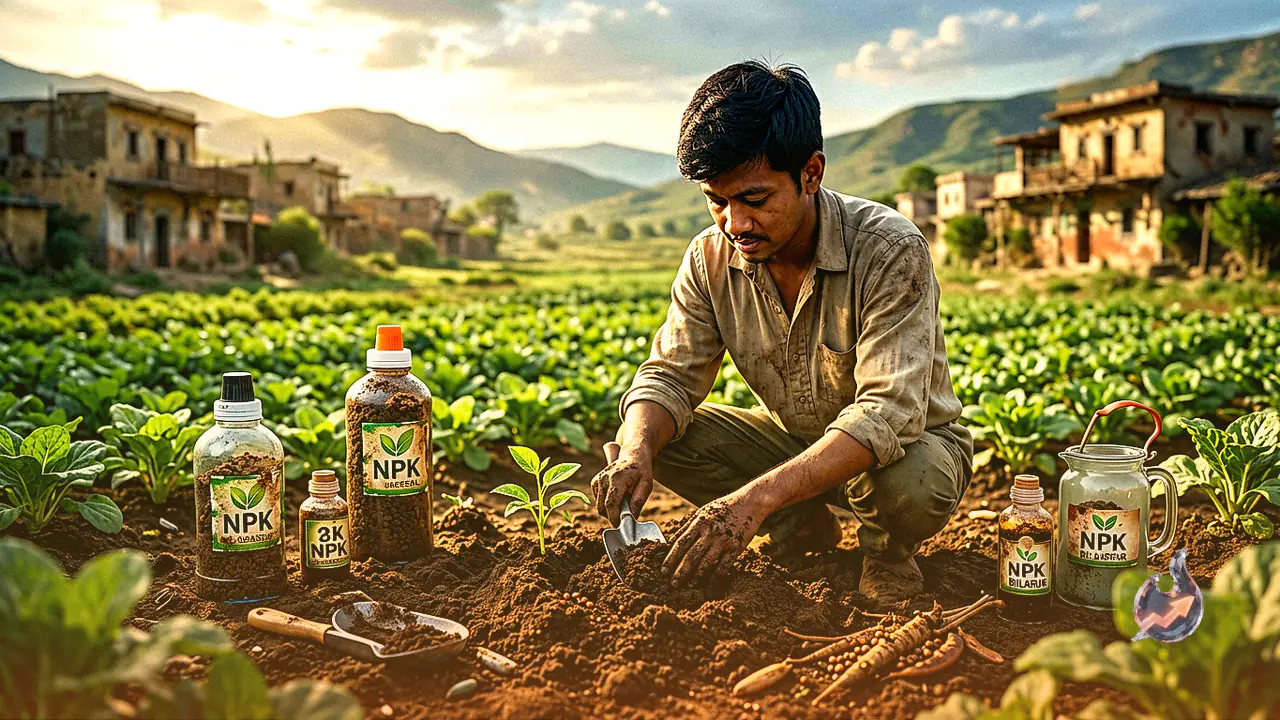

Achieving a balanced level of nutrients in the soil is extremely vital for securing a healthy crop yield. Plants require a total of 17 key nutritional elements, among which nitrogen, phosphorus, and potassium are considered the primary macronutrients. While conventional farming typically relies on synthetic fertilizers to replenish these components, practitioners of organic agriculture can utilize beneficial microbial cultures to fulfill these requirements. Rohan Kumar Verma, a student of vegetable science at the Department of Horticulture in Bilaspur, has detailed a straightforward procedure for preparing, multiplying, and applying organic NPK culture directly in agricultural fields.
Why Primary Nutrients Matter for Crops
Proper plant growth depends on 17 distinct types of nutrients categorized into specific groups, with nitrogen, phosphorus, and potassium taking precedence as primary elements. Chemical farming addresses their shortage through various manufactured fertilizers. Conversely, organic farming methods enhance nutrient availability through beneficial microorganisms and specialized biological cultures, allowing growers to support plant development naturally.
How to Prepare the Culture in 100 Liters of Water
Multiplying the organic culture begins with taking a drum that has a capacity of around 200 liters. After filling it with 100 liters of water, approximately 500 milliliters of mother culture is added to the container. About one kilogram of jaggery is then introduced to serve as nourishment for the growing microorganisms. Once the water, mother culture, and jaggery are blended thoroughly, the container is covered and left to ferment.
Stirring Morning and Evening for 15 Days
The container of liquid must be stirred regularly in a consistent clockwise direction twice a day during morning and evening hours. Continuing this routine for roughly 15 days brings the culture to maturity, making it ready for field application. Regular use of this preparation helps maintain adequate levels of nitrogen, phosphorus, and potassium in organic farming systems without artificial inputs.
Eliminating the Need for Repeated Market Purchases
A major advantage of this technique is that farmers avoid buying fresh mother culture from the market every single time. About 10 liters of the finished solution can be retained in reserve. By adding roughly 90 liters of water and two kilograms of jaggery to this leftover portion, a fresh batch can be cultivated. Following this exact cycle yields a new ready-to-use culture within 15 days.
Sustaining Long Term Soil Health
This approach proves highly beneficial for cultivators dedicated to organic practices. Applying home-grown biological cultures helps preserve soil fertility and structural quality over time. Adopting such measures allows agricultural workers to steadily decrease their reliance on synthetic fertilizers. The developer himself applies these exact organic cultivation techniques and culture preparation methods on his own farm.