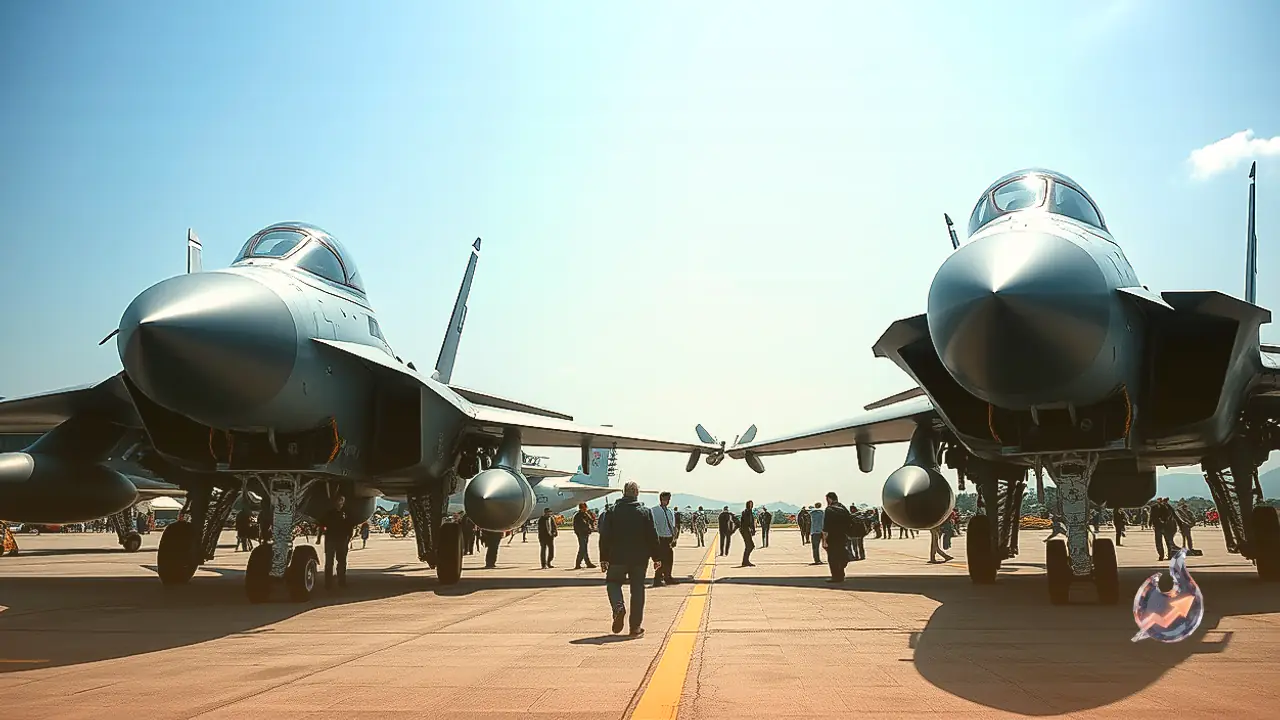
























Amid shifting geopolitical dynamics and evolving security challenges across the Asia-Pacific region, the Chinese People's Liberation Army Air Force and the Royal Thai Air Force have launched their joint bilateral military exercise, Falcon Strike-2026. Taking place in Thai airspace and military facilities, the high-tech war-game features a massive showcase of China's air power and logistics capability. While China actively demonstrated the combat readiness of its 4.5-generation J-10C fighter jets, Thailand chose to keep its most capable US-made F-16 fighter fleet stationed in hangars. The decision to withhold the F-16s highlights significant diplomatic pressure from Washington and acute concerns over defense technology security.
China Showcases Advanced Aerial Arsenal at Falcon Strike-2026
In this iteration of the Falcon Strike exercises, China deployed a complete tactical contingent comprising modern multirole fighters, airborne early warning and control (AWACS) aircraft, aerial refueling tankers, and ground-based air defense units. The drills aim to enhance tactical coordination and operational familiarity between the two air forces. Video footage released by Chinese state broadcaster CCTV illustrated joint flight formations and tactical maneuvers executed by Chinese and Thai aircraft.
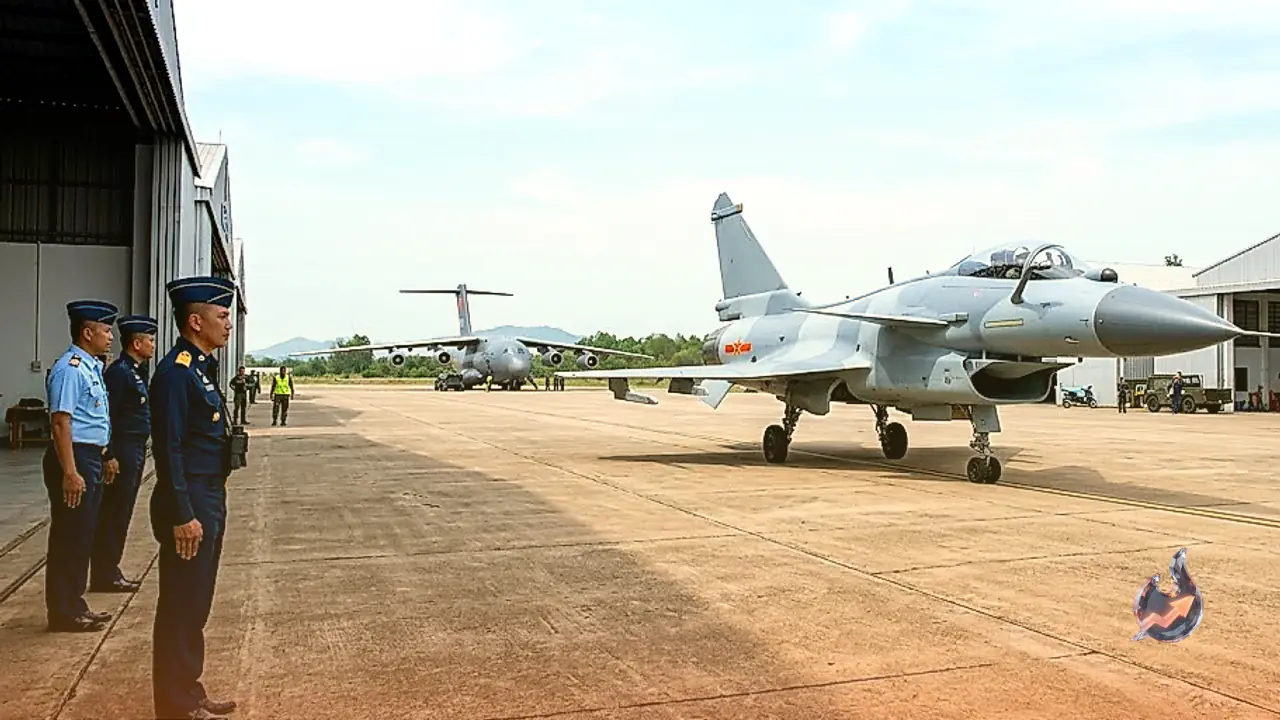
Leading China's aerial contingent is the J-10C, a 4.5-generation multirole fighter jet, supported by the J-10S dual-seat trainer variant and the heavy strategic transport Y-20. Defense analyst Wang Yanan, who serves as editor-in-chief of the publication Aerospace Knowledge, noted that the J-10C forms a backbone element of the Chinese fighter inventory. Its deployment overseas confirms the operational reliability and adaptability of the platform under diverse environmental conditions.
Y-20 Heavy Transports and Expeditionary Logistics
The exercise also highlighted the strategic utility of China's Y-20 heavy transport aircraft in executing long-range military logistics. The Y-20 fleet was responsible for airlifting ground-based air defense missile components, aviation spares, and technical support personnel directly to Thailand. This seamless deployment underlines China's capability to sustain expeditionary air operations without relying on foreign transit hubs.
Three Reasons Behind Thailand's Decision to Withhold F-16s
Despite possessing a fleet of advanced American F-16 fighters, Thailand opted to field Swedish-designed JAS 39 Gripen multirole jets and Alpha Jet light attack aircraft for the joint maneuvers. Defense experts identify three primary factors behind the decision to leave the F-16s out of the exercise.
First, strict US technology safeguards prevented the integration of F-16s into joint drills with Chinese forces. Washington maintains stringent restrictions to ensure that US radar signatures, data-link protocols, and electronic warfare capabilities are not exposed to foreign military observation during international drills.
Second, past diplomatic lessons influenced Thailand's decision. Thailand previously sought to purchase fifth-generation F-35 stealth fighters from the United States, but Washington denied the request citing concerns over Bangkok's growing military ties with Beijing. Thai defense officials are reluctant to further jeopardize their bilateral defense relationship with the US.
Third, technical intelligence protection played a decisive role. Had F-16 fighters flown alongside Chinese J-10C jets and AWACS platforms, China's active electronically scanned array (AESA) radars and signals intelligence sensors could potentially record the F-16's electronic signatures and radar frequencies. Retaining the F-16s in hangars mitigated any potential intelligence leakage.
China's Expanding Overseas Combat Validation System
Military analysts view Falcon Strike-2026 not merely as a routine training exercise, but as an operational trial for China's overseas combat validation system. Deploying fighters, AWACS, tanking assets, and heavy airlift units simultaneously to a foreign host nation demonstrates China's growing capability to project structured air defense and strike packages well beyond its territorial borders.