






















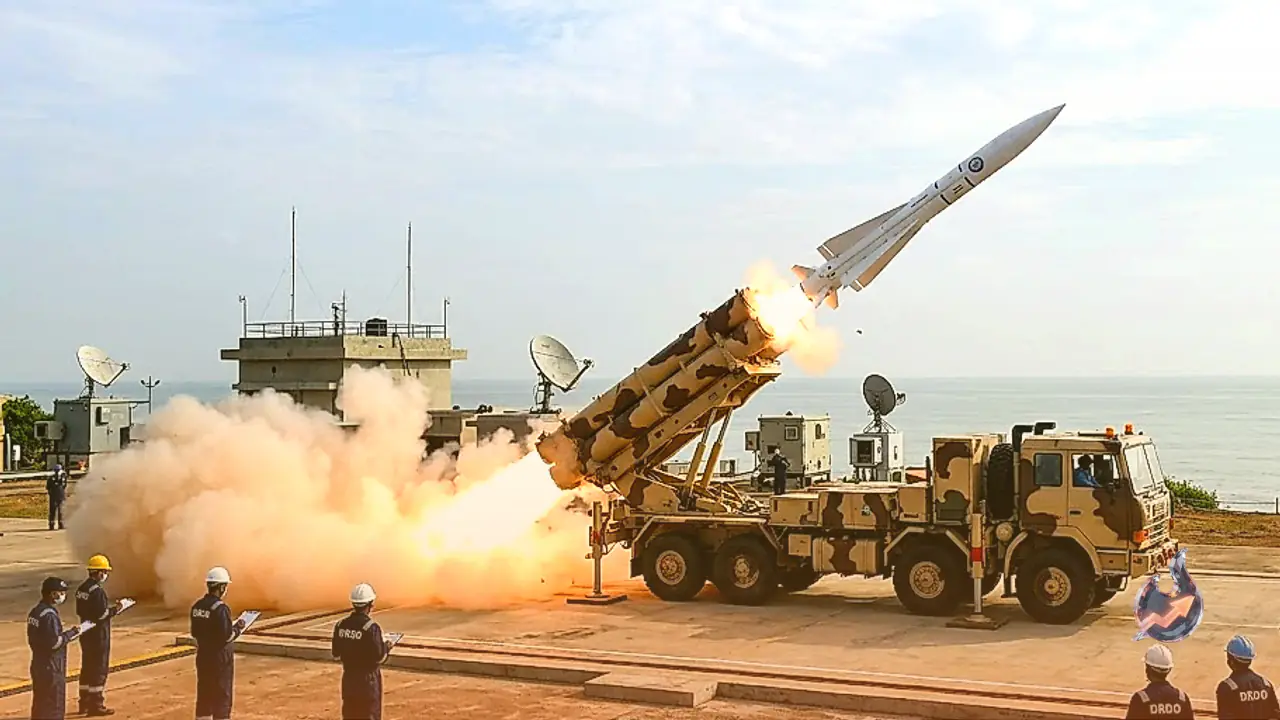

India has reached a major milestone in indigenous military capabilities following the successful flight test of its long-range interceptor missile under Project Kusha. Conducted on July 23, 2026, from APJ Abdul Kalam Island off the coast of Odisha, the test demonstrated the system's ability to track and destroy high-altitude, high-speed simulated targets. The achievement has drawn international attention, with the Chinese media outlet South China Morning Post noting that this breakthrough will significantly lower India's reliance on foreign-built air defence hardware.
Reducing Dependence on Foreign Defense Systems
For years, India has relied on foreign acquisitions to safeguard its airspace. In 2018, India signed a deal valued at approximately $5.43 billion with Russia to procure five squadrons of the S-400 air defence system. While four of these squadrons have already been delivered and deployed, the delivery of the fifth system faced delays due to military commitments tied to the war in Ukraine. Additionally, India utilizes Israel's Barak missile systems for mid-range air defence.
The development of Project Kusha, an indigenous Long-Range Surface-to-Air Missile (LRSAM) system, aims to alter this equation. By building its own capability to intercept long-range threats, India seeks to phase out its dependence on foreign suppliers. Chinese media observations highlighted that the test showcases India's growing confidence in deploying homegrown defence tech against sophisticated aerial threats.
Technical Capabilities and Range of Project Kusha
Developed by the Defence Research and Development Organisation (DRDO) in collaboration with various private and public sector industrial partners, Project Kusha is engineered to counter a comprehensive array of threats. These include stealth fighter jets, cruise missiles, unmanned aerial vehicles (drones), and strategic bombers.
The system incorporates three distinct variants of interceptor missiles
- M-1 Interceptor: Designed for an operational range of around 150 kilometers.
- M-2 Interceptor: Features an engagement range of approximately 250 kilometers.
- M-3 Interceptor: Possesses a maximum operational range between 350 and 400 kilometers.
The interceptor missiles are designed to reach speeds of up to Mach 5.5. To counter modern electronic warfare, the system integrates advanced guidance mechanisms, including dual active radio frequency seekers and imaging infrared seekers. These technologies ensure target acquisition even in high-jamming environments. Additionally, the system utilizes Gallium Nitride (GaN) based AESA radar technology, substantially enhancing its surveillance and multi-target tracking capabilities.
Integration into 'Mission Sudarshan Chakra'
Project Kusha represents a key component of Prime Minister Narendra Modi's proposed 'Mission Sudarshan Chakra'. This initiative aims to establish a comprehensive, multi-tiered national defence shield by 2035 to protect critical infrastructure and strategic assets against ballistic missiles, precision-guided munitions, and stealth aircraft.
Within this defensive architecture, Project Kusha functions as the outer shield layer, engaging long-range incoming threats at distances up to 400 kilometers. Shorter-range systems, such as Akash, alongside medium-range interceptors, will form the inner protective operational layers, creating an integrated national air defence network.