























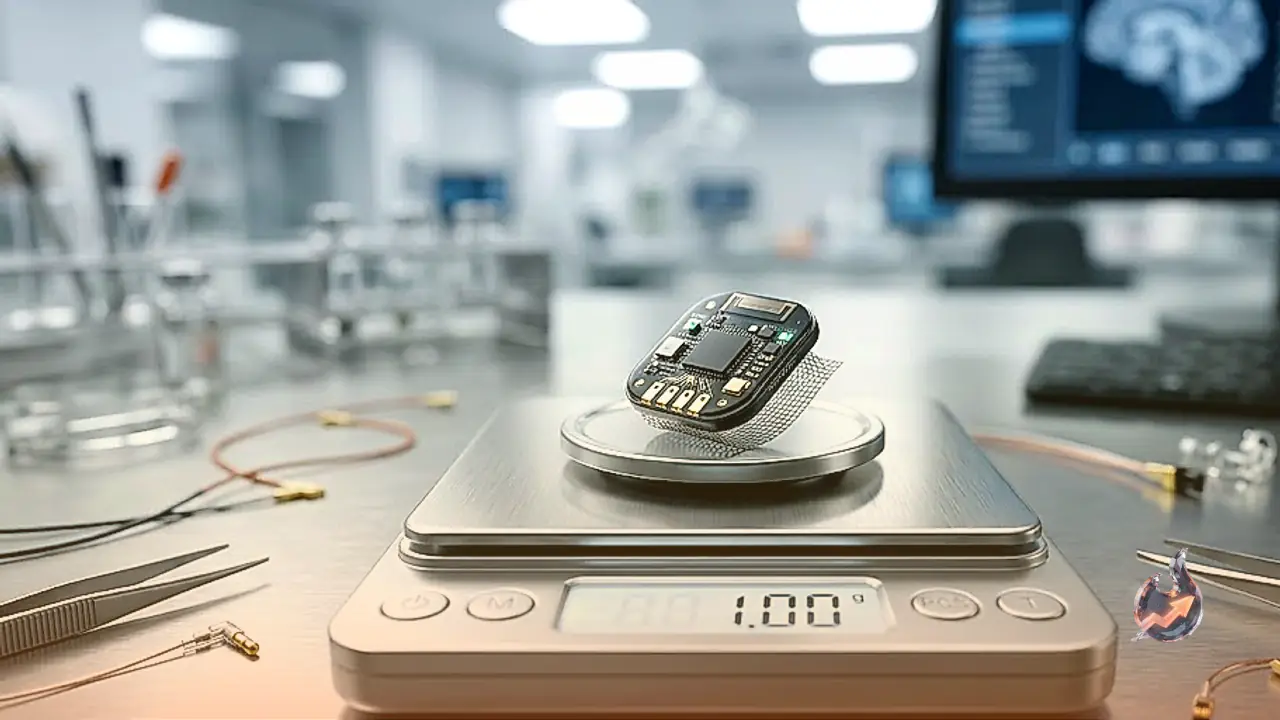

Unlocking the mysteries of how the brain generates thoughts, processes emotions, and directs social interactions has long stood among the most formidable challenges in neuroscience. Observing neural activity under completely natural conditions has traditionally been restricted by bulky equipment and physical tethers. In a major technological advance, researchers have developed an ultra-compact wireless monitor designed to capture the brain's internal activity with unprecedented freedom. Weighing merely one gram, the device is recognised as the world's smallest wearable brain monitor.
The Engineering Behind Airscope
The miniature wireless apparatus has been designated as Airscope. It is the result of a collaborative initiative between scientists from Tsinghua University and the Chinese PLA Medical School. Findings detailing the design and capabilities of this breakthrough monitoring tool were published in the scientific journal Nature. According to the research group, the micro-device enables real-time visual tracking of deep neural events while simultaneously logging high-fidelity recordings of complex biological communications.
Simultaneous Monitoring Across 8,500 Neurons
During rigorous laboratory evaluations conducted on mice, Airscope demonstrated a remarkable tracking capacity. The sensor successfully mapped and recorded the firing patterns of more than 8,500 neurons in a mouse brain at the exact same moment. Neurons function as fundamental signaling cells responsible for processing and transmitting vital information across the central nervous system. In conventional laboratory setups, researchers frequently had to immobilise the subject's skull or connect it to heavy, tangled cables. Such physical constraints invariably suppressed spontaneous reactions and distorted natural movement patterns. Because Airscope is lightweight and fully wireless, test subjects are free to explore, run, and interact naturally while their neural circuitry is continuously examined.
Artificial Intelligence Integration and High-Volume Data Flow
Creating such a tiny yet powerful imaging instrument required novel computational and engineering solutions. The development team integrated artificial intelligence to craft specialised high-precision lenses and facilitate automated recognition of diverse biological subjects within continuous video feeds. Furthermore, the built-in wireless transmitter is engineered to relay large streams of optical data and detailed neural imagery without signal degradation or spatial interruption.
Potential Applications in Medicine and Behavioral Science
The emergence of this wearable micro-monitoring technology carries wide-ranging implications across diverse research disciplines
- Depression and Emotional Disorders: By identifying specific shifts in neuronal networks associated with psychological distress, researchers hope to pinpoint the cellular foundations of mood disorders and pave the way for highly targeted clinical therapies.
- Animal Behavior and Social Networks: Scientists can now observe how neural groups activate when animals participate in group living, competition, or cooperative bonds in uninhibited environments.
- Brain-Computer Interfaces: The detailed observations gathered from this wireless hardware could significantly enhance the accuracy of systems translating mental intention into machine commands, though additional research is necessary.
- Immunology and Cancer Research: The creators suggest that the foundational imaging methodology could ultimately extend beyond the central nervous system, helping medical scientists track the cellular development of chronic conditions, including oncological spread and immune interactions.
For the present, the deployment of Airscope remains confined to preclinical testing in mice, meaning the hardware is not yet configured for direct therapeutic use in human patients. Nevertheless, subsequent phases of development could fundamentally transform our understanding of the mammalian brain and open new horizons for clinical neuroscience.