



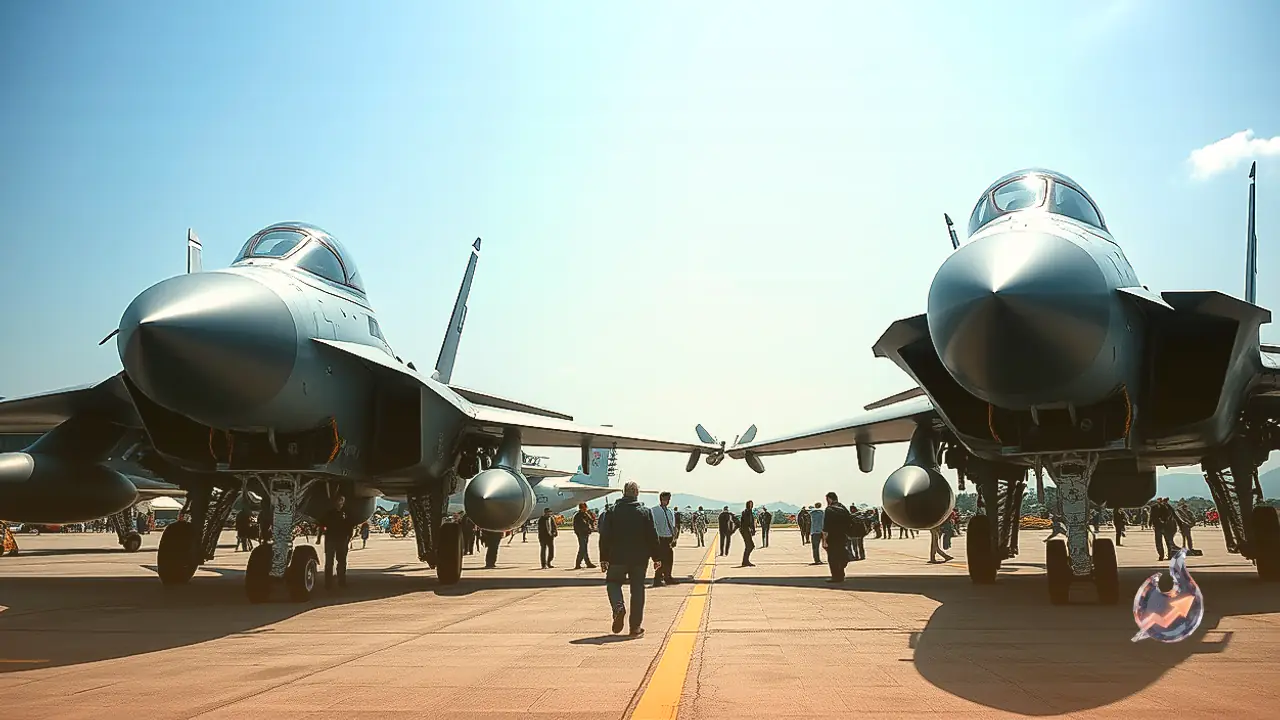



















A quarter of a century after its last batch of newly built combat jets arrived, Taiwan has finally taken delivery of modern fighter aircraft from the United States. On October 2, 2026, the first two factory-fresh F-16C/D Block 70 multirole fighters touched down at Chihhang Air Base. Their arrival coincides with a prolonged period of elevated naval and aerial patrols by Chinese forces around the self-governed island, transforming this delivery from a routine procurement milestone into a key upgrade for the territory's contested air defenses.
Bearing tail numbers 6727 and 6728, the newly delivered aircraft will operate out of Chihhang Air Base, an installation situated on the southeastern coastline near Taitung. Prior to their landing, the arriving fighters were accompanied in local airspace by upgraded F-16AM jets alongside T-BE-5 advanced jet trainers deployed to welcome the new arrivals.
Contract Background and Timeline Setbacks
The acquisition traces its roots back to 2019, when Taipei finalized an arms agreement with Washington valued at approximately 8 billion US dollars. The original rollout schedule anticipated initial deliveries beginning around 2023. However, severe disruptions across global supply chains and pandemic-induced labor shortages delayed key manufacturing phases. Furthermore, adjustments to the assembly line and software verification issues peculiar to the advanced avionics suite pushed milestones back by roughly three years.
The initial airframe from this procurement was rolled out at Lockheed Martin's Greenville production facility in South Carolina in March 2025 before extensive flight testing cleared the path for transpacific ferry operations.
Technological Enhancements Over Legacy Airframes
The arrival of the Block 70 configuration represents a substantial technological jump beyond Taiwan's existing inventory. The island continues to operate 139 of the original 150 F-16 Block 20 aircraft delivered decades ago. While those older planes underwent structural and avionics modernizations from the late 2010s into the early 2020s, the new Block 70 airframes integrate superior performance characteristics directly from the production floor.
Propulsion is supplied by the General Electric F110-GE-129 turbofan engine, which produces more than a fifth greater maximum afterburning thrust than the older Pratt & Whitney powerplants fitted to the Block 20 variant. The new models also feature conformal fuel tanks moulded along the upper fuselage. These specialized tanks expand internal fuel capacity without adding external parasite drag or taking up valuable weapons stations. For a military lacking a sizable aerial refueling fleet, the supplemental fuel load translates directly into significantly longer loiter times over surrounding sea lanes.
Sensors, Avionics, and Electronic Warfare Caveats
To detect potential airborne adversaries without alerting them, the new airframes are configured to carry the IRST21 Legion-ES infrared search and track pod. This passive sensor scans the skies using thermal heat signatures, enabling pilots to identify and track airborne contacts without radiating radio waves from an active radar. The capability is specifically intended to counter reduced-signature combat aircraft such as China's J-20 and J-35 stealth jets, supplementing the primary AN/APG-83 active electronically scanned array radar.
Despite these technological strides, the newly arrived planes have entered service without their full intended electronic warfare suite. The aircraft are slated to field the L3Harris Viper Shield electronic warfare system, but the initial two units were delivered without it installed because the system has not yet concluded complete integration validation. As a result, comprehensive onboard jamming and electronic countermeasure functions will have to be retrofitted at a later date.
Weapons Suite and Southeastern Strategic Deployment
Further down the line, Taiwan's weapons pipeline for the new fleet includes AIM-120C-8 beyond-visual-range air-to-air missiles, AGM-84H SLAM-ER standoff cruise missiles, and AGM-154C JSOW glide weapons. This diverse weapons loadout expands the role of the F-16 from traditional air-to-air interception toward precision maritime strikes and long-range ground attack.
The delivery breaks a logistical drought that began after 2001, when Taiwan completed its acceptance of F-16A/B Block 20 aircraft. Although defense officials made a formal request for 66 F-16C/D jets in 2006, political and diplomatic hesitations delayed approval until the 2019 agreement was ratified. Operating permanently from Chihhang Air Base places these fighters directly adjacent to the Bashi Channel, an essential transit chokepoint through which Chinese warships and bombers routinely transit toward the Philippine Sea. Deploying responsive air power into this southeastern gateway allows Taiwan to better patrol its eastern flanks, even though the limited delivery numbers cannot realistically match the sheer numerical scale of China's air force.
The Long Ferry Flight Across the Pacific
The journey bringing tail numbers 6727 and 6728 to Taiwan spanned several weeks. Departing Greenville on August 17, the aircraft crossed the eastern Pacific supported by US Air Force KC-135 aerial tankers before landing in Hawaii. Once in the Pacific archipelago, the fighters remained grounded for over six weeks, initially due to adverse weather patterns and subsequently because of maintenance and technical troubleshooting before the final transoceanic leg could be completed.