























When people discuss fashion and personal style today, high heels are frequently viewed as a modern invention originating primarily from Western culture. A common assumption is that raised footwear for women arrived from Europe and subsequently spread across the globe over the years. However, a fascinating question arises when historical evidence suggests that elements resembling contemporary trends might actually be rooted deep within ancient Indian history.
Recently, a compelling discussion has captured the attention of history enthusiasts and social media users alike. This conversation centers around the historic Ramappa Temple located in the Indian state of Telangana, renowned widely for its magnificent architecture and intricate stone carvings. As a designated UNESCO World Heritage Site, this architectural masterpiece features numerous stunning sculptures, but one particular female figure has recently drawn intense scrutiny from researchers and observers, raising questions about whether elevated footwear existed in India eight centuries ago.
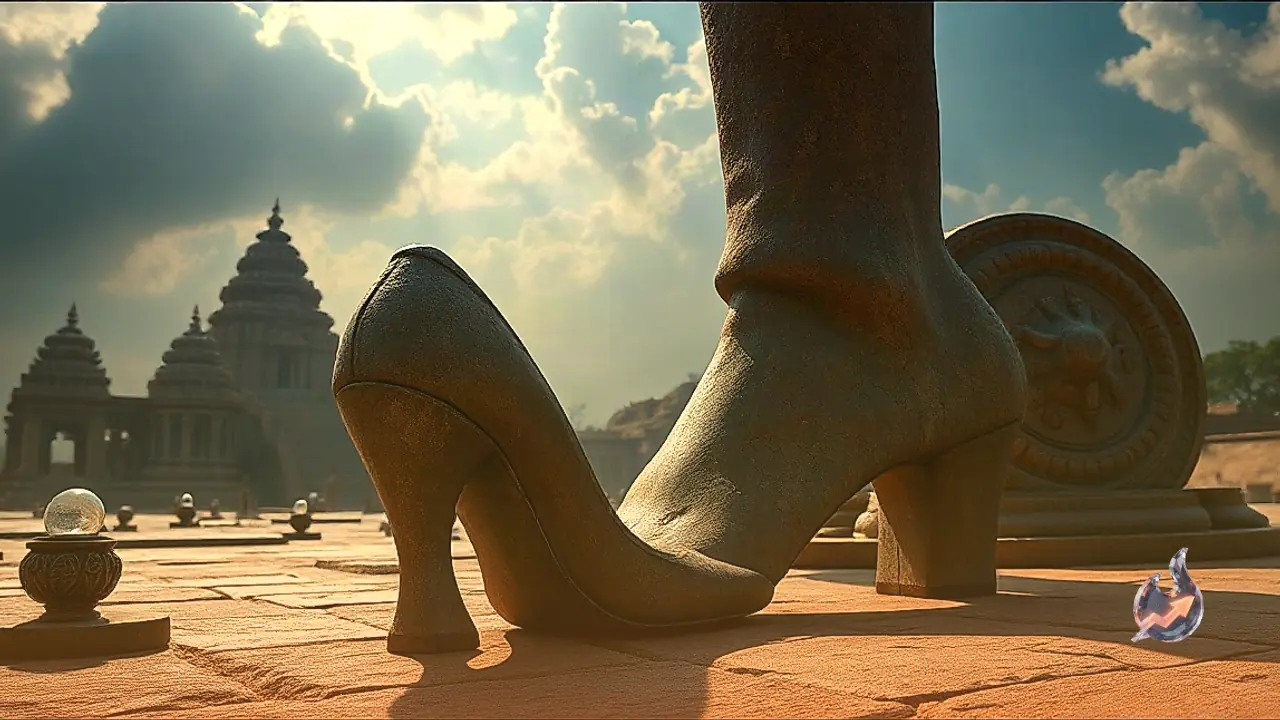
Dating back to the early thirteenth century, construction on this famous Telangana temple began in the year 1213 CE during the rule of the Kakatiya Dynasty. The craftsmanship displayed across the temple walls and pillars remains remarkably detailed and lifelike. Among these numerous carvings, the depiction of a woman wearing footwear with a visibly raised sole has become a major talking point. Upon close examination, this sculpted footwear bears a striking resemblance to contemporary platform heels or high-heeled sandals. The emergence of these images prompted claims from various observers suggesting that India utilized raised footwear centuries before such styles gained traction in Europe.
Following the circulation of these claims, historians and subject matter experts offered a more measured perspective on the findings. Specialists emphasize that viewing this single sculpture as definitive proof that modern high heels were invented in ancient India would be an overstatement. The artwork alone does not serve as direct evidence that sophisticated footwear manufacturing techniques existed during that era in the same manner as today.
At the same time, the sculpture highlights a remarkable aspect of historical craftsmanship. It stands as clear testimony to the exceptional skill and precision possessed by the artisans of the Kakatiya Dynasty over 800 years ago. These master sculptors demonstrated an extraordinary ability to carve intricate details into stone, ranging from garments and jewelry to dance postures and specific footwear designs. Such discoveries underscore the depth preserved within Indian history, demonstrating that ancient art forms captured the nuanced aspects of lifestyle and daily living alongside profound religious devotion.