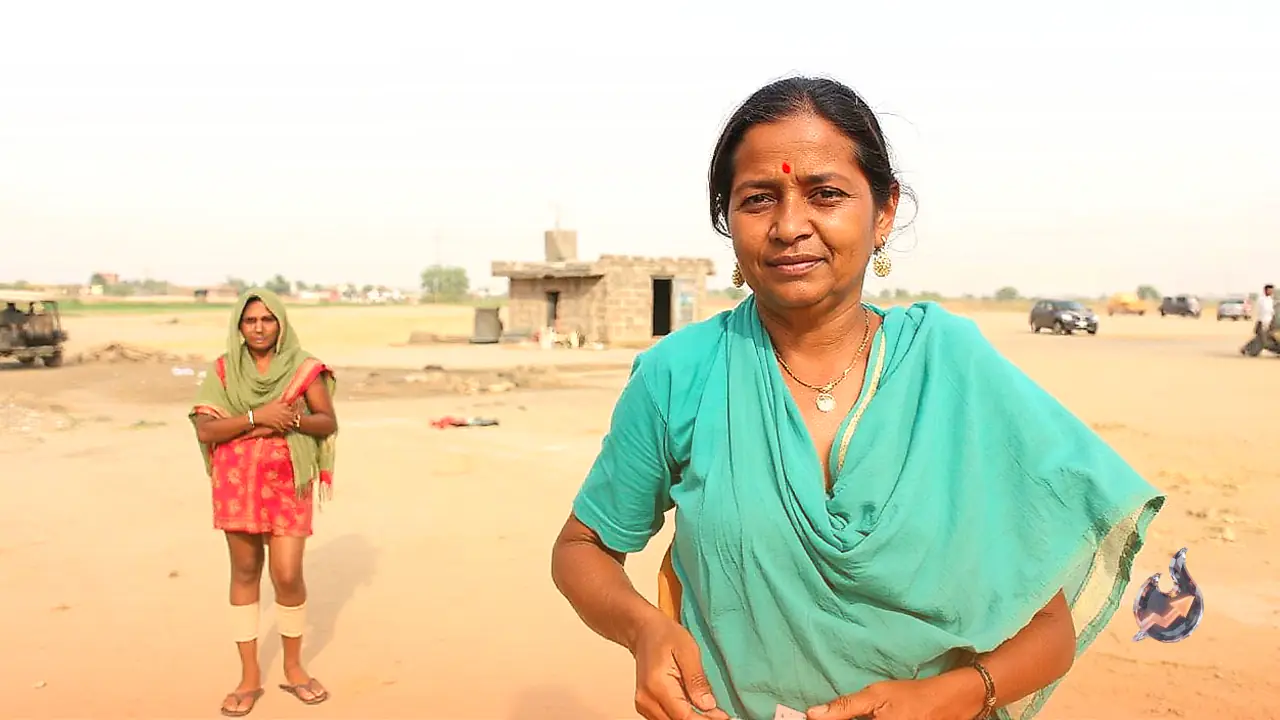














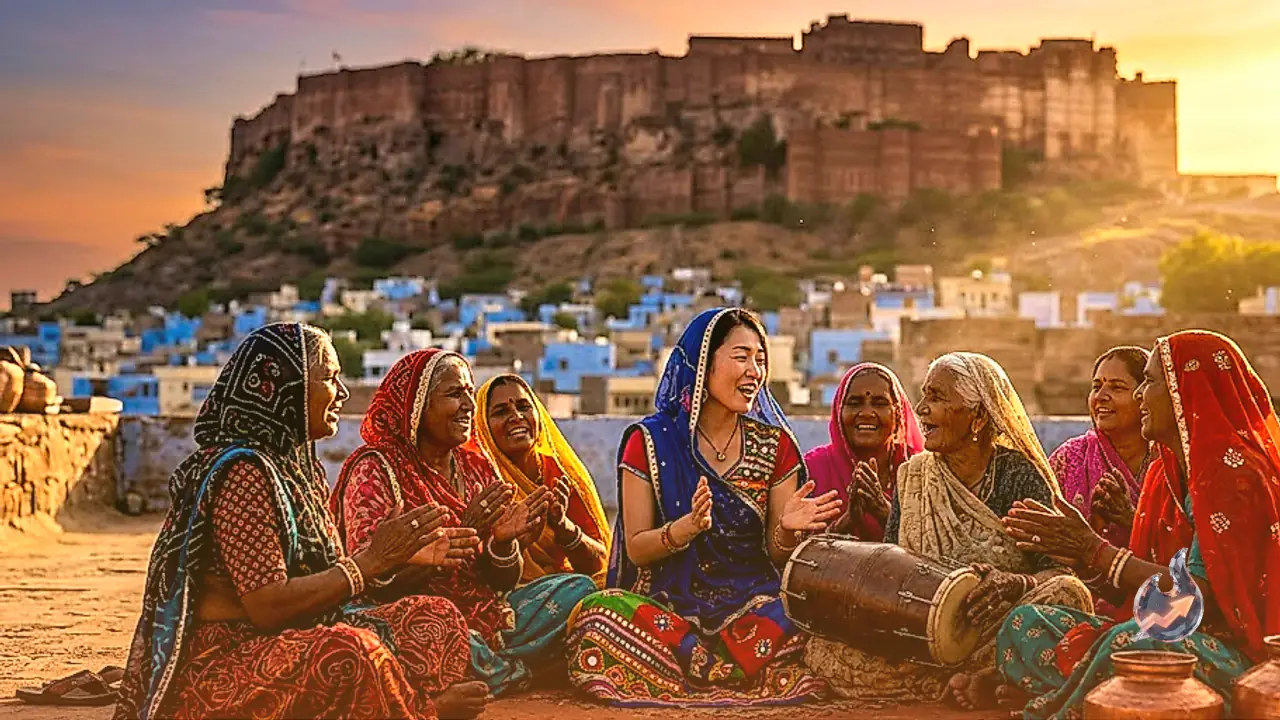

The distinction between a local and a foreigner is usually quite apparent, primarily given away by differences in attire, lifestyle, and most importantly, language. However, in the historic streets of Jodhpur, a visitor has completely blurred these traditional boundaries. Mayumi, a native of Japan, has absorbed the folk traditions, art, and language of the Marwar region so profoundly that even the local residents are left in pleasant disbelief when they meet her. Affectionately called 'Rajasthani Madhu' by the people who know her, her journey is far from being just a casual tourist's hobby. It has evolved into a deep, unbreakable cultural bridge connecting two geographically distinct countries. Recently, her visit to Jodhpur became the center of attention when she was spotted sitting among local women at the magnificent foothills of the Mehrangarh fort, eagerly learning and singing traditional folk songs in a completely authentic Rajasthani style.
A Journey Sparked by the Kalbelia Dance
Mayumi, or Madhu, did not develop this profound connection with the desert state overnight. It has been a long and emotional journey spanning approximately a decade and a half. About fifteen years ago, when she first set foot on Rajasthani soil, she was introduced to the region's world-famous Kalbelia dance. She was so deeply moved by the unique rhythm, fast-paced movements, and the boundless energy of this traditional dance form that she firmly decided to make it a part of her life. Her arrival in India in the year 2013 proved to be a massive and highly significant step in this cultural exploration. During that period, she did not merely focus on learning the physical nuances of the dance; instead, she initiated a serious effort to closely understand the underlying folk culture, the essence of the local soil, and the daily lifestyle of the people living there.
Deep Affection for Traditional Attire and Jewelry
This talented Japanese artist's love for Rajasthani culture is not confined to Kalbelia performances delivered on a brightly lit stage. Her daily attire and adornments also clearly reflect the Marwari colors deeply embedded within her. She possesses a special fondness for wearing the traditional Rajasthani Ghaghra-Odhni, donning heavy and authentic jewelry, and sliding colorful, culturally rich bangles onto her wrists. When Madhu steps out fully dressed in these traditional garments and begins to sing folk melodies, for a moment, it feels as though a daughter from a remote village in Marwar has returned to her home. Looking at her effortless and natural appearance, it becomes almost impossible for any newcomer to guess that she is actually a citizen of Japan from across the seas.
Incredible Mastery Over Marwari and Folk Music
Perhaps the most astonishing aspect of Madhu's artistic repertoire is her language and her incredibly effective way of communicating. She has learned to speak the Marwari and Rajasthani languages with such precision and confidence that anyone listening to her words would be left completely speechless. Her pronunciation, the cadence of her words, and her overall accent are exactly like those of the common people living in the rural areas of Rajasthan. During her stay in Jodhpur, she enthusiastically participated in a gathering with a group of women sitting beneath the Mehrangarh fort. There, she did not just listen to the local songs from the women; she learned them in a very short amount of time and even sang along, matching her voice perfectly in tune with theirs. Her presence at any cultural event or folk gathering in Rajasthan infuses the entire atmosphere with a fresh wave of enthusiasm and energy.
A Cultural Ambassador of Rajasthan on Foreign Soil
Today, for Madhu, Rajasthan is no longer just a place to visit or a mere tourist destination. It has transformed into an entire world connected to genuine emotions, a sense of belonging, and deep respect. She was so charmed by the simplicity and natural warmth of the local people that she made it a core part of her own identity. Even more significantly, she has taken this invaluable cultural heritage back with her to her homeland in Japan. She is currently doing the commendable work of teaching Rajasthani folk dance and traditional songs to the people in her own country. Through her art, hard work, and unwavering dedication, she has now become an incredibly beautiful and vibrant symbol of Marwar's culture, even on foreign soil.