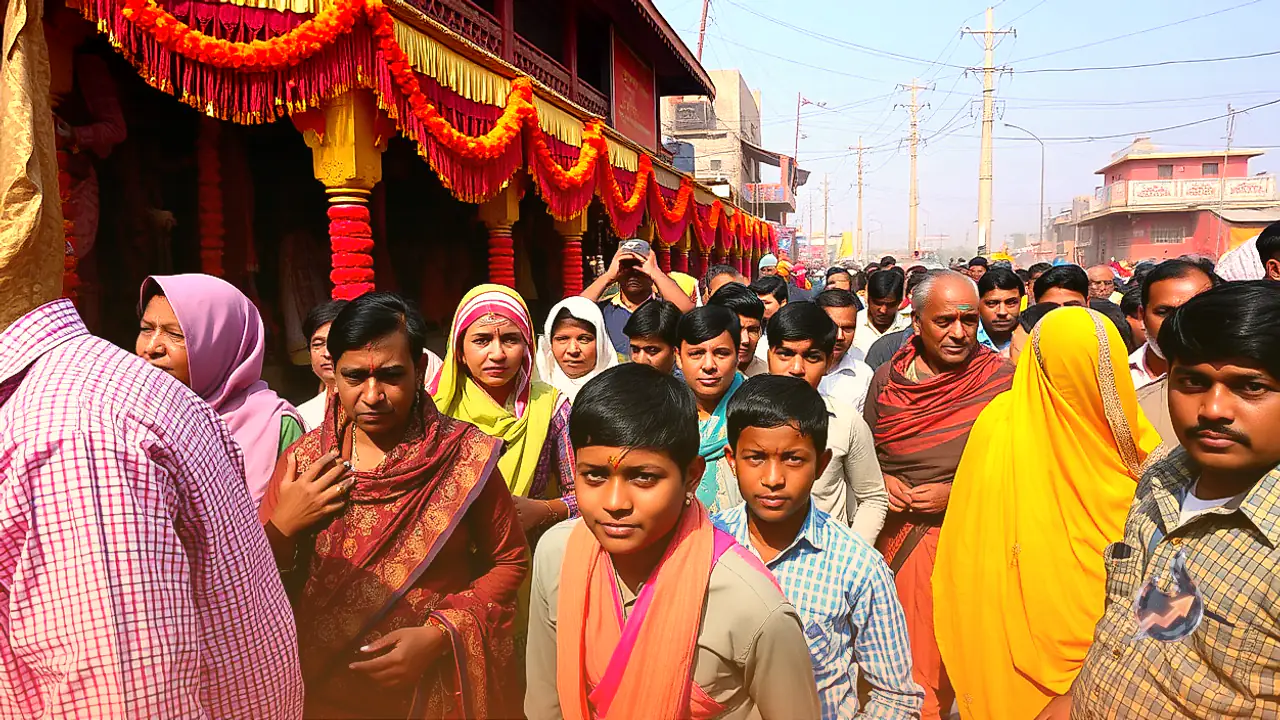














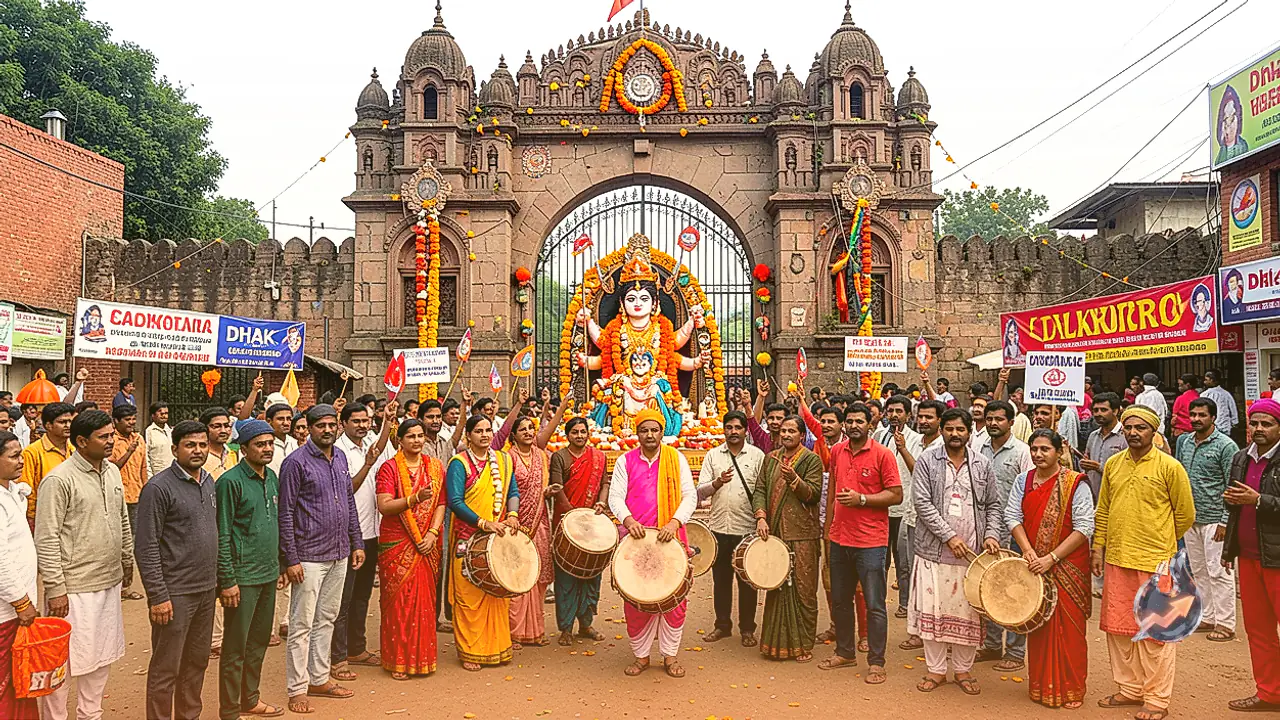

During the festive season of Sharad Navratri, the national capital transforms into a vibrant hub of cultural celebrations. At the heart of this festive grandeur stands the historic Kashmiri Gate Durga Puja in North Delhi. This year marks a monumental milestone as the pandal completes 75 years of its iconic Dhak drumming tradition. It was in 1951 that traditional Dhak players were brought from Kolkata for the first time, introducing a rhythmic musical identity to Delhi's Durga Puja festivities. Over the decades, this musical tradition spread to hundreds of other pandals across the National Capital Region, yet the resonant beats echoing at Kashmiri Gate remain unmatched. Originally held inside the premises of Roshanpura Kali Mandir, this historic puja was later shifted to the grounds of the Bengali Senior Secondary School, located near IP College in Civil Lines.
A 75 Year Legacy of Dhak Rhythms Since 1951
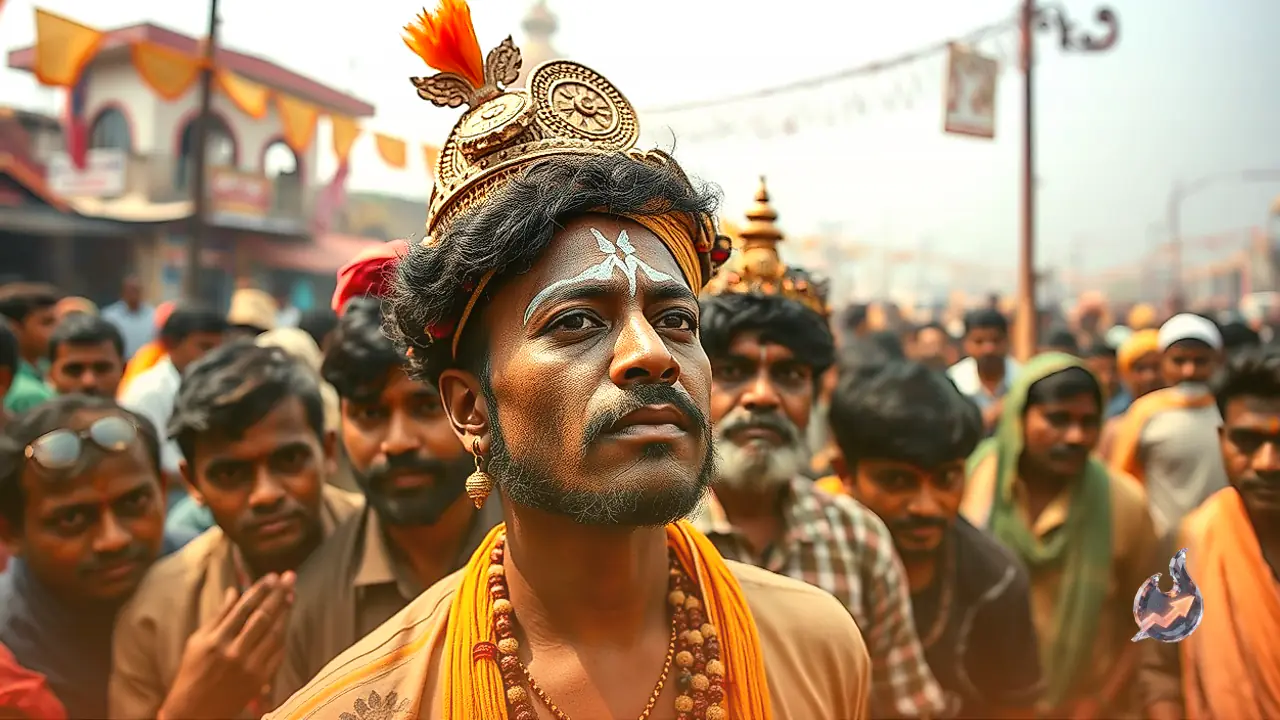
A dedicated signboard at the Kashmiri Gate pandal proudly commemorates the commencement of the Dhak tradition in 1951. The Dhak, a large membrane drum, is not merely a musical instrument; it represents the cultural soul of Bengal and the ceremonial spirit of Durga Puja. According to renowned academician Manju Majumdar, Durga Puja is unimaginable without the deep, echoing sound of the Dhak. The moment the Dhakis strike their wooden drumsticks against the stretched hides, the entire atmosphere vibrates with spiritual fervor and festive energy, signaling the divine arrival of Goddess Durga. While South Delhi hubs like Chittaranjan Park now showcase massive art installations and modern lighting, the traditional appeal of Kashmiri Gate's Dhak beats continues to draw thousands of nostalgic devotees.
The Historical Origins of Kashmiri Gate Puja Since 1910
The lineage of the Kashmiri Gate Durga Puja dates back to the early years of the twentieth century. According to the archives of the Delhi Durga Puja Samiti, members of the local Bengali community came together in 1910 to establish the city's first organized community Durga Puja. At that time, the Bengali population in Delhi was relatively small, consisting mainly of professionals who had migrated to work in government departments and the railways. Living far away from their ancestral homes in Bengal, these families sought to recreate their cultural and religious roots in the capital. Some historical accounts even suggest that private Durga Puja celebrations were conducted by migrant Bengali families in Delhi as early as 1842, before taking on a public, community driven format in 1910.
Bullock Cart Immersion and Cherished Culinary Memories
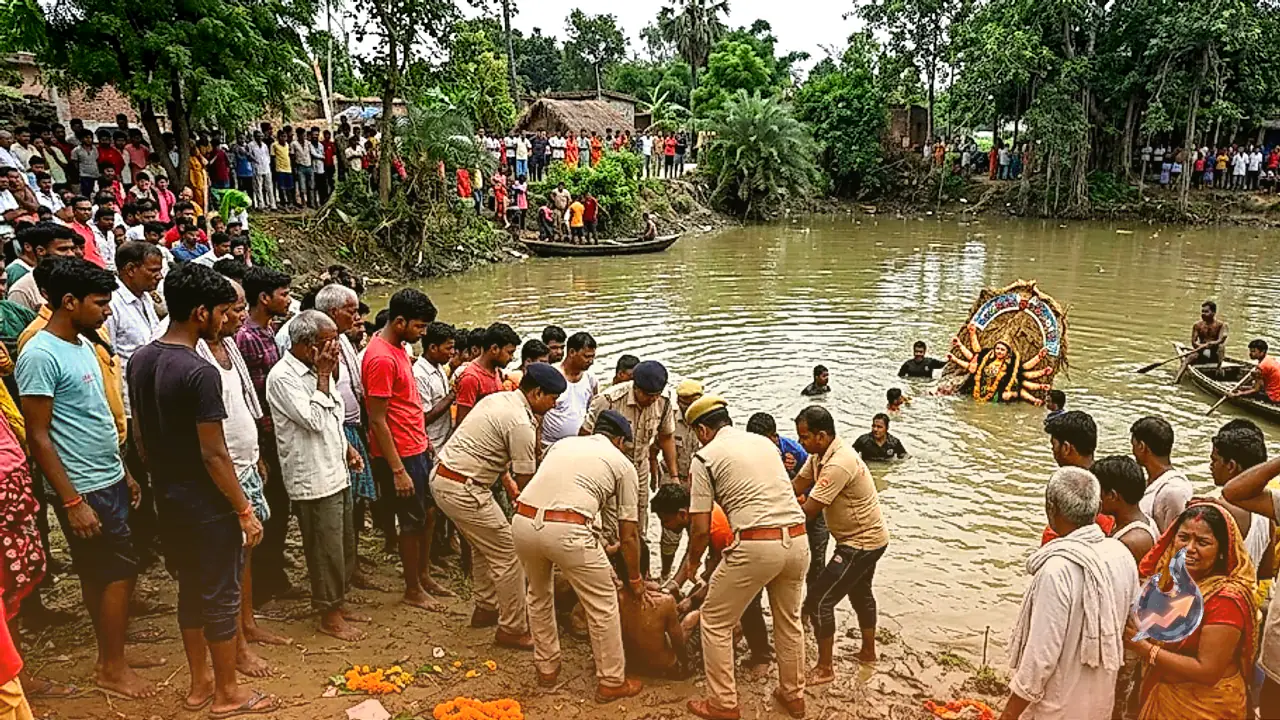
One of the most remarkable aspects of the Kashmiri Gate Puja is its steadfast preservation of heritage and age old rituals. While almost all contemporary pandals in Delhi use modern transport vehicles for the deity's immersion, the idol of Goddess Durga at Kashmiri Gate is traditionally carried to the Yamuna immersion site on a wooden bullock cart, maintaining a century old practice. Alongside these preserved customs, visitors this year miss a long standing culinary tradition. The famous Annapurna Misthan Bhandar stall, which used to be a major crowd puller near the Fountain area in Chandni Chowk for its fresh Rasgullas and Mishti Doi, is absent following the closure of the iconic sweet shop last year.
Expansion Across Timarpur, Gol Market, and Kali Bari
When the capital of British India was shifted from Kolkata to Delhi in 1911, a large number of Bengali civil servants and administrative staff relocated to the new capital. Most of these government employees settled in Timarpur, where they established the Timarpur Durga Puja in 1913, considered the second oldest community puja in Delhi. Later, in 1919, the Government of India Press was moved from Kolkata to Delhi. The press staff initiated another puja in Timarpur, which eventually moved to Minto Road when the press was permanently established there, located near the present day Bharatiya Janata Party national headquarters.
By 1930, numerous Bengali families settled around the Gol Market locality, launching neighborhood pujas at Edward Square, Baird Road, and Sikandra Place. In 1935, permanent land was allocated near Birla Mandir for the construction of Delhi Kali Bari, giving rise to one of the most prominent religious centers in the city. The idol of Goddess Durga worshipped at Delhi Kali Bari is crafted as an exact replica of the deity at Kolkata's famous Kalighat temple. Historical records highlight that freedom fighter Netaji Subhash Chandra Bose served as the president of the Delhi Kali Bari Puja Committee in 1935, and Dr. Rajendra Prasad, India's first President, was a regular visitor to the shrine. Until the 1960s, artisans for building pandals and priests for conducting rituals were specially brought to Delhi from Banaras and Bengal.
From Neighborhood Celebrations to CR Park's Mini Bengal
As the capital expanded, the Bengali community established new residential enclaves across Delhi. Durga Puja celebrations began in Lodhi Road in 1944, followed by Karol Bagh, Sarojini Nagar, and Moti Bagh in the early 1950s. The 1960s saw an influx of non-government Bengali professionals who settled in neighborhoods such as Defence Colony, Shahdara, Kailash Colony, Lajpat Nagar, Tilak Nagar, and Patel Nagar, forming local puja committees in each area.
In recent decades, Chittaranjan Park in South Delhi has emerged as the cultural epicenter of the community, earning the moniker 'Mini Bengal'. CR Park hosts four major, highly competitive Durga Puja pandals every year. The cultural vibe at CR Park is so magnetic that renowned personalities, including music director Shantanu Moitra, return to Delhi annually to participate in the festivities. Today, families across Delhi NCR make it a point to visit both the historical Kashmiri Gate pandal and the vibrant lanes of CR Park to experience the full spectrum of Bengal's rich cultural legacy.