




















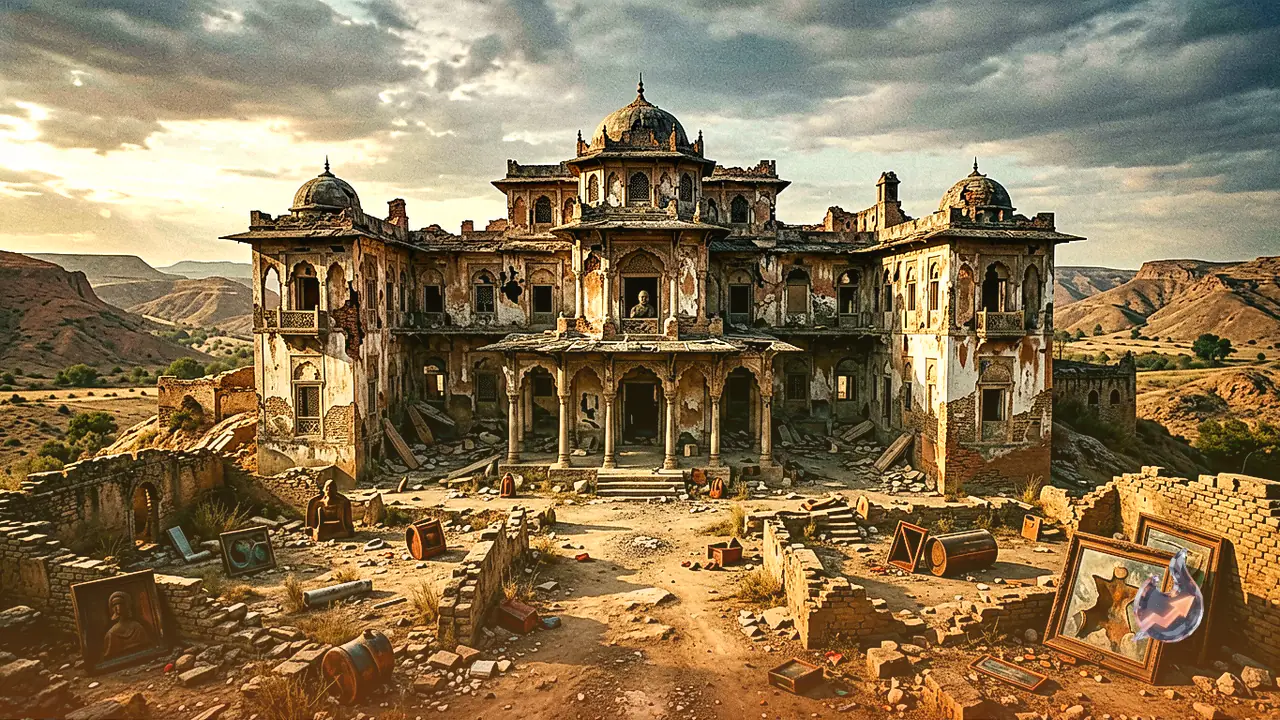

Situated amidst the scenic landscape of Naubat Pahad in Hyderabad, Telangana, the historic Hill Fort Palace currently stands in a state of severe neglect. Once celebrated for its grand architecture, Gothic craftsmanship, and royal hospitality, this iconic monument has gradually transformed into decaying ruins due to prolonged administrative apathy and time's relentless wear.
The Beginnings in 1915 and Architectural Marvel
The foundation of this majestic estate was laid in the year 1915 by Sir Nizamat Jung, who envisioned a residence inspired by classical Gothic architecture. Sir Nizamat Jung resided in this palace for nearly 15 years, during which time the estate earned widespread renown across the region for its unique design and striking beauty.
The palace was a prominent architectural landmark in the cultural ecosystem of Hyderabad. Nestled in the serene surroundings of Naubat Pahad, its towering arches and impressive stonework highlighted the craftsmanship of the era. The expansive complex featured 40 luxurious rooms, 3 grand banquet halls, and an open-air swimming pool, making it an extraordinary benchmark for modern and regal living in that era.
Transition to Royal Residence and the Ritz Hotel Era
In 1929, upon returning from the holy Haj pilgrimage, Sir Nizamat Jung decided to embrace a minimalist lifestyle and part ways with the grand palace. Recognizing its grandeur, Mir Osman Ali Khan, the seventh Nizam of Hyderabad, purchased the property for his younger son, Prince Moazzam Jah, turning it into an official residence for the royal family.
Following Operation Polo, which integrated Hyderabad into the Indian Union, the Government of India assumed control of the property. Subsequently, in 1955, the structure was leased out to the Ritz Hotel Company. For several decades, the Ritz Hotel operated within these walls, catering to prominent domestic tourists, international visitors, and dignitaries.
Over Two Decades of Abandonment and Structural Decay
The operational era of the hotel came to an end in late 1997 when the state government terminated its lease agreement with the operating firm. Since then, the entire sprawling property has remained completely deserted. Abandoned for over two and a half decades without essential maintenance, the historic palace has suffered severe structural decay. Massive cracks have appeared along its stone walls, the roofs have collapsed or become dangerously fragile, and debris litters the surrounding courtyard. What was once a shimmering jewel of Hyderabad's architectural heritage now exists merely as a fading memory of its glorious past.