




















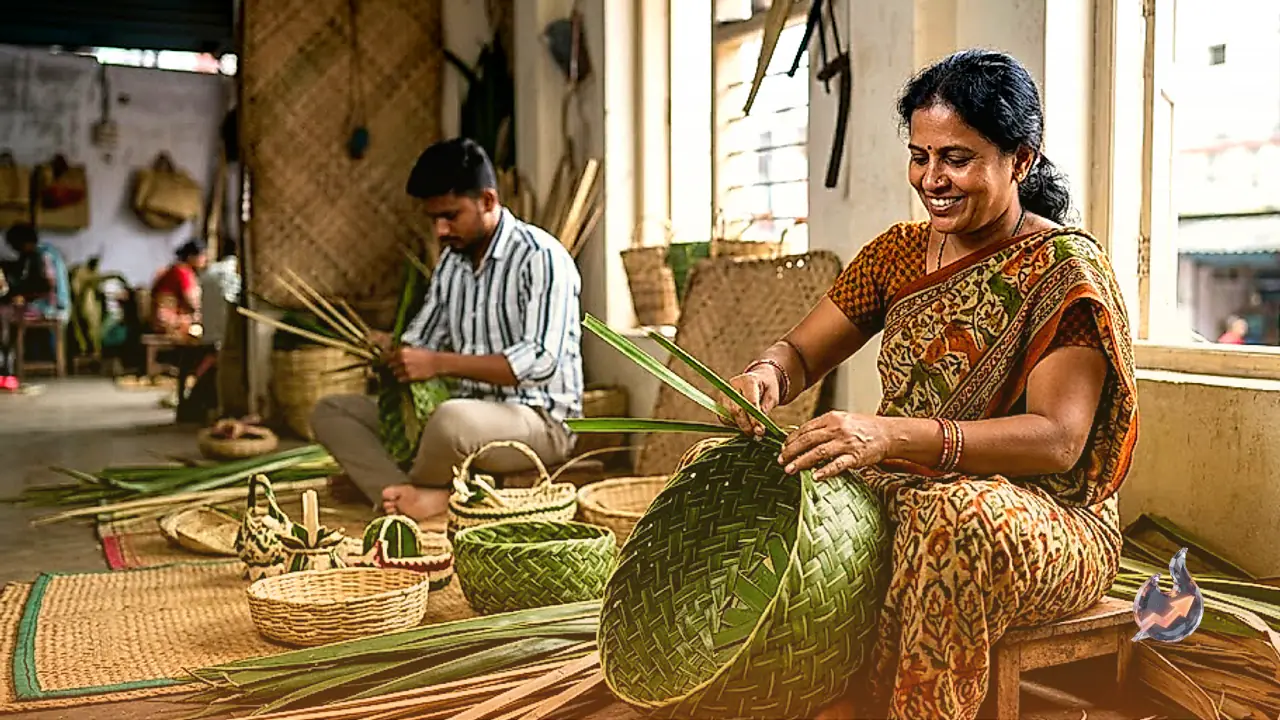

Amid the fast-paced modern life of Hyderabad in Telangana, a traditional handicraft thrives in the alleys surrounding the Exhibition Grounds in Goshamahal, located in the Old City area. Families originally from Visakhapatnam in Andhra Pradesh sit along the roadside to showcase their weaving craft. Using fresh green coconut leaves and slender bamboo strips, these artisans fashion durable mats, decorative pieces, traditional items, and intricate baskets. Living in Hyderabad for the past 15 years, these families rely entirely on coconut leaves and their crafting heritage to secure their daily livelihood.
A 15-Year Journey Built on Family Collaboration
For these artisan households, leaf weaving is the sole financial support for their families. Elders, women, and the younger generation participate together in the craft from dawn until dusk. The process involves peeling raw leaves, trimming them with care, and weaving them into defined shapes. Utilizing traditional tools and refined technique, the craftsmen transform basic natural leaves into sturdy and artistic utility items.
Time and Skill Required for Handcrafted Products
According to the weavers, fashioning a simple item or a small basket requires approximately two to three hours of focused labor. Conversely, crafting complex decorative structures or fulfilling large event orders demands an entire day of continuous work. The precision of their hands and reliance on age-old implements ensure that the final creations display exceptional craftsmanship and structural strength.
Sustaining Natural Art Against Plastic Competition
Despite the rapid rise of plastic and thermocol decorations in modern weddings, festivals, and corporate events, the artisans remain steadfast in their pursuit. They maintain that decorations crafted from natural leaves offer an authentic charm and vitality that synthetic materials cannot match. During religious rituals, worship, and auspicious functions, consumers continue to favor natural, eco-friendly objects. Even with limited resources and rigorous physical labor, the weavers take pride in their work. Supporting such local craftsmanship strengthens environmental preservation and reinforces efforts toward a plastic-free society.