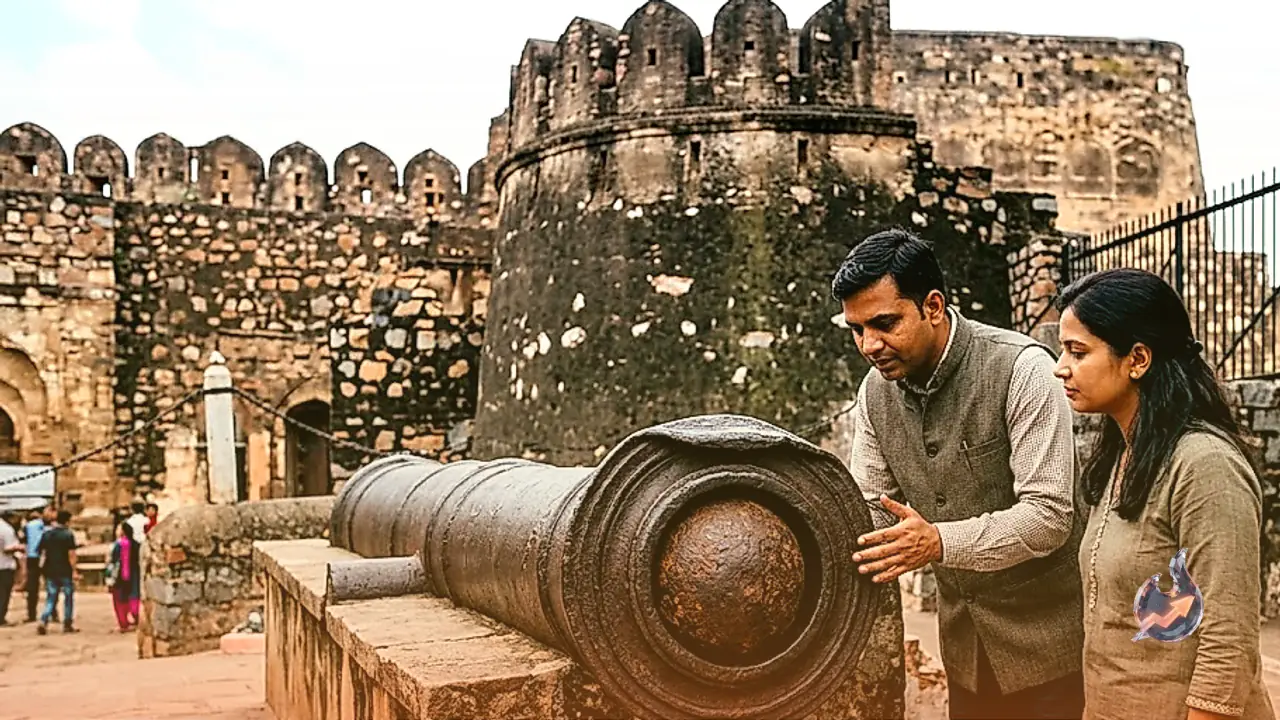
























The historical city of Bareilly in Uttar Pradesh holds a deep colonial legacy that traces back to the early nineteenth century. Established in 1811, the Bareilly Cantonment grew into a pivotal strategic stronghold for the British military. Over two centuries later, this sprawling cantonment area continues to preserve the architecture, garrison life, and fierce conflicts that defined the British Raj in northern India.
The Origin of Lal Kurti and BI Bazaar
When the British authorities established Bareilly Cantonment, they constructed extensive infrastructure to support their armed forces. The complex included spacious bungalows, officer messes, administrative headquarters, and recreational facilities such as the Bareilly Club. Among the most prominent commercial areas formed during this period was the Lal Kurti Bazaar, now widely known as the BI Bazaar. The market earned its historic name from the striking red coats worn by British soldiers during military parades in the area, leading locals to call the neighbourhood Lal Kurti.
Colonial Architecture and Sacred Landmarks
The architectural footprint of the colonial era remains clearly visible across Bareilly's Cantonment and Civil Lines areas. Senior historian Dr. Rajesh Kumar Sharma noted that the era saw the construction of several prominent Christian places of worship to serve the British community. Structures like the Baptist Church, Methodist Church, St. Stephen's Church, and the Free Will Baptist Church stand as lasting examples of nineteenth-century church architecture. Additionally, heritage landmarks such as Biabani Kothi and the historic main building of Bareilly College reflect the administrative and structural aesthetics of the period.
Role in the 1857 Revolt and Khan Bahadur Khan
Beyond its role as a peacetime garrison, Bareilly Cantonment was a central theater during the Indian Rebellion of 1857. Rohilla leader Khan Bahadur Khan spearheaded an armed uprising against British rule in the region, successfully liberating Bareilly from colonial control for a temporary period. However, British forces eventually launched a counteroffensive to regain command of the town. Khan Bahadur Khan was subsequently captured by the colonial administration and executed by hanging at the old Kotwali police station.
The Historic Cemetery and Nakatiya Battle Legacy
Another crucial link to Bareilly's colonial past is its historical cemetery. British officers and soldiers who lost their lives during the violent clashes of the 1857 Revolt, including the Battle of Nakatiya, were laid to rest in this graveyard. Today, the weathered tombstones serve as silent witnesses to the military engagements of that era. The shaded avenues, heritage bungalows, quiet churches, and old graves of Bareilly Cantonment remain enduring reminders of a bygone epoch.