























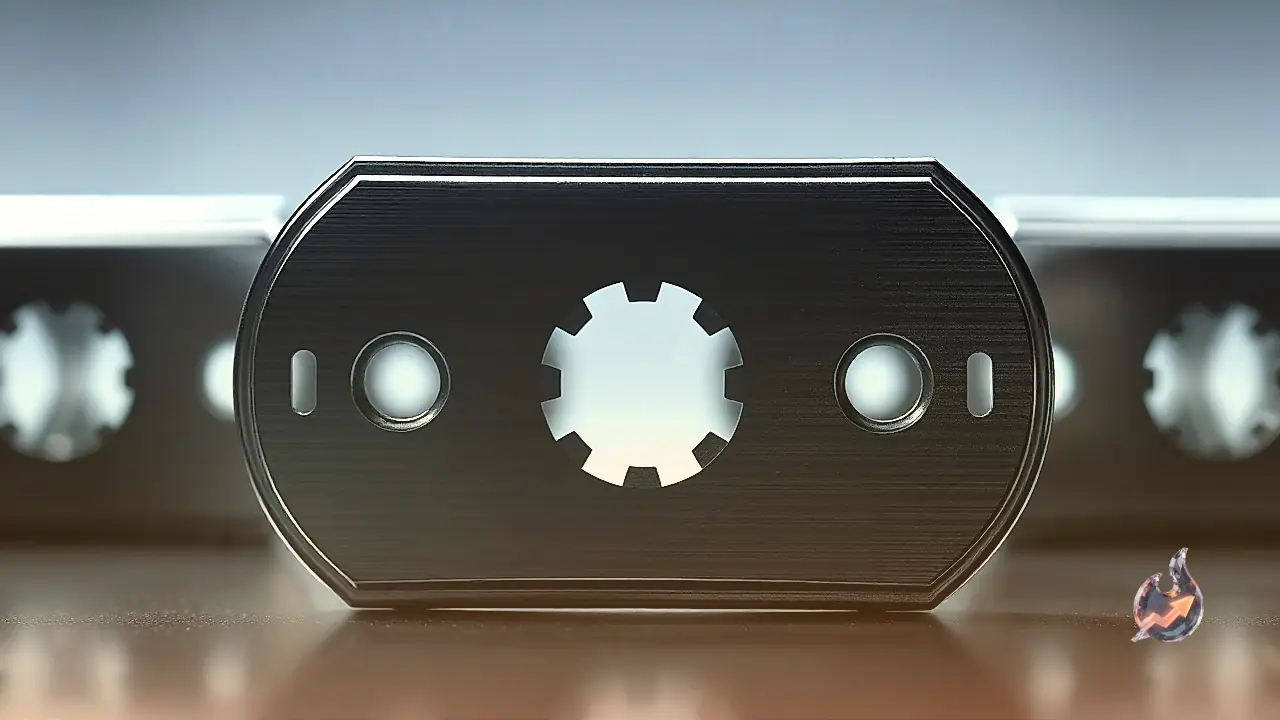

Anyone inspecting a traditional double-edge safety razor blade will instantly notice a series of precise holes, narrow slots, and distinct geometry carved directly through its center. While blades produced by different manufacturers come in varied packaging and steel grades, their central internal cutout remains strikingly uniform across the globe. To a casual observer, this may appear to be a purely cosmetic styling choice or a simple brand distinction. In reality, this geometric pattern is the outcome of a functional engineering standard designed to ensure safety, alignment, and mechanical stability during shaving.
Mechanical Alignment and Locking Mechanics
The primary function of the center cutout revolves around the mounting and clamping assembly of a double-edge safety razor. These razors consist of a handle, a base plate, and a top cap that sandwich the thin metal blade. The inner assembly of the razor head features raised alignment pins, studs, or a central ridge specifically sculpted to match the slots on the blade. When the top and bottom plates are screwed down or clamped together, these internal guides pass through the blade slots, locking it firmly into place. Without this interlocking geometry, the razor blade could easily shift or rotate under force. Even a tiny movement during a stroke could cause severe skin nicks, razor burn, or deep cuts, making exact alignment critical for personal safety.
Global Standardization and Cross-Brand Compatibility
The reason virtually all manufacturers produce blades with the exact same central pattern comes down to global industrial standardization. Decades ago, razor makers adopted a universal mounting system so that blades and handles from different brands could be used interchangeably. Because of this standardized design, consumers are not locked into buying blades from the manufacturer that built their razor handle. A blade manufactured by one company will fit seamlessly into a razor produced by a completely different brand anywhere in the world. This universal compatibility protects consumer choice and keeps the safety razor ecosystem open and accessible.
Handling Mechanics and Structural Equilibrium
Beyond blade retention and alignment, the central cutouts also assist in safe handling during blade changes. By removing excess metal from the non-cutting core, the design shifts the structural emphasis to the outer edges while maintaining overall balance. When inserting or extracting a fresh blade, the inner pattern helps guide the user to grip only the short, non-sharp outer borders. Given how sharp double-edge razors are on both long edges, having a clear center structure makes manual positioning safer and more predictable, though careful handling remains essential at all times.
Distinct Cutouts in Cartridge and Disposable Systems
It is worth noting that this uniform central pattern is specific to double-edge safety razor blades. Modern cartridge razors, multi-blade systems, and single-use disposable razors feature entirely different mounting mechanisms. Cartridge systems use proprietary plastic housings and snap-fit connectors engineered specifically by individual manufacturers to fit only their dedicated handles. Traditional safety blades, however, continue to rely on the classic central cutout system, standing as a testament to practical engineering that has remained effective for generations.