






















Filmmaker Rituparno Ghosh carved out a distinct space in cinema by exploring the delicate layers and hidden complexities of human relationships that mainstream narratives often overlooked. His characters grappled with loneliness, love, emotional confusion, and the constant search for meaning in everyday life. Throughout an illustrious career, he collaborated with numerous prominent actors, shaping each performance with unique sensitivity. Yet, despite his widespread critical acclaim and artistic milestones, one major ambition slipped through his fingers, remaining an unfulfilled dream.
Early Life, Background, and Advertising Roots
Born on August 31, 1963, in Kolkata, Rituparno Ghosh was immersed in a creative environment from an early age. His father, Sunil Ghosh, worked as a documentary filmmaker and painter, fostering young Rituparno's early fascination with literature and cinema. Instead of pursuing formal film education, he earned a degree in economics from Jadavpur University. Following his studies, he spent nearly a decade working in the advertising industry as a copywriter. This extensive background taught him the art of conveying profound narratives concisely, a skill that later defined his distinct cinematic language and his careful attention to minute emotional nuances.
Rise to Prominence and National Recognition
His directorial debut was the children's film 'Hirer Angti', but his breakthrough moment arrived with the 1994 release 'Unishe April'. Focusing on the intricate dynamics between a mother and daughter, the film deeply moved audiences and earned the National Film Award for Best Feature Film, instantly establishing him as a major force in Bengali cinema. Following this success, he directed a string of critically acclaimed features including 'Dahan', 'Bariwali', 'Utsab', 'Tithli', 'Shubho Mahurat', 'Chokher Bali', 'Dosar', and 'Abohomaan'. He earned widespread renown for his ability to portray complex female characters with psychological depth and realism.
Venturing into Hindi Cinema and Working with Top Stars
Rituparno Ghosh eventually expanded his creative footprint into Hindi and English-language cinema. After collaborating with Aishwarya Rai in 'Chokher Bali', he directed the Hindi film 'Raincoat', which starred Aishwarya Rai and Ajay Devgn. Later, he helmed the English-language film 'The Last Lear', featuring Amitabh Bachchan, Preity Zinta, and Arjun Rampal. While his projects frequently featured major mainstream stars, the narrative and character development always remained at the absolute forefront of his artistic vision rather than commercial star power.
The Unfulfilled Dream Involving Madhuri Dixit
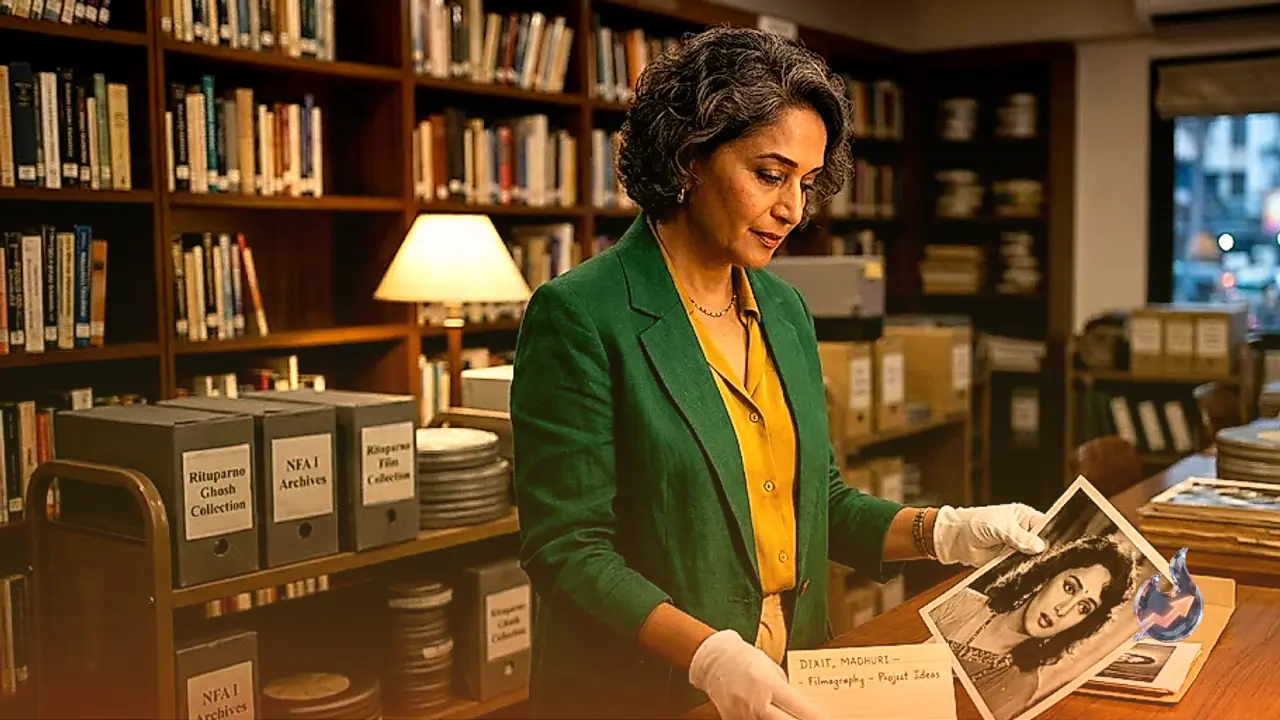
During this active phase of his career, Rituparno Ghosh harbored a strong desire to direct Bollywood icon Madhuri Dixit. He openly expressed this aspiration in interviews, noting that he viewed Madhuri not merely as a major commercial star, but as an exceptionally talented actress capable of channeling deep emotional range onto the screen. He envisioned crafting a narrative that would showcase her in an entirely unconventional, serious dramatic light. However, time constraints and changing circumstances prevented the collaboration from ever materializing, leaving it as one of the significant unrealized chapters of his life.
A Legacy of 12 National Awards and Lasting Impact
Rituparno Ghosh's artistic contributions extended far beyond traditional directing, as he also acted in films and hosted television programs. His movie 'Chitrangada' stands out as one of his most deeply personal projects, where he took on a starring role and placed gender identity at the center of the narrative. Over the course of his career, he amassed 12 National Film Awards, earning accolades both domestically and internationally. Instead of massive action sequences or lavish sets, he prioritized human emotions and interpersonal bonds, leaving behind a timeless cinematic legacy before passing away in Kolkata on May 30, 2013, at the age of 49.