
















While modern Vatican communication regarding papal well-being has advanced far beyond the strict confidentiality of earlier generations, the Catholic faithful were still caught completely off guard by the revelation of Pope Leo XIV's lung cancer and the subsequent surgical excision of a substantial portion of his lung. Even with the Pontiff's prior disclosure on Sunday concerning the medical discovery of an internal nodule, the sheer gravity and swiftness of the surgical intervention arrived as a major shock to the global Church.
A significant reason for the widespread astonishment stems from the fact that virtually no outward indicators had suggested any impending health perils for the pontiff. Belonging to the Order of St Augustine, a tradition deeply anchored in the development of disciplined personal practices, Pope Leo XIV has consistently placed immense value on sustaining robust habits, particularly around physical fitness and vitality. His disciplined regimen has routinely included weekly games of tennis, projecting an image of enduring vigor that seemed distant from sudden medical emergencies.
Surgical Recovery and Everyday Routine Adjustments
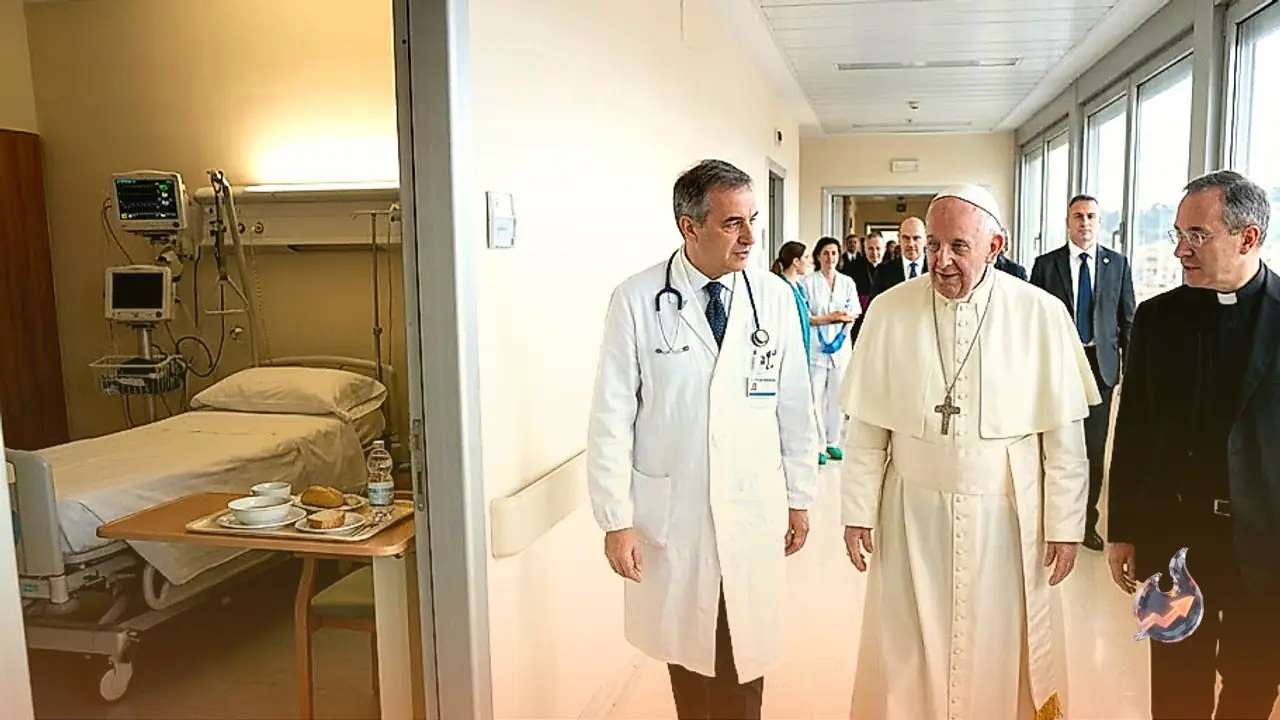
Following the major medical procedure, Pope Leo XIV is slated to spend approximately one week recovering under close observation at Rome's Gemelli Hospital. Nevertheless, with sparse information available concerning his precise prognosis or the follow-up therapeutic treatments that may be required, extensive uncertainty surrounds how his daily administrative and liturgical schedule will need to adjust, as well as how extended those modifications might be.
The physical realities of post-operative healing present immediate logistical challenges, particularly regarding high-altitude exposure and the physiological pressures of extended aviation shortly after pulmonary surgery. These clinical hazards cast substantial ambiguity over his scheduled November voyage across South America. The itinerary holds immense personal significance, featuring a planned stop in Peru, a nation Pope Leo XIV regarded as home during more than two decades of dedicated service. The high elevation characterizing several scheduled South American destinations introduces further medical complexity for someone recuperating from the removal of pulmonary tissue.
Reflections on Papal Momentum and Predecessors
The current situation inevitably draws comparisons to the previous pontificate. His predecessor, Francis, previously reflected on having inaugurated his papacy under the personal presumption that he might only possess a handful of years in office, having contended with numerous physical complications throughout his life. Propelled by that acute awareness of temporal limitation, Francis resolved to enact swift shifts, pursuing institutional transformations that many regarded as distinctly accelerated and radical.
By contrast, Pope Leo XIV commenced his tenure in a remarkably measured, deliberate manner, yet he steadily expanded into a formidable, principled, and deeply empathetic moral figure on the international stage. In a relatively brief window, he achieved an outcome that numerous Catholics previously regarded as nearly unachievable: bridging deep chasms across divergent wings of an increasingly fragmented institution. Notably, both progressive thinkers and traditionalist adherents have frequently characterized his leadership as an authentic reflection of their own core convictions.
Deliberate Governance Versus the Urgency for Reform
Despite the initial success of the surgical operation, the absence of an exhaustive road map for his ongoing convalescence has triggered intense discussions regarding his future pace of governance. Observers are questioning whether the sudden encounter with serious illness might prompt Pope Leo XIV to accelerate the rollout of crucial institutional updates he deems essential for the Church.
Conversely, abrupt structural pivots or sweeping shifts in core doctrine would stand in stark contradiction to his established character. Over the span of nearly a year and a half in office, he has distinguished himself as a patient, deeply reflective, and discerning leader steadfastly committed to institutional continuity and institutional peace. How he recalibrates his vision while managing his recovery will remain the central focus for the Vatican in the weeks ahead.