





















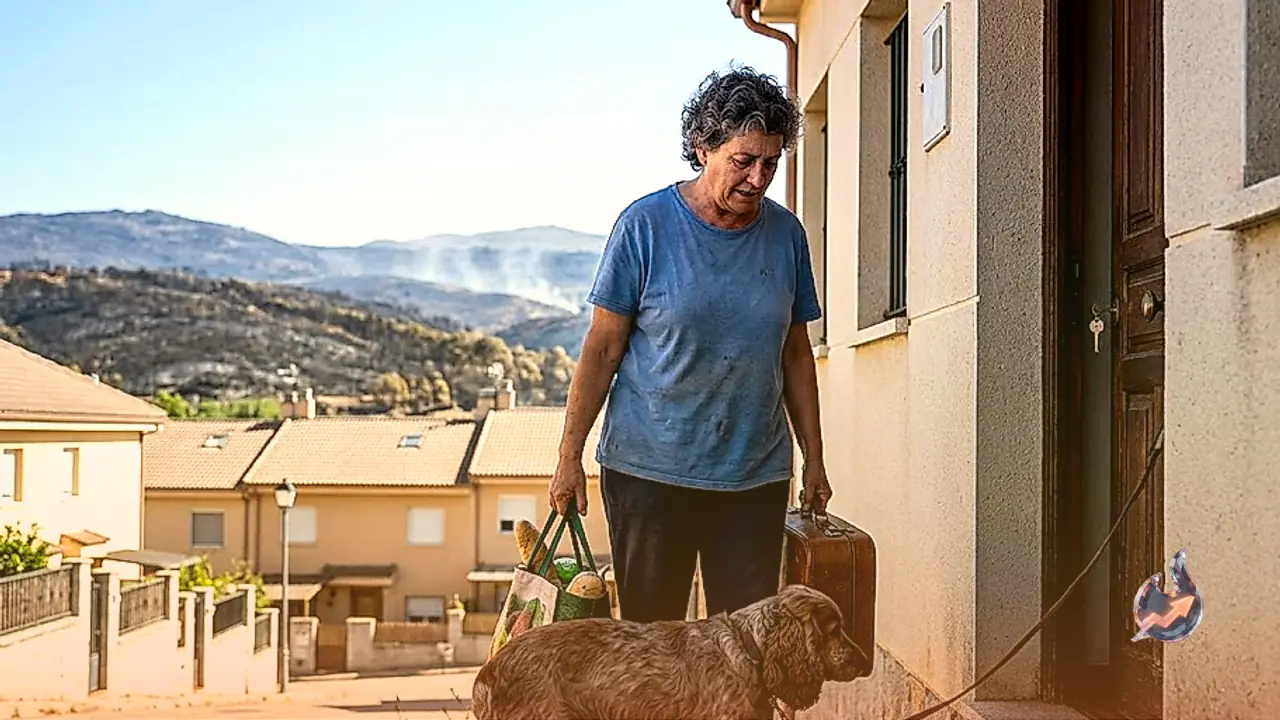

Thousands of residents displaced by fierce wildfires in Spain have received permission to return home after authorities relaxed safety restrictions across Toledo, Madrid, Ávila, and Castellón. However, official celebrations remain cautious as Western Europe prepares for its fourth major heatwave of the summer season. Forecasters warn that a dangerous combination of escalating temperatures, plunging humidity levels, and dry gusts could easily reignite fires that firefighters have spent days battling to contain.
Extensive Evacuations and Historic Destruction in Spain
The return process in the Madrid region saw 24,000 residents allowed back into their properties, while movement lockdowns covering an additional 20,000 citizens were formally removed. Despite these positive developments, emergency teams remain on high alert as several active blazes continue to burn, including a major wildfire at Burgohondo, located 150 kilometers (93 miles) west of the Spanish capital.
The fire centered in the Burgohondo area of Ávila province has already laid waste to more than 43,000 hectares (108,000 acres), establishing it as the largest wildfire ever recorded in Spain's history. The relentless inferno forced roughly 40,000 people to flee their homes. Francisco Bolaños, a key member of the operational firefighting management team, indicated that while the flames did not advance during the night, rising daytime heat poses a serious risk of new spot fires. Operational focus remains anchored on securing and stabilizing a perimeter stretching 180 kilometers (112 miles).
Spanish Prime Minister Pedro Sánchez stated that the next 12 hours would be decisive in controlling the active perimeter near Madrid. He noted that containment efforts were progressing favorably, though emergency crews are exercising maximum caution given the forecast of soaring temperatures, low moisture levels, and gusty winds. Meanwhile, further east, a major wildfire near Vall d'Uixó, northwest of Valencia, continues to burn outside of official control.
Human Cost and Relief Efforts for Displaced Families
The wildfire outbreak forced around 2,000 people from their homes in the nearby Tiétar Valley. Many of these evacuees were sheltered in the town of Talavera de la Reina, located south of the active fire zone, where local volunteers organized food and temporary housing. By Wednesday morning, approximately 300 displaced individuals remained at municipal care centers. Talavera de la Reina Mayor José Julián Gregorio confirmed that evacuees would continue receiving comprehensive support for as long as necessary.
While no deaths have occurred in the fires immediately surrounding Madrid or along the coast near Castellón, authorities in Seville reported that a woman severely burned during the Los Gallardos fire in Almería earlier this month passed away from her injuries in the hospital. Her death brings the total fatality count from the Almería wildfire crisis to 14. Victims of that outbreak included nationals from the United Kingdom, Belgium, the United States, France, and Spain.
France Protects Defense Infrastructure Amid Rising Heat
In southwestern France, emergency services in the Gironde region report that major forest fires remain stabilized, though frequent flare-ups are keeping firefighters on edge. Weather agencies have warned that temperatures could reach 41C (106F), accompanied by drying wind patterns. A total of 16 departments across France have been placed under orange heatwave alerts, including the Landes district further south.
Blandine Sarrazin, Mayor of Le Barp, located southwest of Bordeaux, warned that emergency operations were growing increasingly difficult following the sudden outbreak of two new fires. She urged all residents and visitors to practice extreme vigilance. In response to the threat, French fire services deployed specialized protection measures around classified Seveso industrial sites in Gironde. These strategic facilities house defense and aerospace operations that manufacture hazardous components for rockets and military missiles. Amid the defensive efforts, local officials in Le Porge noted a bright spot when animal rescue volunteers successfully pulled a young roe deer unharmed from the fire zone.
Fires Igniting in Portugal and Mainland Greece
The wildfire emergency continues to affect multiple nations across the Mediterranean region. In northeastern Portugal, firefighters in the Vila Real district are fighting an active one-kilometer fire front. Civil protection crews are maintaining a constant watch around critical public infrastructure near Valpaços, including a regional water treatment facility and a natural gas depot.
Simultaneously, wildland fires have broken out in Greece. Emergency crews have been dispatched to tackle blazes on the Aegean island of Paros as well as near the mainland town of Trifylia in the southern region, where dry terrain and hot winds threaten local vegetation.