























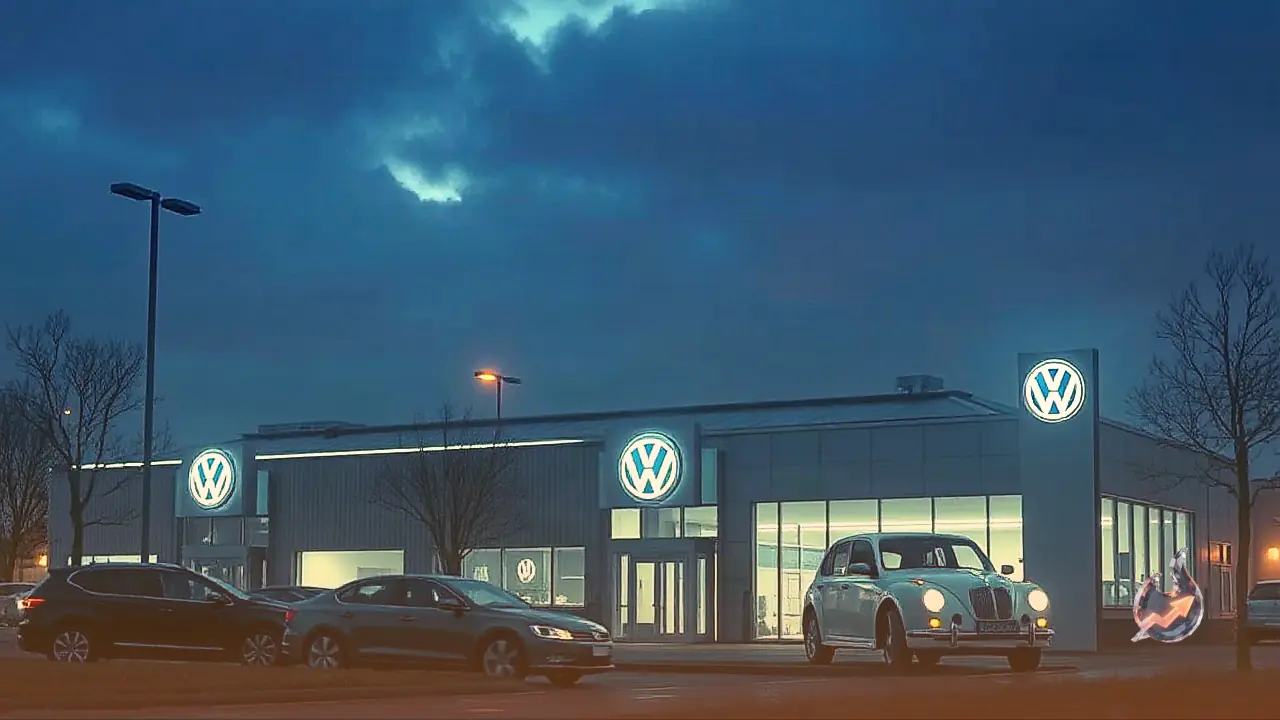

The governing board of German automotive titan Volkswagen has officially endorsed a sweeping restructuring blueprint that involves eliminating an additional 50,000 jobs. This major decision elevates the total number of positions the enterprise intends to shed by 2030 to a staggering 100,000 roles.
Strategic Turnaround and Model Reductions
Chief Executive Officer Oliver Blume described the move in a statement on Thursday as a robust signal for the future, emphasizing that the organization assumes full responsibility for its entire workforce. The manufacturer behind the iconic Golf has suffered from slumping profits driven by declining sales volumes and intense competition, most notably from rival Chinese automakers.
As part of the turnaround strategy, Volkswagen announced plans to slash its total vehicle model offerings by 50 percent and reduce production complexity by 75 percent by the year 2035. The firm intends to prioritize its most compelling vehicles and ramp up production volume for each individual model to help drive down operational costs.
Workforce Adjustments and Plant Evaluations
Company representatives noted that a fundamental adjustment of the global workforce capability, including management positions, has become necessary to safeguard long-term competitiveness amidst shifting consumer demands and rapid technological disruption. Furthermore, Volkswagen is evaluating the future viability of its production facilities located in Emden, Zwickau, Hanover, and Neckarsulm, where current manufacturing capacity exceeds market demand. Alternative uses for these specific plants are actively under review.
This organizational overhaul represents the largest restructuring effort in the nearly nine-decade history of the company. As of 2025, Volkswagen sustained a global workforce exceeding 660,000 employees, with a brand portfolio that also encompasses Seat, Bentley, and Lamborghini. Christianne Benner, president of Europe's largest industrial union IG Metall and deputy chair of the Volkswagen Supervisory Board, noted that the automaker has fought hard to formulate constructive solutions to address an ongoing crisis situation.
Global Market Pressures and Overseas Competition
Volkswagen's financial earnings have experienced a sharp contraction in recent years, heavily impacted by dwindling sales inside China, which historically served as one of the company's most lucrative core markets. Sales have similarly contracted within the United States, exacerbated in part by the economic fallout from vehicle import tariffs implemented during the administration of President Donald Trump.
Concurrently, Chinese automotive firms have expanded their global footprint aggressively by introducing advanced technologies while capitalizing on significantly lower manufacturing overhead compared to their traditional Western competitors. Over recent years, enterprises such as BYD have witnessed dramatic sales surges across multiple key territories, including the United Kingdom, the European Union, and Southeast Asia.