














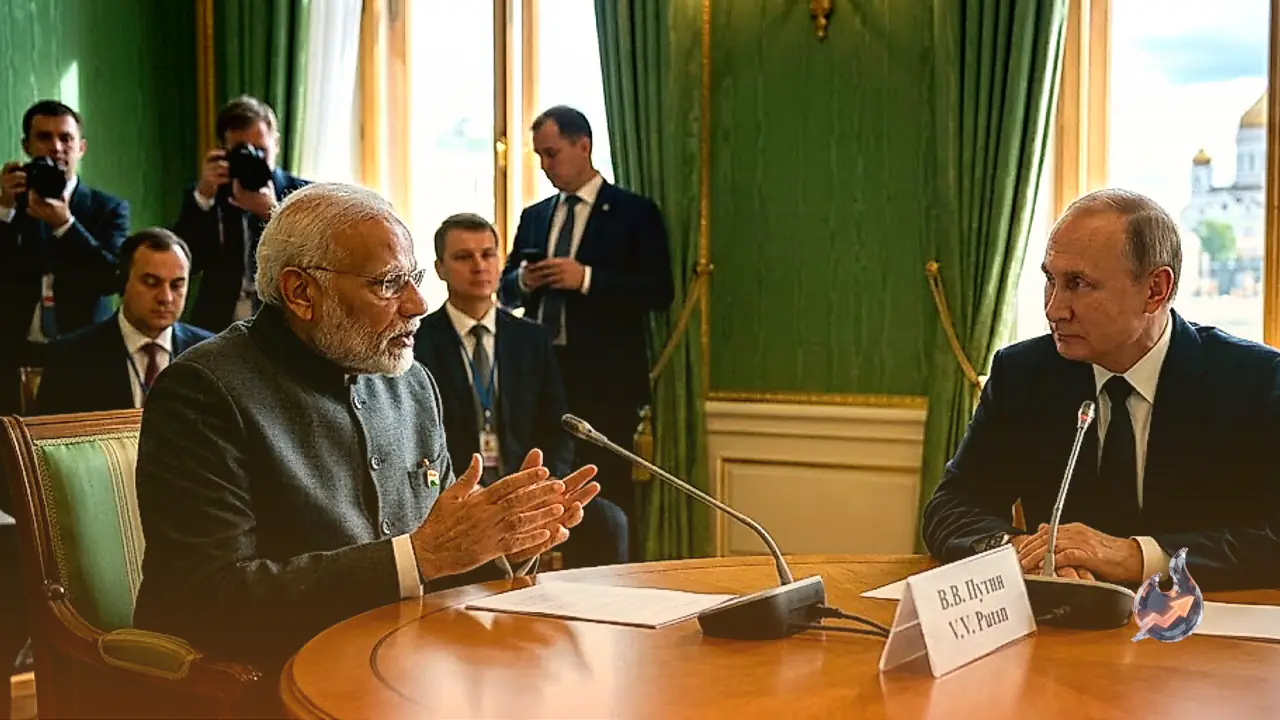

Indian Prime Minister Narendra Modi has renewed his direct appeal to Russian President Vladimir Putin to bring an immediate end to the ongoing military conflict in Ukraine. Speaking on Monday, Modi emphasized that every single day spent in active warfare pushes humanity backward, whereas every step toward peace fills society with fresh hope and enthusiasm. While India's domestic economy relies heavily on discounted crude oil imported from Moscow, Modi has repeatedly pressed Putin for a peaceful resolution ever since the full-scale invasion of Ukraine began in 2022.
Strategic Autonomy and Long-Standing Ties
Modi's latest remarks do not represent a sudden tactical shift in foreign policy, nor are they intended to appease any third-party Western government. Western nations have persistently pressured New Delhi to take a firm and explicit stance against the Kremlin's military strategy, yet India has steadfastly maintained its policy of strategic neutrality, consistently advocating for diplomatic dialogue. Despite Western reservations, major global economies continue to court New Delhi because of its sheer market size and rapid economic growth. The diplomatic outreach is deeply rooted in decades of robust bilateral partnership between Moscow and New Delhi, which have successfully navigated complex geopolitical differences over generations.
India remains a foundational member of the BRICS economic bloc alongside Russia and China, and participates actively in the Shanghai Cooperation Organisation. At the same time, New Delhi is an active partner in the Quad security dialogue alongside the United States, Japan, and Australia, an association that has occasionally drawn uneven responses from Moscow. Despite these competing alignments, Russia continues to supply approximately 40 percent of India's defense imports while serving as a reliable pillar for the nation's energy security. Consequently, analysts point out that Modi's public peace appeal will not rupture bilateral ties, nor was it likely to catch Russian diplomats off guard.
The Kremlin's Stance and Ongoing Hostilities
In response to Modi's call for a cessation of hostilities, Russian President Vladimir Putin acknowledged the statement by expressing gratitude and noting that Moscow is moving forward along its designated path. However, international observers emphasize that such diplomatic pleas have done little to alter the Kremlin's fundamental military calculations. The Russian leadership remains thoroughly convinced that its forces are advancing steadily toward a decisive military outcome in Ukraine, intending to secure peace strictly on terms dictated by battlefield success.
As a result, the armed conflict persists relentlessly after more than four and a half years of heavy combat and staggering casualties on both fronts. Ukraine has increasingly brought the war directly to Russian territory through long-range drone strikes targeting domestic oil refineries, which have subsequently triggered fuel shortages and lengthy motorist queues across various Russian regions. Meanwhile, recent overnight missile bombardments striking the town of Boryspil outside Kyiv resulted in four fatalities. Citing recent coverage in the Kommersant newspaper, Russian authorities remain firm in their belief that time favors Moscow in this prolonged war of attrition, making a voluntary military pause unlikely in the near term.