



















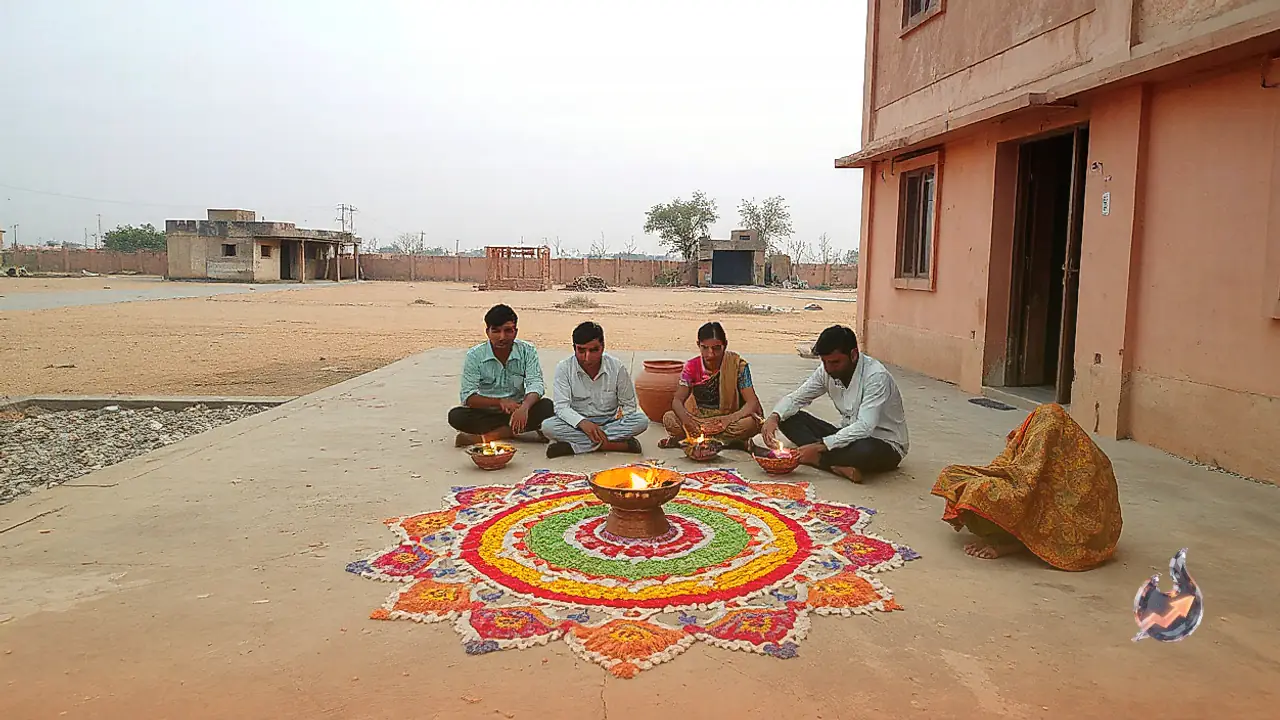

Decorating courtyards and entrances with intricate rangoli patterns is a cherished Diwali tradition. While most households rely on synthetic, chemical-heavy colors purchased from local markets, Home Science students at PG College in Ghazipur have introduced a sustainable and economical alternative. The students designed eye-catching rangolis using everyday kitchen groceries and natural materials, keeping the total expenditure remarkably low between 50 and 100 rupees per design.
Kitchen Essentials and Simple Tools for Intricate Designs
The students utilized basic household ingredients such as wheat flour, refined flour (maida), and semolina (suji) to craft their festive patterns. Ishika, one of the students involved, emphasized that purchasing synthetic dyes every season is unnecessary when household supplies can yield equally stunning results at a fraction of the cost. Explaining the step-by-step creation process, Khushi shared that sketching a light outline with chalk on the floor helps maintain geometric proportions. Once the outline is set, household items like spoons and sieves can be used to fill in fine details evenly. Spoons are particularly handy for shaping elements like oil lamps (diyas) or floral curves. Depending on practice and design size, a complete rangoli can be finished in about an hour.
Benefits and Precautions of Using Lime
For vibrant white backgrounds and crisp outlines, the team incorporated standard quicklime. According to Khushi, an average-sized rangoli requires approximately 1 kilogram of lime. Beyond its visual contrast, using lime offers practical domestic benefits by acting as a natural repellent against insects and pests around the home. However, safety precautions are essential when working with lime. Users should ensure it remains out of reach of young children and household pets, and prevent direct contact with the eyes or skin to avoid potential irritation.
Fresh Flowers and Fine Sand for Quick Setup
Promoting completely natural decor, student Samia Parveen designed rangolis using fresh marigold flowers. She noted that between half a kilogram to one kilogram of marigold flowers is sufficient for a medium-sized setup. A major advantage of floral rangolis is their quick assembly, taking roughly 30 minutes on Diwali day. Meanwhile, student Anu demonstrated the use of fine white sand, which can be blended with small amounts of color to generate varied textures and patterns. She added that even half a kilogram of flowers can easily yield a compact, elegant layout for tight spaces.
Advocating Chemical-Free Celebrations
The underlying goal of this student initiative was to encourage non-toxic, eco-conscious celebrations. Student Naz Iqbal spent two to three days preparing for the project to demonstrate practical methods for avoiding chemical dyes. The group members noted that they have been practicing rangoli making for the past 5 to 6 years. By combining their experience, they successfully showed how everyday domestic items can replace market-bought synthetic materials without compromising on traditional festive aesthetics.