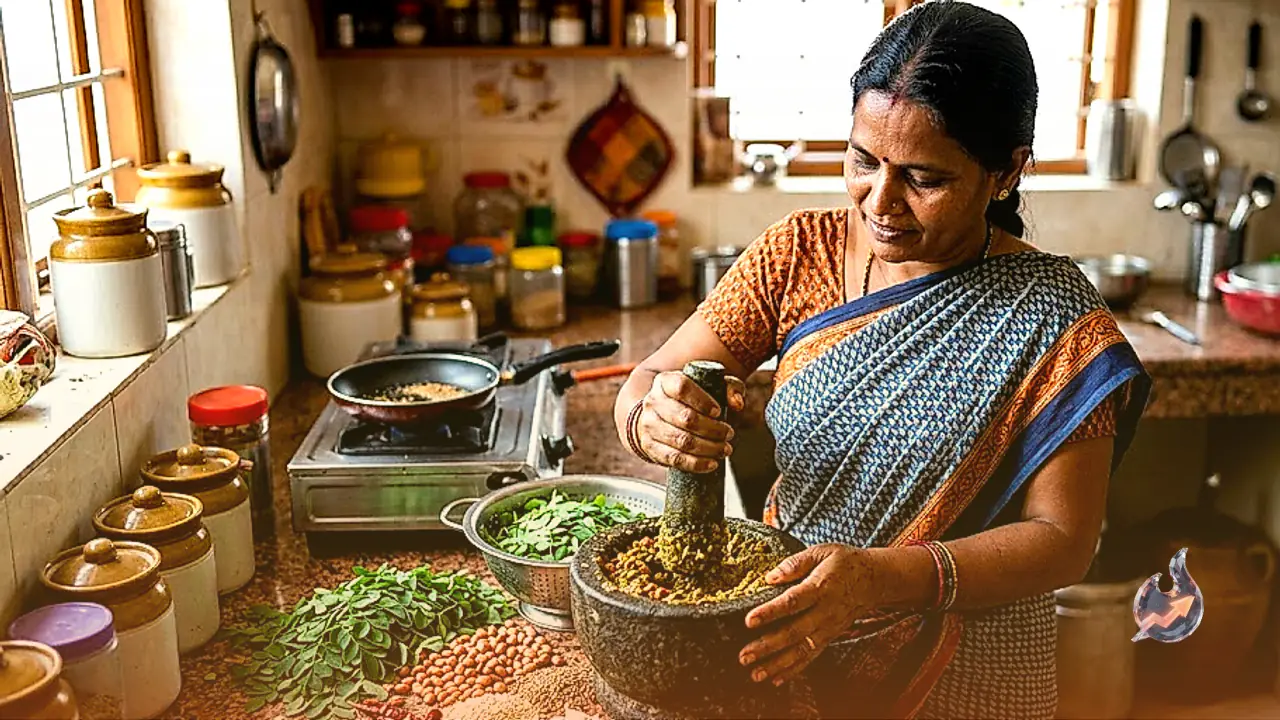























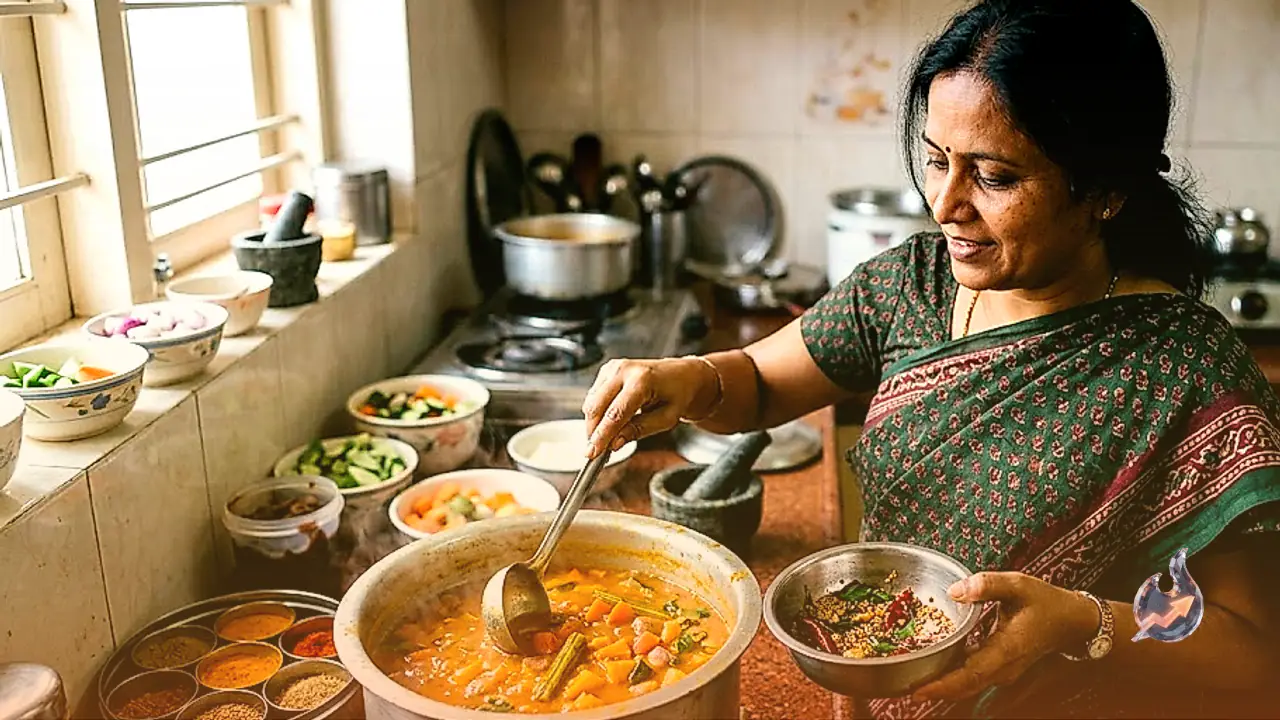

South Indian dining remains incomplete without the distinct aroma of idli, dosa, or crispy medu vada, yet the real soul of these dishes lies in a steaming bowl of delicious sambar. Many home cooks often wonder why their homemade broth lacks the rich depth, pungent aroma, and signature tanginess commonly served in traditional eateries and restaurants. The good news is that replicating that authentic taste does not demand exotic ingredients or tedious effort. With ordinary kitchen pantry staples, lentils, and fresh produce handled with correct timing, you can easily prepare an exceptional restaurant grade sambar right in your own kitchen.
Essential Ingredients And Preparation
Achieving a balanced texture and full-bodied aroma starts with assembling the correct quantity of ingredients. The recipe calls for approximately one cup of toor dal. For the vegetable mix, gather one sliced onion, one diced tomato, one chopped carrot, a modest portion of pumpkin, one chopped eggplant, and a few slit green chillies. The seasoning kit requires quality sambar masala powder, turmeric powder, red chilli powder, salt, and prepared tamarind water. A small piece of jaggery can also be included if you prefer that gentle sweet and sour undertone typical of popular restaurants. For the final crackling tempering, keep mustard seeds, fresh curry leaves, whole dried red chillies, aromatic asafoetida, and cooking oil or pure ghee ready.
Cooking And Whisking The Lentils
The cooking sequence begins by preparing the pulse. Rinse the toor dal thoroughly in water multiple times to clear away excess starch, then transfer it into a pressure cooker. Pour in about two and a half to three cups of fresh water, adding a dash of turmeric and a measured pinch of salt. Cook under pressure until the lentils turn completely tender and soft enough to crush effortlessly between your fingers. Once the steam naturally settles, open the lid, allow the boiled dal to cool down slightly, and beat it vigorously with a whisk or ladle to form an ultra smooth, velvety base.
Simmering Fresh Vegetables With Seasoning
In a separate wide pot, assemble the chopped carrots, pumpkin cubes, eggplant pieces, onions, tomatoes, and green chillies. Add a moderate quantity of water along with turmeric and a sprinkle of salt, placing the pot over a steady flame to simmer. It is crucial not to overcook the vegetables into mush; they must remain gently tender while maintaining their distinct form and texture so their individual flavors shine through. Once cooked to the desired tenderness, blend in the sambar masala powder and red chilli powder. Pour in the pre-whisked dal base and stir everything together into a uniform mixture.
Infusing Tamarind And Slow Simmering
Once the base is combined, stir in the tamarind water, which imparts the unmistakable bold tartness characteristic of authentic sambar. For those who enjoy the mild sweetness that balances the heat in restaurant renditions, drop in a small amount of jaggery, which remains an optional addition. Bring the flame to low and let the entire pot simmer gently for approximately 8 to 10 minutes, stirring periodically to prevent any scorching at the base. If the consistency appears too dense at this stage, pour in a splash of warm water to adjust the broth to your preferred soup-like thickness.
The Aromatic Tempering And Serving
The defining crescendo of any great sambar is its aromatic tadka. Heat a spoonful of oil or fragrant ghee inside a small seasoning pan. Scatter in the mustard seeds and allow them to crackle and pop vigorously. Follow immediately by tossing in the whole dried red chillies, fresh curry leaves, and a generous pinch of asafoetida. Pour this sizzling, smoking tempering straight into the bubbling sambar and cover the vessel briefly with a lid so the fragrant oils infuse deeply throughout the liquid. Give it a gentle final stir, and your delectable restaurant style sambar is ready to be enjoyed alongside hot idlis, crispy dosas, crunchy vadas, or plain steamed rice.