






















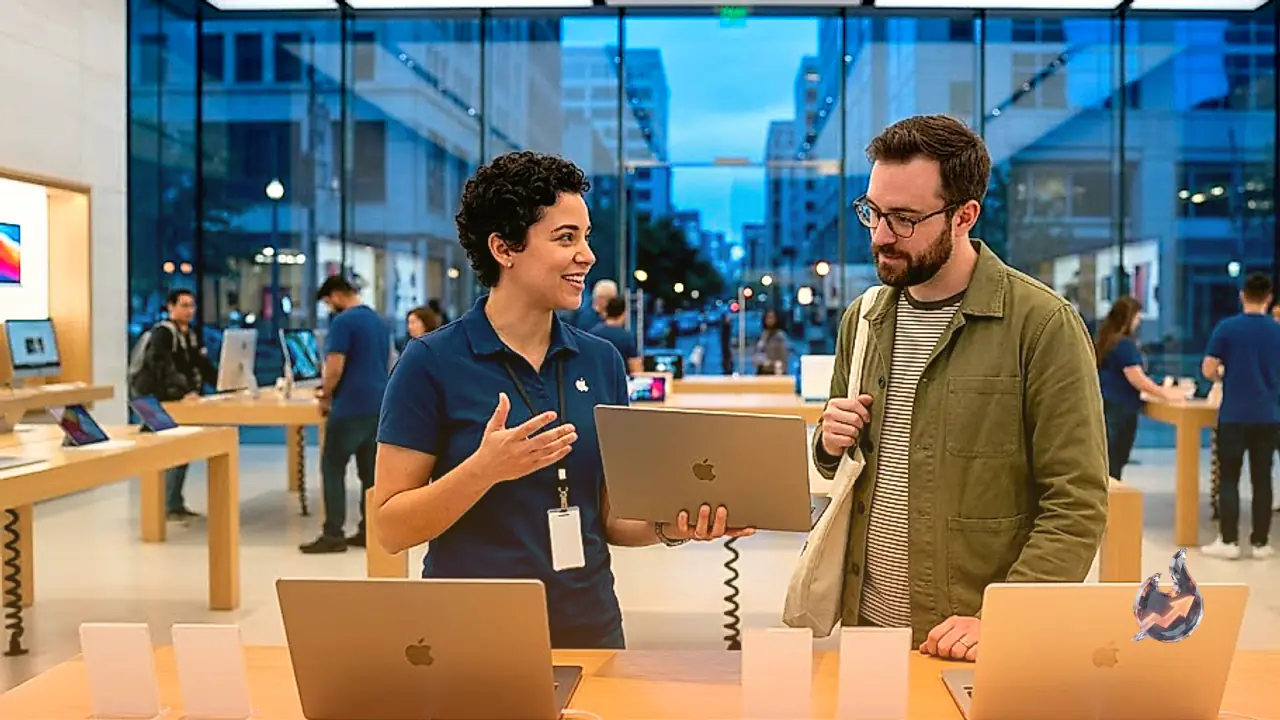

Anyone hoping to walk away with a new MacBook Air this month should brace for a wait, because Apple's slim, all-purpose laptop has quietly turned into one of the hardest Macs to actually get delivered on time.
Why the MacBook Air still makes sense for most buyers
The Air has long held the title of the Mac most people should buy, and that logic still holds even with Apple's cheaper MacBook Neo chasing the same audience. The Air packs an M-series chip, more RAM than the Neo, and a bigger, sharper display, while skipping some of the extras that only matter to power users, such as extra ports, a high-refresh-rate mini-LED screen, and other pro-grade hardware found on the MacBook Pro. For shoppers who want more performance than the Neo offers but don't want to pay a premium for Pro-only features, the Air has always sat in the sweet spot between the two.
A global memory shortage is choking supply
That sweet spot is getting harder to reach right now. The MacBook Air has become the latest Mac caught up in RAMageddon, the worldwide memory shortage that has been squeezing hardware makers large and small. Apple simply doesn't have enough MacBook Air units on hand to ship orders in a timely manner. Placing an order today typically comes with a shipping estimate that stretches toward the end of August, and some listings even carry a blunt disclaimer warning that the MacBook Air is subject to availability.
Apple isn't exactly rushing to fix it
Apple will still happily take a customer's money for a MacBook Air, but its own stores and website are steering shoppers elsewhere while the shortage plays out, nudging them toward the base model MacBook Pro instead. That machine is arguably the best MacBook Pro for most people who do want one, but it also starts $700 more than the entry-level MacBook Air. The timing makes the push sting even more, since Apple recently raised the MacBook Air's own MSRP by $200. Put together, buyers are effectively being offered two options: pay more for a MacBook Air and wait weeks for it to arrive, or hand over roughly $2,000 for a MacBook Pro today.
Where you can actually buy one right now
Shoppers don't have to accept those terms, because Apple isn't the only place selling its own laptops. Retailers including Amazon and Best Buy currently have the latest MacBook Air models in stock, so anyone who needs the M5 Air at its listed MSRP can still find one through those channels for now. That availability may not last, though, especially if Amazon and Best Buy start selling through their stock, since Apple isn't likely to keep sending them large numbers of fresh units while its own supply stays tight.
A better long-term move for many buyers could be the refurbished market. Picking up a slightly older MacBook Air model there can mean paying under $1,000 for essentially the same perks that a $1,300 machine currently offers new. A refurbished M4 MacBook Air, for instance, is currently priced at $900 on Amazon. That means stepping back one generation of Apple's chip, but since the company's recent silicon has been so capable across the board, most buyers likely wouldn't notice a meaningful difference in everyday use, while still pocketing real savings.
The refurbished route also opens the door to spec'ing up a laptop with extra RAM or storage for less money than buying new. A refurbished M1 Pro MacBook Pro, despite being five years old, remains more than capable of handling everyday 2026 workloads, and a configuration with a 1TB drive currently runs just over $900. For anyone who has always wanted the extra headroom of a MacBook Pro but balked at the sticker price, that kind of refurbished configuration can be a genuine opportunity worth considering.
Where Apple's Mac lineup goes from here
Apple isn't going to stop building new computers just because the memory crisis is dragging on, and a shift to an M6 generation is expected sometime early next year, though the company's exact plans could still change depending on how market conditions evolve between now and then. Once Apple does release an M6 Air, the current M5 model should become the new value pick in the lineup, particularly if prices climb again in the meantime as memory costs keep rising.
It would be convenient to simply tell shoppers to wait out RAMageddon and buy once the crisis passes, but there's no clear timeline for when that will happen. Memory manufacturers have openly acknowledged they're struggling to raise production fast enough to meet demand, which suggests the market may not stabilize until sometime next year, if not later than that. That means Apple's prices could stay elevated while its supply remains tight for a while yet, leaving shoppers with few easy options in the near term.
The practical advice for now is simple. Anyone who doesn't urgently need a new MacBook is better off holding onto their current machine for as long as possible, since prices are unlikely to drop soon. Anyone who genuinely does need one should shop around rather than defaulting to Apple's own store, checking Amazon, Best Buy, and the refurbished market before settling, since the newest machine sitting on the shelf isn't always the smartest buy for the money.