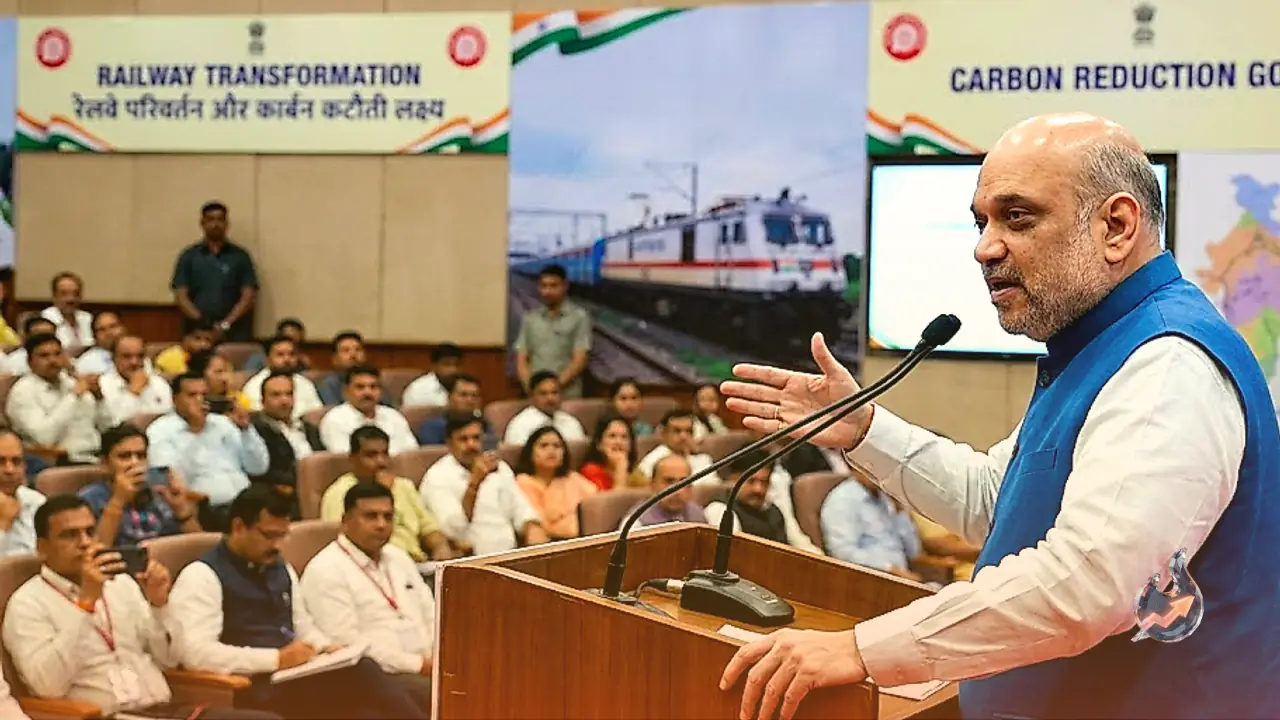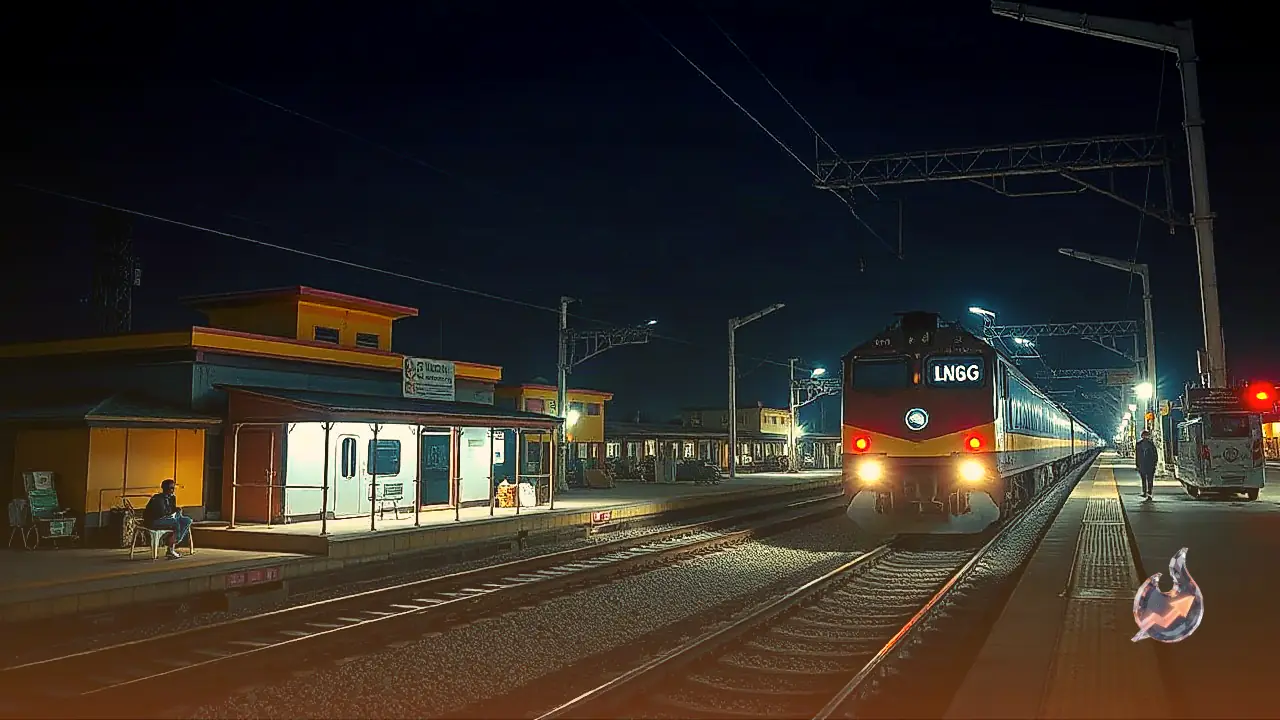



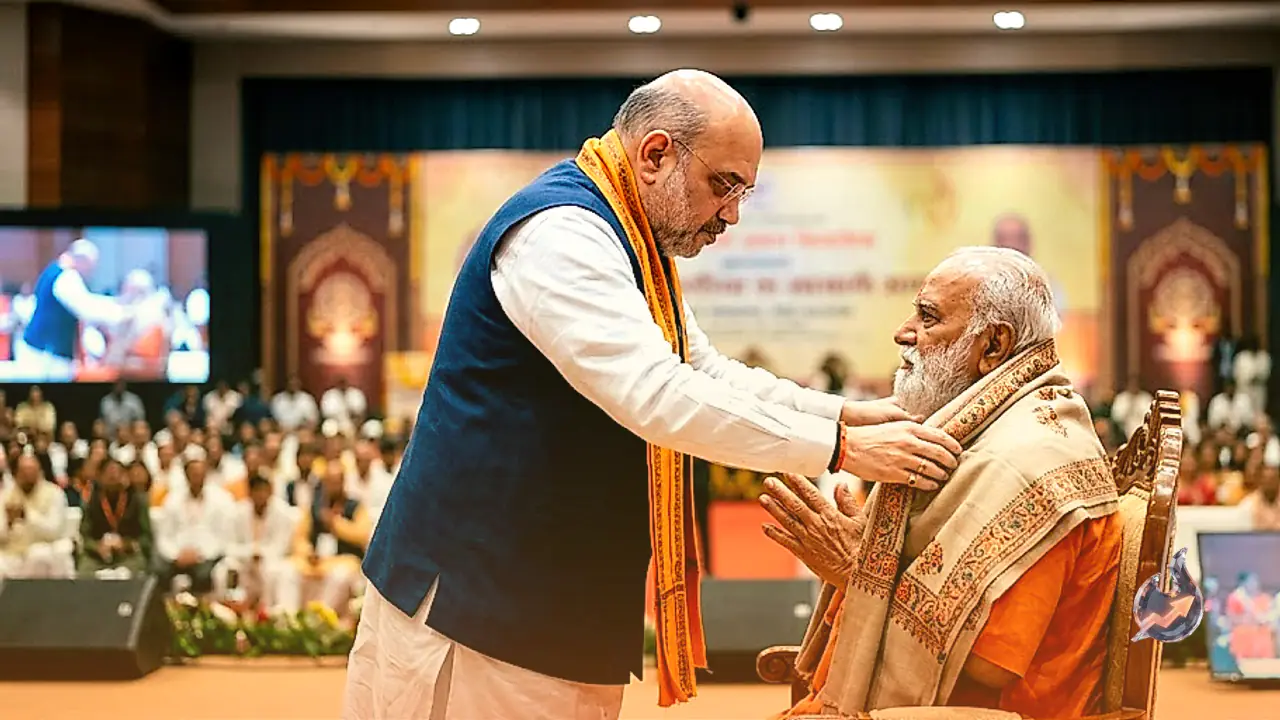
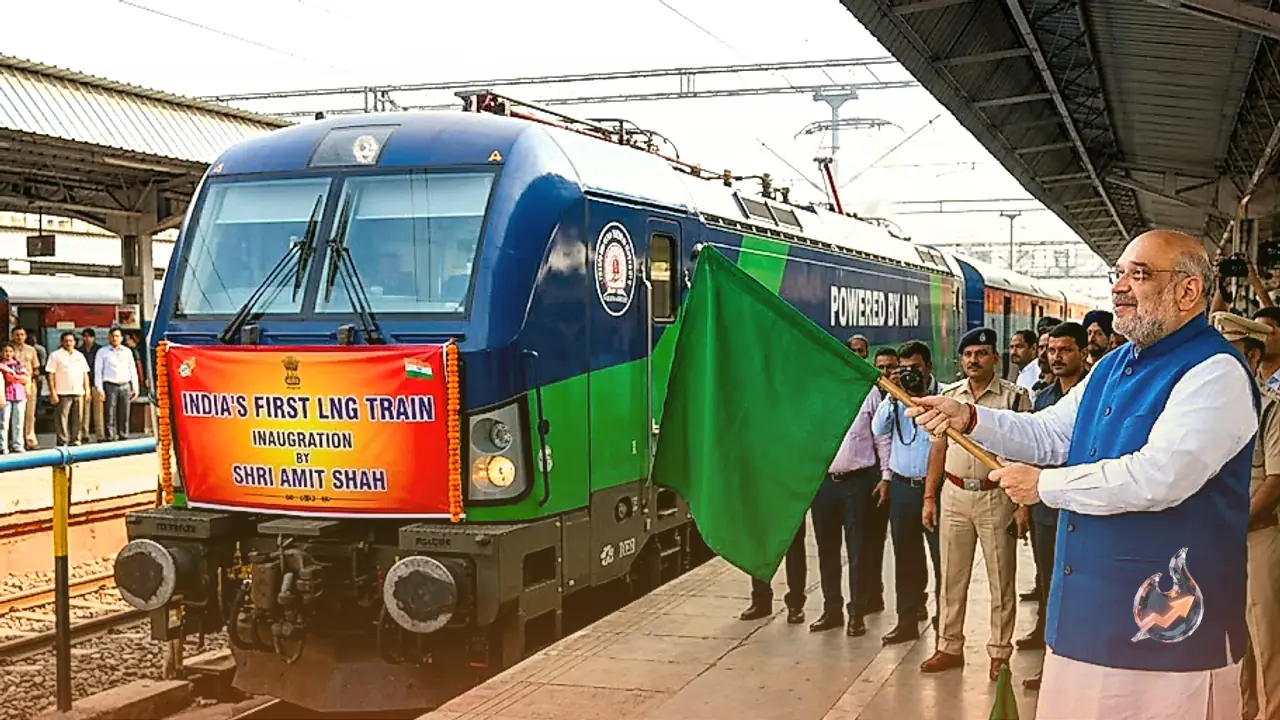














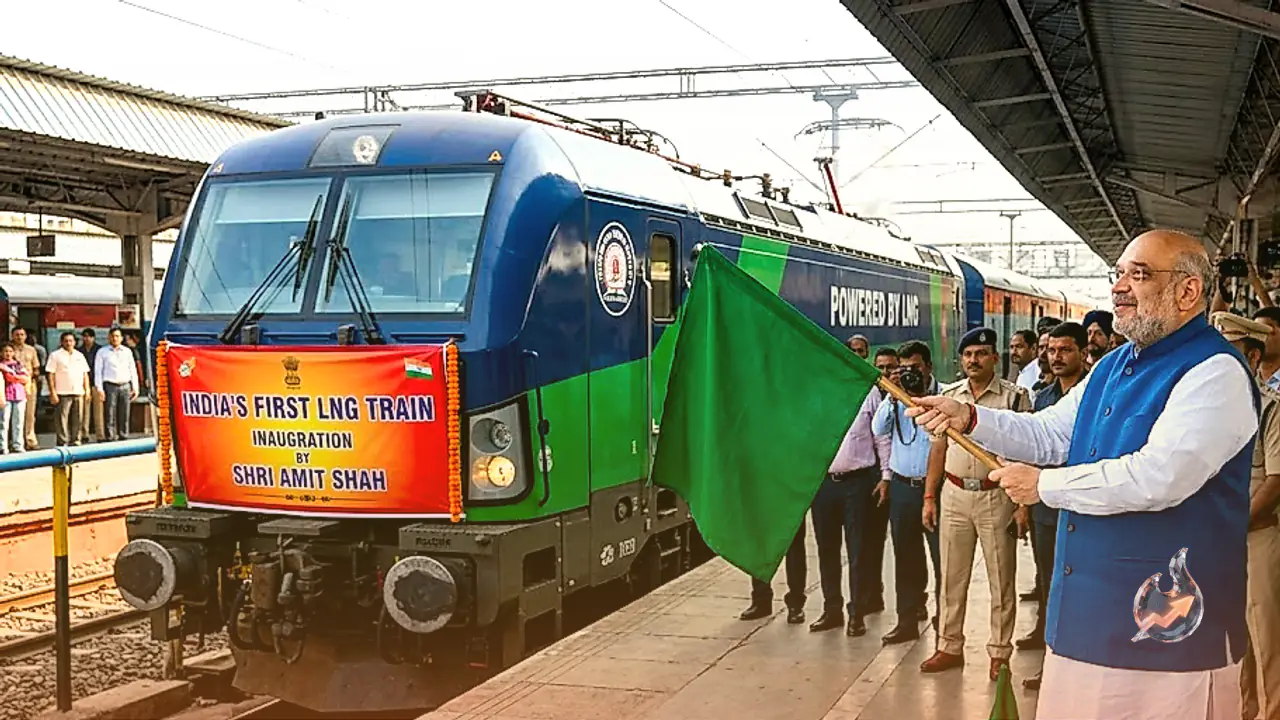

A new chapter in the history of Indian Railways unfolded on Sunday when the country's first train powered by Liquefied Natural Gas (LNG) was officially flagged off from the Sabarmati railway station in Ahmedabad, Gujarat. Union Home Minister Amit Shah greenlit the special train, hailing the initiative as a revolutionary step toward environmental conservation and shifting the national railway network toward cleaner, greener energy sources. During the event, the launch of this unique train was accompanied by the inauguration and foundation-laying ceremonies for various other vital railway infrastructure projects in the Sabarmati region.
Remembering Sabarmati's Historical Roots and Gandhian Ideals
Commencing his address, Amit Shah underscored the historical significance of the land hosting the event. He reminded the audience that Sabarmati is the sacred ground where Mahatma Gandhi championed experiments in satyagraha, simple living, rural development, and khadi. Shah emphasized that it is from this very historic location that new initiatives relating to environmental protection and modern technology are being rolled out across the railway sector. According to him, while some of the newly launched projects are designed to enhance passenger convenience, others focus heavily on safety and environmental preservation.
Recalling the Past When Passengers Walked Two Kilometers for a Rickshaw
Sharing personal reflections on the transformation of the Sabarmati railway station, Amit Shah drew a vivid contrast with the past. He recalled that back in the 1980s, passengers arriving at the station had to walk nearly two kilometers just to find and board a rickshaw. Illustrating how times have changed, he noted that the exact same station has now transformed into a vital and vibrant hub of a modern transportation network. Today, the location enjoys seamless connectivity encompassing metro rail services, state transport bus terminals, and prospective high-speed rail operations, making daily commutes vastly more convenient for ordinary citizens.
Unveiling Railway Projects Worth Over Fourteen Hundred Crores
Substantial investments are being channeled into upgrading the Sabarmati railway station and its surrounding vicinities. Amit Shah announced that railway development projects valued at approximately Rs 1,472 crore are being inaugurated and initiated in the area. The collective purpose of these infrastructure endeavors is to expand passenger amenities, reinforce safety protocols, and build robust, uninterrupted transportation connectivity. The overarching government objective is to provide citizens with world-class railway infrastructure that saves time while ensuring a comfortable and secure journey.
Dramatic Reduction in Diesel Consumption and Electrification Goals
Detailing the railway sector's commitment to ecological sustainability through hard figures, Amit Shah pointed out the steep decline in diesel consumption over recent years. He stated that during the 2015-16 fiscal year, Indian Railways consumed roughly 293 crore liters of diesel, which plummeted to around 108 crore liters by 2024-25. Under visionary government roadmaps, the stated target is to reduce railway diesel consumption completely down to zero by the year 2030. Alongside environmental benefits, this massive shift aims to conserve vital foreign exchange reserves. Furthermore, discussing railway electrification progress, he shared that approximately 99.6 percent of the country's rail network electrification has already been successfully completed, with the remainder slated for completion in the near future.
Exploring Hydrogen and Alternative Green Energy Options Beyond LNG
Emphasizing that alternative energy adoption is an absolute necessity for the future, Amit Shah shed light on forthcoming technological pipelines. He noted that alongside LNG trains, active work is underway to introduce hydrogen-powered trains in India. With the rollout of hydrogen trains, India joins an elite group of nations actively researching and implementing this cutting-edge technology. Nevertheless, the specific train flagged off at the Sabarmati event operated on LNG propulsion, demonstrating that the railways are pursuing parallel strategies to test multiple alternative fuels and engineering methods.
Boasting Freight Capacity Equivalent to Six Hundred Trucks in a Single Engine
Highlighting technological breakthroughs aimed at supercharging India's freight transport capabilities, Shah pointed to heavy-duty locomotive examples. Citing the formidable twin-section engine boasting a capacity of 1,200 horsepower, he explained that this single engine delivers freight-hauling capacity roughly equivalent to 600 trucks. He pointed out that previously, moving such massive loads required two separate locomotives working in tandem, whereas a single WAG-12 class engine now effortlessly handles the task. Additionally, he mentioned ongoing trials of double-decker freight trains across the nation, designed to maximize cargo movement efficiency across existing rail corridors.
Intensive Focus on Delhi-Howrah and Delhi-Guwahati Rail Networks
The government is methodically upgrading the nation's busiest rail corridors to handle mounting traffic loads. Amit Shah outlined ongoing efforts to convert the sprawling 11,000-kilometer rail network stretching between Delhi and Howrah, as well as Delhi and Guwahati, into four-lane capacity routes. According to him, this extensive expansion will help manage escalating rail traffic and drastically improve inter-regional connectivity. Projects like dedicated freight corridors, rapid rail transit systems, and modernized railway stations have collectively revolutionized the operational capability of Indian Railways.
Targeting One Hundred Percent Indigenous Manufacturing Through Make in India
Reiterating the core vision of an self-reliant nation, Shah underscored indigenous manufacturing as a top governmental priority within the railway domain. Based on figures provided by him, approximately 94 percent of locomotives currently manufactured within India are produced locally under the Make in India initiative, with a firm future target to achieve 100 percent domestic manufacturing. Concluding his address, he extended warm congratulations to Union Railway Minister Ashwini Vaishnaw and the dedicated team of the Sabarmati railway division for successfully executing these innovative initiatives. The deployment of the LNG train from Sabarmati stands as a prime component of this sweeping modernization drive, where the ultimate goals are curbing fuel consumption, lowering pollution, expanding freight bandwidth, and delivering world-class amenities to passengers.