




















A child's early fascination with vibrant colors and spontaneous sketching on paper does not have to remain confined to leisure time. Within contemporary creative industries, fine arts has transformed into a viable entrepreneurial avenue capable of delivering both financial independence and widespread social recognition. Crucially, embarking on this artistic journey demands minimal financial capital compared to conventional business ventures. From producing bespoke portraits within the comfort of a home studio to establishing an independent training academy, the modern art landscape presents diverse income streams for skilled practitioners.
Nurturing Early Talent Through Structured Guidance
Mansi, an accomplished painter based in Ambala, stresses that parents should not dismiss a child's natural inclination toward drawing as a mere recreational pastime. Cultivating raw talent requires consistent mentoring, systematic instruction, and disciplined daily practice to elevate it to professional standards. Today, an increasing number of young students participate in art competitions, discovering their inherent capabilities and progressively considering fine arts as an aspirational, long-term career path rather than a temporary distraction.
Finding an Identity in Nature and Spiritual Themes
Mansi's own artistic odyssey originated in her childhood passion for drawing. During her initial years, painting served strictly as a creative outlet, but she gradually recognized that dedicated craftsmanship could generate substantial earnings. Her teachers recognized her dedication and provided continuous encouragement throughout her developmental phase. Drawing inspiration from the natural world and spiritual traditions, she began crafting specialized paintings that progressively captured the attention and appreciation of art patrons.
Overcoming Skepticism to Sell a Masterpiece for 50000 Rupees
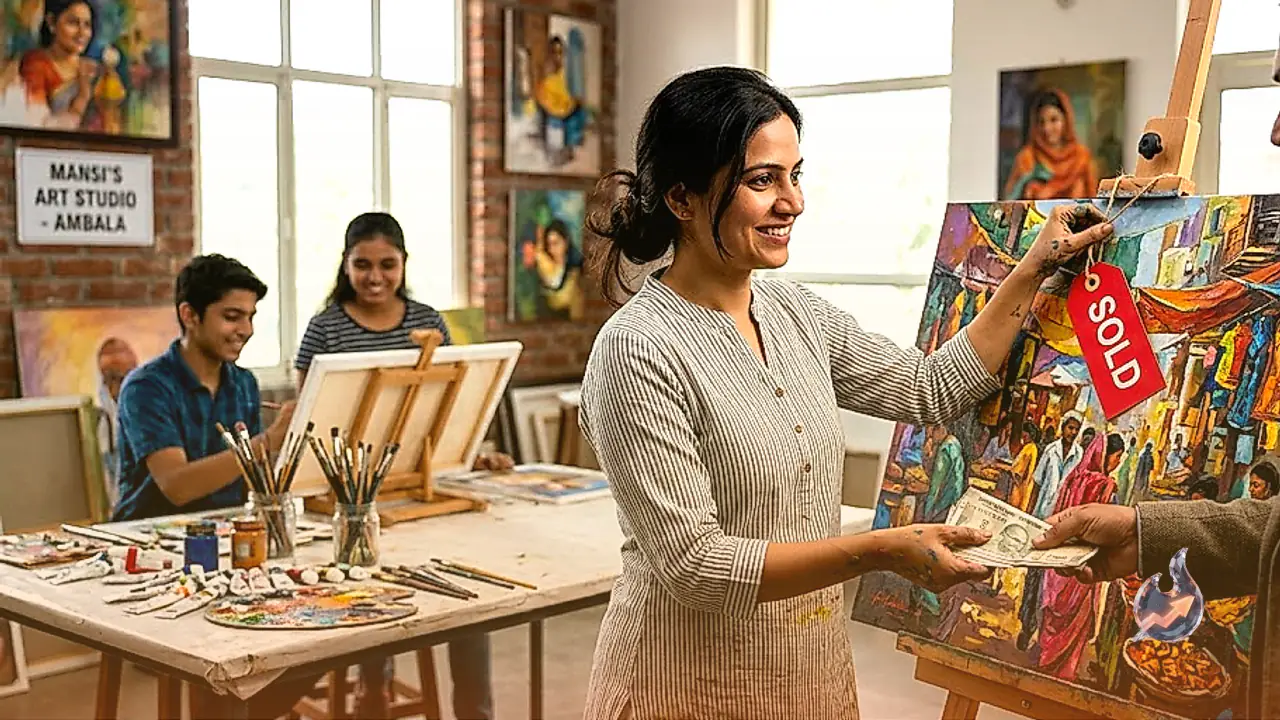
When Mansi initially shared her vision of establishing painting as a financially rewarding career, acquaintances often expressed doubt, viewing the craft merely as an unpaid hobby. Undeterred by skepticism, she honed her technique, and market appreciation for her work steadily escalated. That persistence culminated in a major commercial milestone when one of her individual paintings was purchased for approximately 50000 rupees. Mansi notes that a painting represents far more than colored pigments applied to canvas; it embodies intense emotional investment and countless hours of meticulous labor, which explains why exclusive art pieces routinely command substantial valuations.
Building a Low-Cost Teaching Academy for Steady Income
Fine artists do not need to rely solely on the erratic sale of completed canvases to sustain themselves financially. Establishing a personal art academy to mentor aspiring students in drawing and painting offers a dependable revenue model. Setting up a modest neighborhood academy requires an initial capital expenditure of approximately 15000 to 20000 rupees. If an instructor starts with an initial cohort of 20 students and charges a monthly tuition fee of 1000 rupees per student, the venture generates a stable baseline income of about 20000 rupees per month.
As enrollment expands over time, monthly earnings can rise to between 40000 and 45000 rupees, successfully converting a modest home-based initiative into a lucrative micro-enterprise. Achieving this level of stability requires technical mastery of the medium alongside the patience and pedagogic skill to instruct young minds. In addition to group academy classes, artists can offer personalized private sessions to further enhance their earnings.
Institutional Employment and Digital Marketplaces
Beyond entrepreneurship and private tutoring, formal training in fine arts unlocks viable employment pathways across educational institutions. Qualified artists can secure appointments as drawing teachers in primary and secondary schools. Pursuing advanced academic degrees in visual arts allows individuals to qualify for professorships and faculty roles within colleges and universities.
Meanwhile, online platforms have democratized access to national and international client bases. People regularly commission custom sketches and celebratory portraits via digital portals, allowing artists to secure remote commissions without leaving home. Operating through these virtual channels, many artists consistently earn between 1000 and 1500 rupees per day by fulfilling portrait orders. With structured training, continuous practice, and proactive presentation of one's portfolio, painting provides a balanced synthesis of boundless creative expression and commercial viability.