

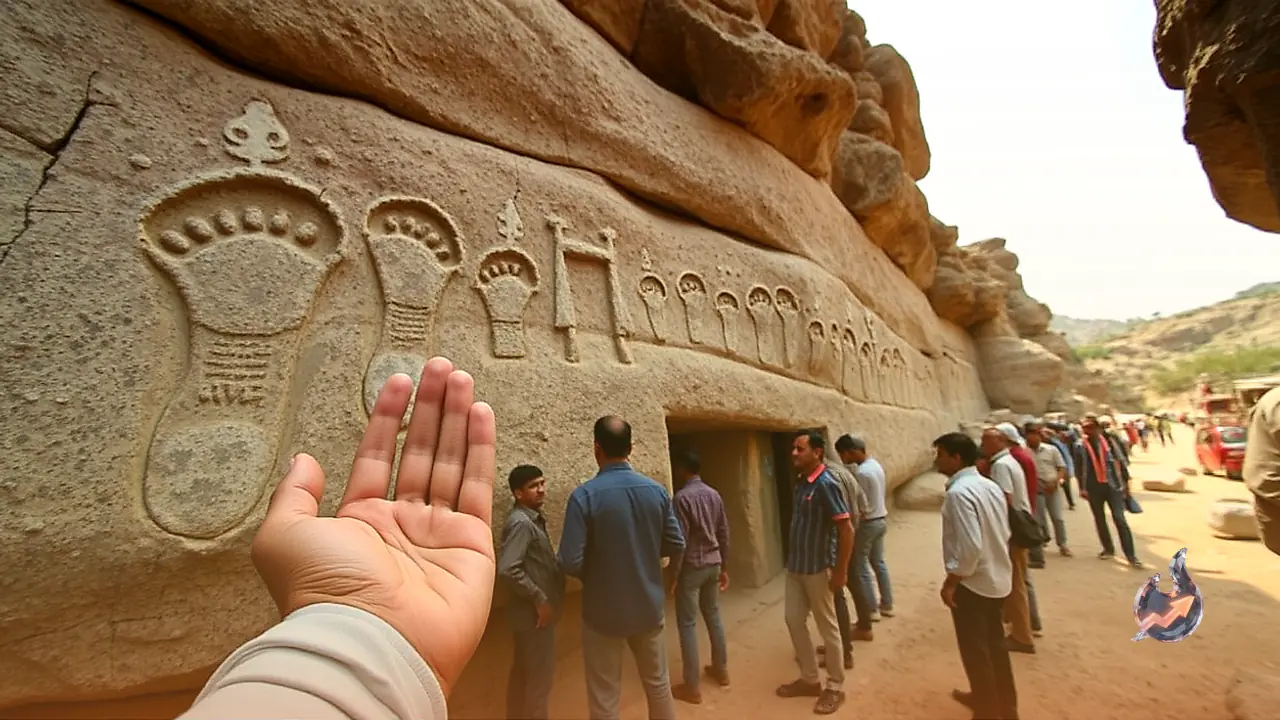




















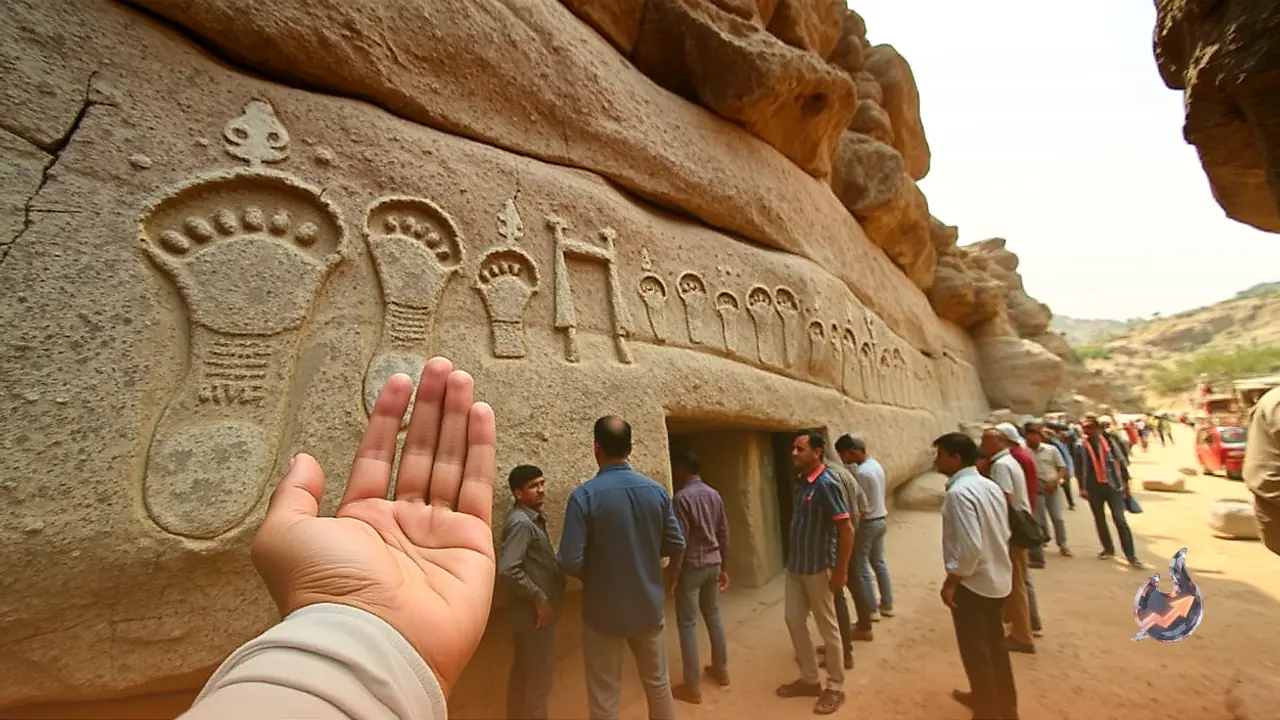

Significant prehistoric traces belonging to the Stone Age have been documented in the Aravalli hills surrounding Kot village in the Faridabad district of Haryana. The site features primitive hand and foot impressions carved onto rock surfaces, providing key insights into the lifestyle, habitat, and cultural activities of ancient human populations that once inhabited the region. The diverse rock carvings and structural formations highlight a deep historical timeline, turning these hills into a critical location for archaeological research.
Stone Age Lifeway and Natural Rock Shelters
According to archaeologist Tejveer Mavi, early humans during the Stone Age relied heavily on rock formations for sustenance and survival. Sharpened stone tools served as hunting implements and everyday gear, while natural caves and large rock overhangs acted as shelters against natural elements and wild predators. Archaeological excavations in the Aravalli range reveal vital clues about ancient survival strategies. The presence of stone engravings and primitive craftsmanship highlights early human ingenuity in adapting to their immediate environment.
Submerged Megaliths and Animal Carvings
In Kot village, numerous massive stones remain buried about 4 to 5 feet into the ground. In Rajasthan, menhirs measuring up to 15 feet in height have also been documented. The rock surfaces found in Kot feature distinct engravings depicting various animals, birds, and dogs. These artistic representations suggest sustained human habitation over extended eras, showing that early communities observed and recorded local wildlife directly onto their rocky dwellings.
Circular Stone Enclosures and Footprint Petroglyphs
Several megalithic structures in the Kot hills are arranged in circular enclosures. Within these circular stone formations, central boulders feature distinct sets of footprints attributed to adult men, women, children, and various animals. The deliberate preservation of these human and animal prints sets this geographic region apart from conventional hill terrain, offering researchers a tangible record of communal life and movement in prehistoric times.
Variations in Handprint Measurements
The discovery of handprints of varying dimensions has added an important dimension to the ongoing research. Tejveer Mavi noted that while initial discoveries documented hand impressions measuring around 23 centimetres, with common sizes ranging between 19 and 22 centimetres, a significantly larger handprint measuring 27 centimetres has now been found. This variance in physical dimensions points to the possibility of evolving techniques or distinct demographic groups over separate historical periods, warranting deeper investigation.
Prehistoric Tool Discoveries and Academic Study
In addition to rock art and footprints, various Stone Age stone tools and associated relics have been located across the Kot hills. These artifacts provide direct evidence of prehistoric hunting methods, food processing, and daily routines. Due to the high concentration of observable relics, the hills have become an active field destination for university students and researchers studying archaeology and ancient Indian history, offering firsthand practical exposure to concepts otherwise limited to textbooks.
Preservation Demands for Aravalli Heritage
The prehistoric stones, engravings, implements, and foot impressions in Kot village represent a vital link in regional archaeology. Tejveer Mavi emphasized that archaeological authorities and the government must implement targeted preservation measures to safeguard this heritage site. Protecting these megaliths and petroglyphs from environmental degradation will ensure that future generations of researchers can continue unlocking the ancient history of the Aravalli mountain belt.