




















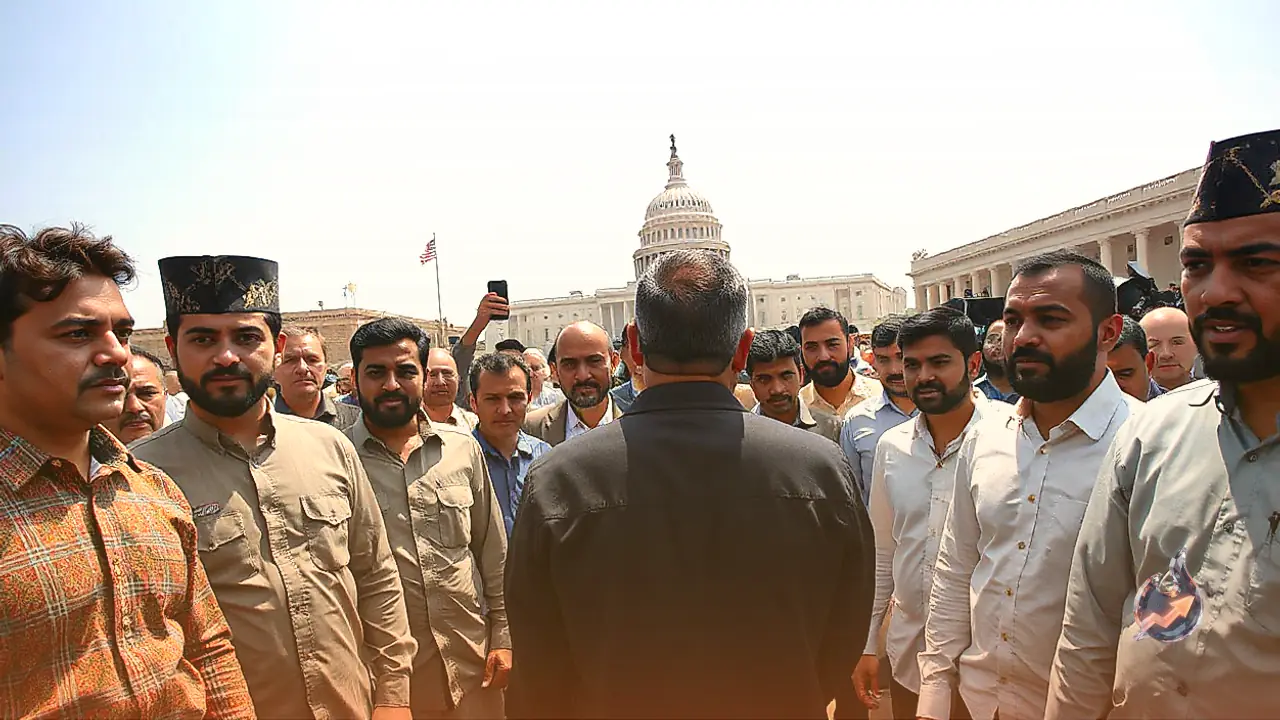

A historic milestone has been reached in American congressional politics as Democrat Abdul El-Sayed secured a decisive victory in Michigan, becoming the first Muslim member ever elected to the United States Senate. In the midterm election outcomes, the 42-year-old physician and public health expert captured more than 52% of the ballots cast, defeating Republican contender Mike Rogers. The hard-fought contest unfolded against a backdrop of fierce personal attacks, contentious political debates, and significant resistance from figures inside his own party.
Rhetoric and Allegations Defining the Campaign Trail
Throughout the campaign, El-Sayed faced intense verbal assaults from high-profile conservative leaders. US President Donald Trump publicly targeted him with harsh rhetoric, characterizing El-Sayed as a dangerous and violent jihadist while telling Black and Jewish voters that backing him would be irrational. Texas Republican Senator Ted Cruz amplified the criticism, warning that the nation could face grave risks if El-Sayed were appointed to the Senate Intelligence Committee. Republican opponent Mike Rogers also challenged El-Sayed's allegiance, questioning whether he stood with the United States or with terrorist groups.
Despite the attacks, prominent Democratic figures mobilized to back his bid, including former President Barack Obama, who actively campaigned for him. Concurrently, political opponents sought to leverage his family history. The dispute originated around a 2012 social media post written by El-Sayed's sister, Iman Abdelhadi, indicating that their mother had taken part in activism connected to the Muslim Brotherhood in Egypt during the 1970s. Following her divorce, El-Sayed's mother relocated to Missouri and took up work as a nurse with the Islamic American Relief Agency (IARA). In 2004, the FBI searched the relief group during an investigation into potential terror connections, leading to questioning of El-Sayed's mother. Republican operatives made this a central talking point in their attacks.
El-Sayed countered the narrative directly, clarifying that he was raised by his father and stepmother rather than his mother, and stressed that he maintained no ties to the Muslim Brotherhood. The exchanges reached a peak shortly before Election Day when Vice President JD Vance criticized him at an October 15 rally, referring to him as a punk who ought to remain quiet and show gratitude toward the country that provided him opportunity. Following his victory on November 4, El-Sayed addressed Vance's remarks during his victory address, noting the irony that Vance himself would be the one administering his oath of office. Under US constitutional procedure, the sitting Vice President swears in members of the Senate. Approximately 60% of ballots had been tabulated when polling closed on November 3, after which El-Sayed delivered his address alongside his wife, Dr Sarah.
Roots, Education, and Path to Public Office
Born on October 31, 1984, in Detroit, Michigan, Abdul El-Sayed is the son of Egyptian immigrants who moved to the United States during the 1970s. When he was three years old, his parents divorced, and his upbringing was guided by his father and stepmother, while his mother moved to Missouri.
El-Sayed pursued medical training and academic research, earning degrees from the University of Michigan and Columbia University. Before entering public administration, he worked as an assistant professor in epidemiology. His transition into electoral politics was motivated by concerns over the public health landscape. His platform reflected the conviction that flawed governance was degrading the health of everyday Americans and that living conditions in the country should not be burdened by systemic hurdles. At age 30 in 2015, he assumed the role of executive director for the Detroit Health Department. He later launched a bid for Michigan governor in 2018, though he was unable to capture the Democratic nomination at that time.
Navigating Primary Resistance and Party Dissent
The journey to the general election required El-Sayed to overcome fierce resistance within Democratic ranks. During the August 2026 primary contest, he squared off against four-term Congresswoman Haley Stevens. Stevens deployed more than $42 million in campaign expenditures in an effort to secure the nomination, but El-Sayed prevailed by a margin of 15,000 votes.
The rivalry persisted into the general election cycle. On the final Sunday before the midterm balloting, Stevens appeared at a church alongside Republican nominee Mike Rogers, explicitly telling attendees that Rogers was the candidate who would receive her vote for the US Senate. Rogers, who had previously represented Michigan's 8th congressional district in the House of Representatives, benefited from this public endorsement from a sitting Democratic lawmaker. Following his general election triumph, El-Sayed asserted that members within his own political party had expended more than $70 million overall in attempts to thwart his candidacy.
Demographics, Policy Focus, and Strategic Realities
Achieving statewide office has historically posed steep hurdles for Muslim candidates in the United States. Muslims represent under 1.34% of the US population, totaling approximately 4.5 million individuals out of more than 350 million citizens. Because each state elects only two senators across an entire electorate, building a statewide coalition presents structural challenges. Furthermore, the climate of suspicion and scrutiny that emerged following the September 11 terrorist attacks often saw Muslim contenders subjected to xenophobic and extremist labeling based on their names and faith, a playbook deployed against El-Sayed throughout the race.
El-Sayed navigated these dynamics by anchoring his candidacy in concrete pocketbook matters. His platform centered on halting military funding to Israel, introducing higher taxes on billionaires to finance universal healthcare, and safeguarding public tax dollars for domestic needs. His agenda emphasized creating governance responsive to working citizens rather than the interests of Donald Trump, Elon Musk, and other wealthy donors. Addressing the media two days prior to the vote, he stressed that his campaign was oriented toward the 9,999,998 residents of Michigan whose day-to-day struggles were neglected by conventional politics.
Throughout the contest, El-Sayed kept theological debates separated from civic priorities. He maintained that his heritage and spiritual beliefs were not the factors driving up prices at the grocery store, inflating petrol expenses, or complicating access to clean air, safe water, and medical care. When his foreign policy stances regarding Israel created distance with Jewish voters, he organized direct discussions with Jewish community leaders, making clear that his policy disagreements were aimed at the Israeli administration rather than the Jewish people. These efforts intersected with broader political conditions: President Trump's public approval rating had dropped to 38% amid criticism of his executive decisions and foreign policies. Combined with Michigan's electoral tendency, where no Republican has won a US Senate election since 1994, El-Sayed successfully leveraged party momentum to secure his place in the history books.