
















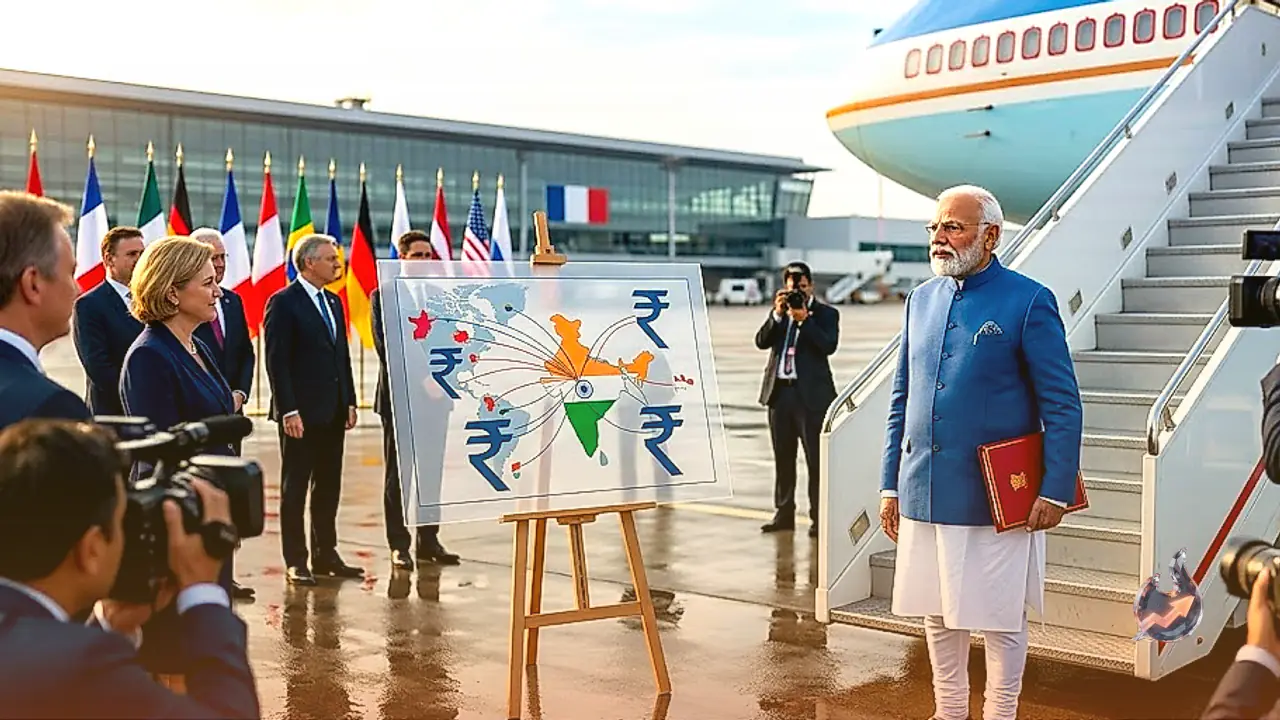

Prime Minister Narendra Modi's international travels accumulated a total expenditure of Rs 555 crore between 2021 and August 2026, according to official government data.
The Ministry of External Affairs disclosed these figures in a written reply submitted to Rajya Sabha members Sanjay Singh and V. Sivadasan. The two MPs had sought detailed information regarding the Prime Minister's overseas visits and the total expenditure incurred on them during this timeframe.
The True Purpose and Impact of State Visits
While these financial figures have once again brought the cost of foreign trips into the public spotlight, the broader questions center on why heads of state travel abroad and what tangible benefits these missions deliver for India.
International affairs expert Shreesh Pathak notes that overseas visits rank among the most potent instruments available to any head of government. These journeys are far beyond mere ceremonial outings.
In-person leadership summits can help break deadlocks on complex issues that remain stalled for months within bureaucratic channels. Such high-level interactions translate political goodwill into concrete agreements spanning defense, commerce, technology, and regional connectivity.
Furthermore, these diplomatic missions communicate clear messages to allies, competitors, and domestic citizens regarding the nation's core strategic priorities.
What Research Reveals About State Travel
Empirical research supports the tangible economic value of such diplomacy. Economist Volker Nitsch analyzed decades of international travel data concerning French, German, and American heads of state.
The study concluded that a single official state visit typically generates an 8 to 10 percent boost in bilateral export volumes.
Comparing Modern Diplomacy Across Prime Ministers
Shreesh Pathak emphasizes that it would be inaccurate to suggest India's strategic diplomacy originated solely in 2014. Previous administrations laid significant groundwork in foreign engagement.
Atal Bihari Vajpayee undertook 29 trips across 32 countries, while Manmohan Singh completed approximately 71 visits to 46 nations. In comparison, Narendra Modi's travels exceeding 100 visits across more than 80 countries stand out distinctively due to their sheer scale and institutional depth.
Pathak points out that under Modi's tenure, India shifted away from strictly bilateral engagements toward a networked diplomatic framework. This approach has involved strengthening the Quad, shaping global agendas through the G20 and the International Solar Alliance, and deepening multi-alignment strategies.
At the same time, India has successfully forged closer ties with the United States, Japan, European nations, Australia, and the Gulf region while preserving its longstanding strategic partnership with Russia.
According to Pathak, the ultimate benchmark of success is not the volume of foreign leaders met, but whether these relationships yield tangible dividends in defense manufacturing, energy security, market access, connectivity, and strategic autonomy. This conversion process remains underway rather than complete.
The Evolution of Indian Foreign Policy
Examining the foreign itineraries of successive Prime Ministers illustrates how India's diplomatic posture has matured across decades. From the foundational years of independence to the contemporary era, national priorities have continually shaped international engagements.
Each administration adapted its foreign policy to address shifting global geopolitics and domestic economic imperatives. Modern Indian diplomacy increasingly ties international partnerships directly to national development, security, and global standing.