























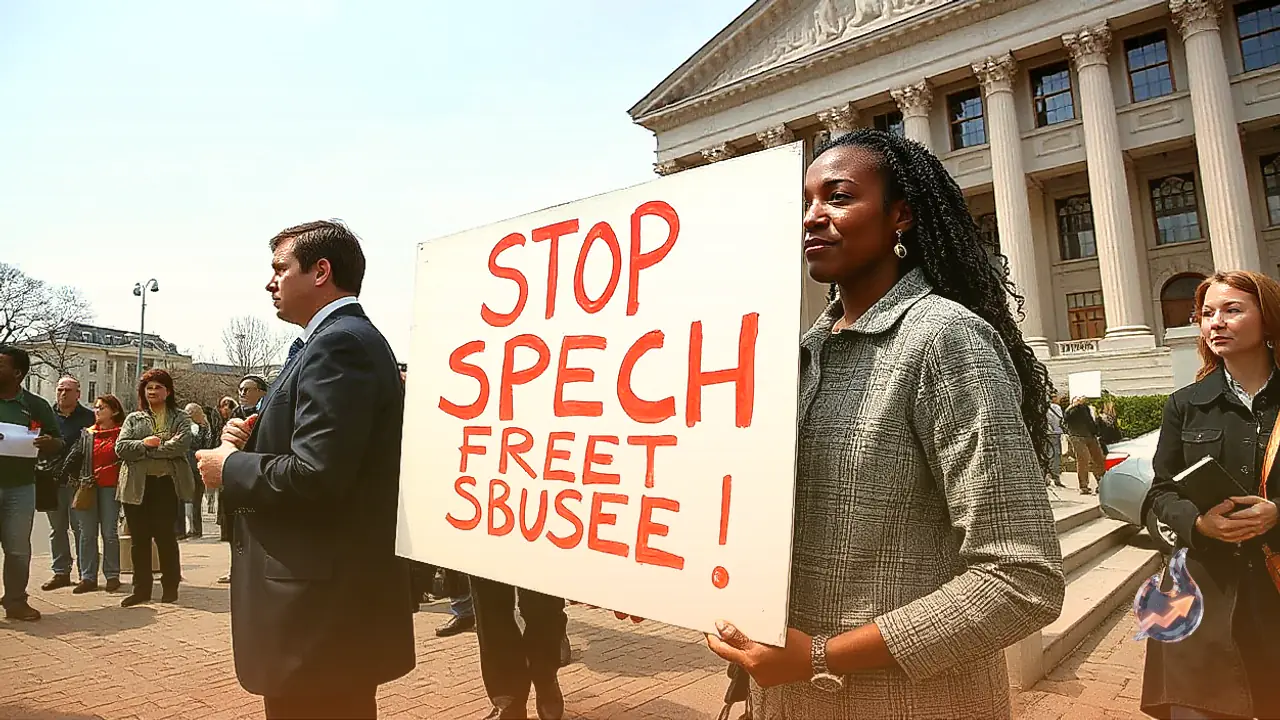

Whenever digital sexual violence surfaces in public forums, an aggressive segment of online commentators inevitably rallies behind abstract notions of free expression to justify abusive behavior. The disturbing aftermath of a 2024 sexual assault case at Cornell University, in which a former student accused seven members of the Chi Phi fraternity of repeatedly raping her, brought this reality back into sharp focus. Over subsequent weeks, far-right personalities and anonymous accounts coordinated efforts to reveal the identity of the anonymous survivor known in legal filings as Jane Doe. For Mary Anne Franks, a professor at George Washington University Law School and the president and legislative tech policy director at the Cyber Civil Rights Initiative, such retaliatory campaigns are not isolated anomalies but predictable outcomes in the historical intersection of digital networks and gendered violence.
Franks has dedicated decades to studying digital abuse, nonconsensual imagery, and the legal arguments surrounding technology and civil rights. When commentators like Michael Tracey publicly doxed Jane Doe while claiming protection under the First Amendment, Franks countered that viewing free speech purely through an abstract lens distorts reality. By prioritizing an absolutist model of expression over physical integrity, platforms and legal purists treat bodily safety as subordinate to speech. In reality, Franks emphasizes, sexual abuse itself constitutes a massive speech suppression crisis, as it systematically strips survivors of their ability to participate in public discourse.
The Shift in Terminology and the Dimensions of Consent
In analyzing how modern discussions surrounding digital violence have evolved, Franks highlights the transition away from phrases like revenge porn, which entered mainstream vocabulary around 2011. While widely recognized, that label implicitly blamed the victim by presuming that retaliation was earned, while conflating nonconsensual abuse with legitimate adult pornography. Legal scholars and civil rights organizations now use rigorous terms such as image-based sexual abuse and nonconsensual pornography to clarify the criminal nature of these acts without trivializing the trauma inflicted.
According to the framework maintained by the Cyber Civil Rights Initiative, consent is multifaceted and must exist across every single stage of sexual interaction and distribution. Abuse occurs when there is an absence of consent regarding the sexual activity itself, the act of recording that encounter, the sharing of legitimate recordings, or the synthetic fabrication of deepfake imagery. When perpetrators distribute recordings of nonconsensual assaults or weaponize private intimate media against former partners, multiple layers of consent are violated simultaneously.
The Cornell Case and the Weaponization of Ephemeral Messaging
The lawsuit arising from Cornell details an ordeal spanning seven hours inside the Chi Phi fraternity house in 2024. Beyond the physical assault, the case highlights the critical function played by modern communication tools. Early that evening, one of the perpetrators photographed the survivor's body and circulated the image across a fraternity Snapchat group, explicitly telling other members that she was upstairs and accessible. This single transmission served as the catalyst that prompted other fraternity members to enter the bedroom.
The Snapchat message reduced a human being to isolated anatomy, treating a vulnerable individual as a shared recreational commodity. Rather than encountering resistance or outrage from fellow fraternity brothers, the perpetrator was met with collective participation and social validation. The temporary architecture of platforms like Snapchat creates a dangerous perception that consequences vanish alongside the messages, encouraging reckless behavior and gamifying invasive violations of privacy.
Privileged Enclaves and a Long Legacy of Harassment
Fraternity culture and elite athletic circles have long served as incubators for group violence, rooted deeply in privileged entitlement. Franks points out that when men who have enjoyed social advantages encounter elite academic environments, they frequently confront the reality that they are not inherently exceptional. To counteract that cognitive discomfort, some channel their frustration into devaluing and dehumanizing women. Because fraternities have historically served as pipelines to national leadership, producing presidents, lawmakers, and Supreme Court justices, these toxic dynamics carry profound institutional weight.
The history of Cornell exemplifies how elite spaces often harbor casual misogyny. In 1995, during the nascent era of the consumer internet, an email originating from four Cornell undergraduates leaked widely under the title 75 Reasons Why Women Shouldn't Have Free Speech, in which women were denigrated as slurs. The list included horrific rationalizations for sexual assault, such as asserting that an inability to speak prevented women from saying no. Back then, defenders dismissed the incident as harmless satire and argued that administrative sanctions violated the First Amendment. Franks underscores that private institutions possess clear authority to discipline harmful conduct and that campus safety mandates operate independently of private speech claims.
How Abuse Silences Free Expression
The broader cultural discourse frequently depicts efforts to curtail sexual harassment and digital abuse as censorship or ideological overreach. This perspective ignores the devastating chilling effect that violence exerts on its victims. Survivors of sexual assault are frequently silenced through formal gag orders, online smear campaigns, and intimidation by perpetrators and their allies. Many victims are forced to withdraw from university courses, abandon extracurricular commitments, or retreat entirely from public life.
This silencing extends into wider professional arenas, pushing female journalists to stop covering sensitive topics and driving female politicians out of office after bad actors distribute private media to destroy their reputations. Franks notes that the current ethos of social platforms, accelerated under Elon Musk's management of X, has transformed free speech rhetoric into a shield for bigotry and abuse. High-profile figures claim to defend speech while curating systems that amplify their allies and silence dissent, fostering an environment where users dox women with zero algorithmic or administrative resistance.
The Burnerverse and Digital Mob Violence
Digital harassment has expanded beyond individual attackers into coordinated harassment subcultures. A notable example is the so-called burnerverse, a network of anonymous college sports and fraternity-aligned accounts that treat doxing young women as a competitive sport. This network ruined the life of 20-year-old Maddie Kowalski at the University of Florida after an intimate recording was blasted across public feeds alongside her full name and sorority chapter, subjecting her to ceaseless phone calls, text abuse, and digital stalking.
Screens act as filters that erode empathy, encouraging men to seek communal status by degrading women in public spectacles. In the frenzy of online outrage, innocent bystanders who happen to share names with accused individuals frequently get caught in the digital crossfire. Franks argues that commercial social platforms are fundamentally incompatible with measured accountability because their algorithms thrive on immediacy, rage, and unverified mob judgment.
Protective Measures and Signs of Resistance
Addressing this entrenched crisis demands proactive accountability rather than placing the entire burden of safety on prospective victims. Universities must mandate serious education and intervention targeting male students, particularly within fraternities and sports rosters. At the same time, physical self-defense education remains a vital tool for young women, reinforcing boundaries and offering practical strategies to identify predatory red flags.
For young men navigating modern digital landscapes, Franks recommends developing intentionality and critical detachment from social feeds. Recognizing that online isolation fuels sextortion schemes against young men and drives predatory behavior against young women is essential. Users must resist the urge to trade their dignity or others' safety for cheap algorithmic approval. Amid these systematic failures, Franks finds enduring hope in authentic investigative work, such as the fearless reporting by student journalists at the Cornell Daily Sun who risked backlash to publish the truth.