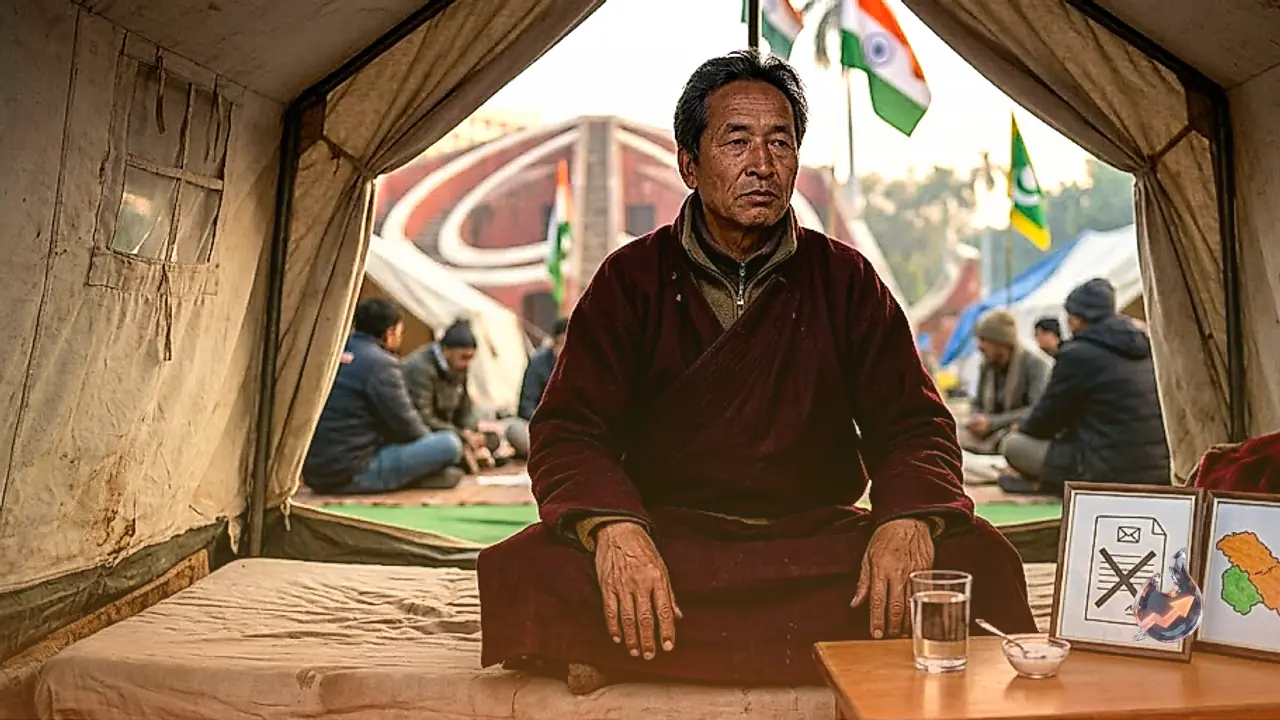



















As soon as Dharmendra Pradhan stepped down from his post, the Cockroach Janta Party called off its ongoing agitation, but the Opposition quickly pivoted its strategy to target Union Home Minister Amit Shah instead.
Rahul Gandhi Raises Direct Questions and Serious Allegations
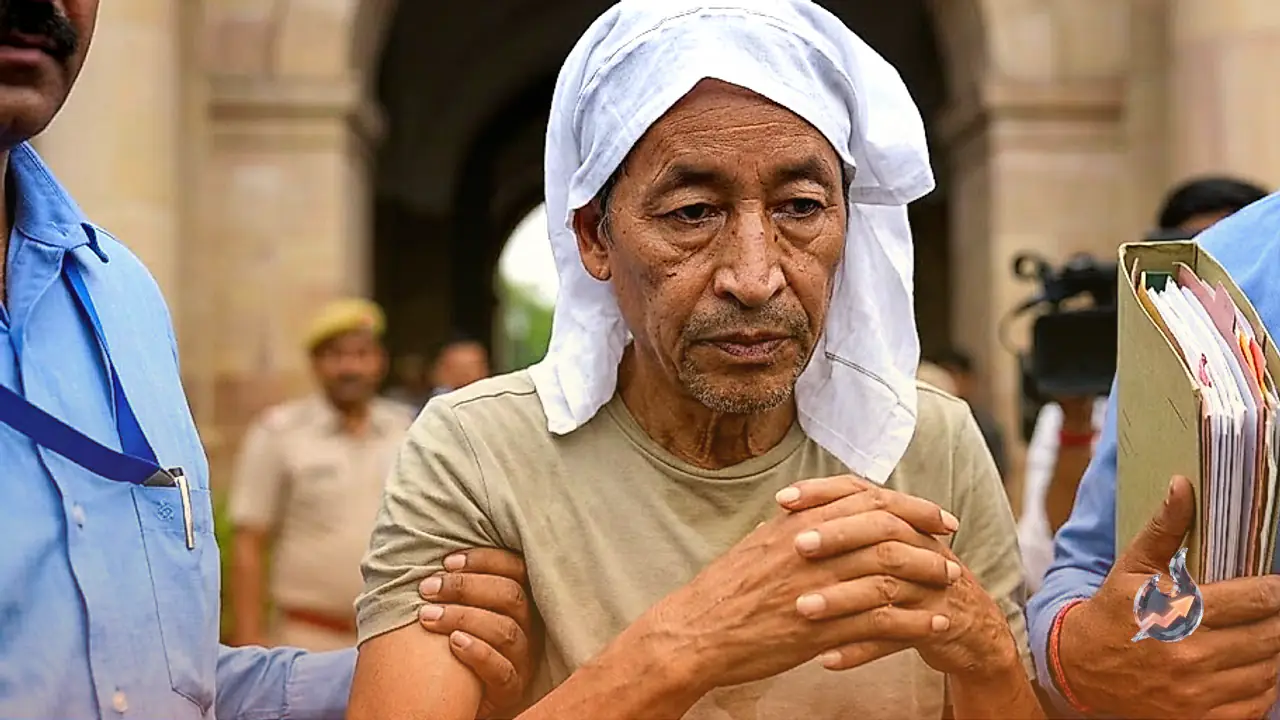
The initial sign of this tactical shift emerged during the press conference held by Rahul Gandhi on 25 July following Dharmendra Pradhan's resignation. Shifting the focus away from Pradhan, Gandhi stated that during the protests, some students suffered broken hands while others sustained fractures in their ribs and legs. He added that pellet guns were deployed and numerous individuals were severely injured, asserting that Home Minister Amit Shah bears direct responsibility for these actions.
Rahul Gandhi posed two direct questions to Amit Shah. First, he asked whether the Home Minister ordered the deployment of pellet guns against students, and if not, who authorized it. Second, he questioned whether the individuals in plain clothes who assaulted students were police officers or volunteers, and who was responsible for their deployment.
Aadesh Rawal, a senior journalist who has covered the Congress party for years, noted that Rahul Gandhi is holding the Home Minister directly accountable by alleging that lathis and pellet guns were used against students on explicit instructions from the Home Minister.
Joint Opposition Strategy Inside and Outside Parliament
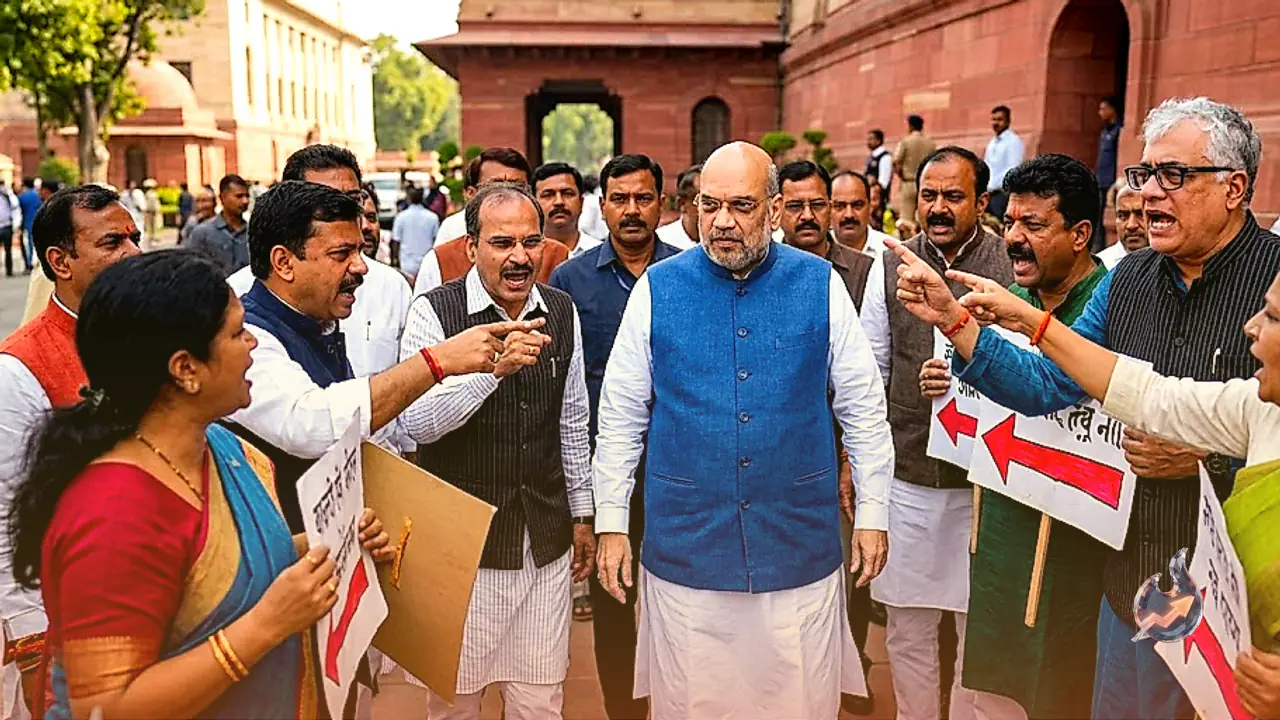
Targeting Amit Shah has evolved into a common strategy across the Opposition ranks. Six distinct developments on 27 July highlighted this coordinated approach. As soon as the House convened at 11 am, opposition members raised massive disruptions demanding a discussion on the police action against students. The Lok Sabha Speaker had to adjourn proceedings four times, leaving no room for any legislative business other than the introduction of a single Bill.
Both houses witnessed adjournment motions. In the Lok Sabha, Congress leaders K.C. Venugopal and Hibi Eden submitted formal adjournment notices, while in the Rajya Sabha, Renuka Chowdhury sought an urgent discussion on the matter. Outside Parliament, Congress MPs staged a coordinated protest march, chanting slogans demanding answers from Amit Shah.
Digital platforms also saw heightened aggression from opposition leaders. The All India Mahila Congress published a post on X demanding that Amit Shah provide explanations regarding the lathi charge. TMC MP Mahua Moitra stated that both the Delhi Police and the CRPF Rapid Action Force operate under Amit Shah, meaning he either issued the directives or must clarify who actually gave them.
Prior to the commencement of parliamentary proceedings on 27 July, opposition leaders convened a strategy meeting in the chamber of Congress President Malligrant Kharge, where they reportedly resolved to disrupt proceedings and demand accountability from Amit Shah. Both the Delhi Police and the CRPF Rapid Action Force, which were deployed during the 20 July march toward Parliament, fall directly under the administrative control of the Union Home Ministry.
Political analyst Rasheed Kidwai observed that the Congress party has little remaining political leverage to gain from the NEET paper leak controversy, prompting it to channel student anger over the lathi charge directly toward Amit Shah. Senior journalist Neeraj Chaudhary added that the Opposition aims to compound the pressure already building on the government and establish clear accountability.
Government Counter-Strategy and Legislative Measures
The administration responded to these political maneuvers through a structured three-step counter-strategy. On 26 July, Prime Minister Narendra Modi announced a high-powered task force dedicated to exam reforms. Headed by Infosys co-founder Nandan Nilekani, the panel includes former Intelligence Bureau chief Tapan Deka, former ISRO chairman S. Somanath, IIT Madras Director V. Kamakoti, former Education Secretary Anita Karwal, and retired civil servant Amrit Lal Meena.
Furthermore, the government introduced the Public Examination Amendment Bill in Parliament on 27 July. The proposed legislation entails stringent penalties, including up to 10 years of imprisonment and fines reaching up to ₹10 crore for individuals implicated in paper leaks, alongside granting the Centre authority to establish a dedicated special task force.
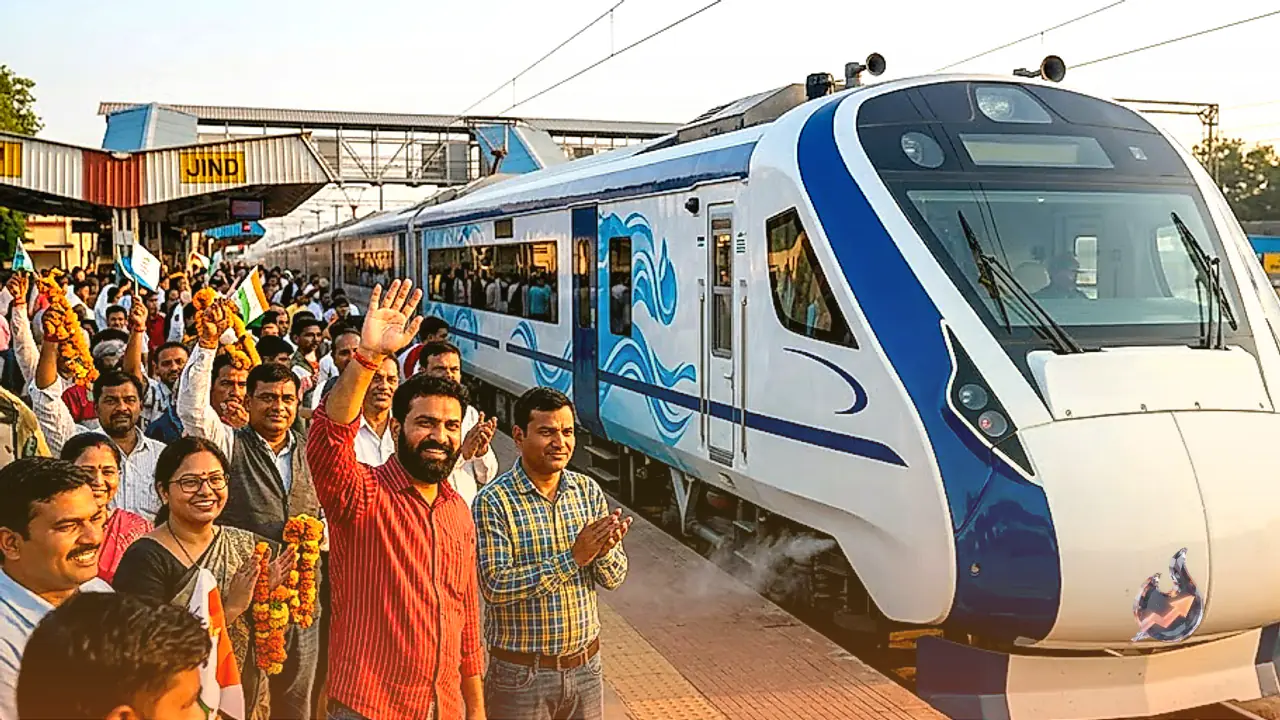
When Dharmendra Pradhan arrived at Parliament on the morning of 27 July, National Democratic Alliance MPs welcomed him warmly with traditional shawls and Mithila caps while raising supportive slogans.
Political analyst Rasheed Kidwai noted that the government prefers a functioning Parliament because structured debates generally favor the ruling party. He remarked that while the Opposition can manage to stall proceedings, the administration possesses a robust bench of capable speakers to counter them. Senior journalist Harshvardhan Tripathi suggested that the government is determined to avoid appearing as though it surrendered to opposition pressure and will seek ways to resolve the impasse.
BJP MP Rahul Sinha asserted that students have accepted the Prime Minister's decisions, and the Congress party is merely attempting to keep the controversy alive out of fear of facing a substantive debate on the Bill.
Potential Risks of the Opposition Strategy Against Amit Shah
The ultimate success of this political gamble rests entirely on public sentiment. Because the ruling coalition commands a clear majority in Parliament, the Opposition lacks the numerical strength to block the Public Examination Amendment Bill, leaving the disruption of parliamentary proceedings as its primary tactical recourse.
Rasheed Kidwai pointed out that since the Opposition cannot openly oppose the legislation itself, it is compelled to raise alternative issues, noting that the BJP pursued a parallel strategy during its years in opposition.
Meanwhile, the government maintains that the student agitation has concluded and the core grievance has been successfully addressed. It accuses the Opposition of paralyzing parliamentary work for partisan objectives rather than engaging in constructive debate over the examination amendment measures.
Ultimately, the outcome depends on public perception. If underlying public anger regarding the handling of student protests persists, targeting Amit Shah could yield political dividends for the Opposition. Conversely, if the broader public concludes that the matter has been settled, the strategy risks backfiring significantly.
The Standpoint of the Cockroach Janta Party
Amid these broader political maneuverings, the Cockroach Janta Party has neither confronted Home Minister Amit Shah regarding the police action against students nor endorsed the Opposition's new strategic direction.
The organization has consistently characterized its protest movement as strictly non-political, maintaining that individuals of all political affiliations, including BJP supporters, are welcome to participate. Throughout the entire episode, Rahul Gandhi refrained from mentioning either the Cockroach Janta Party or Abhijeet Dipke in his public statements.
On 26 July, Cockroach Janta Party spokesperson Saurav Das stated that the administration should honor its previous commitments ensuring that no student faces disciplinary repercussions for joining the demonstration and that all pending legal cases against them are formally withdrawn.