














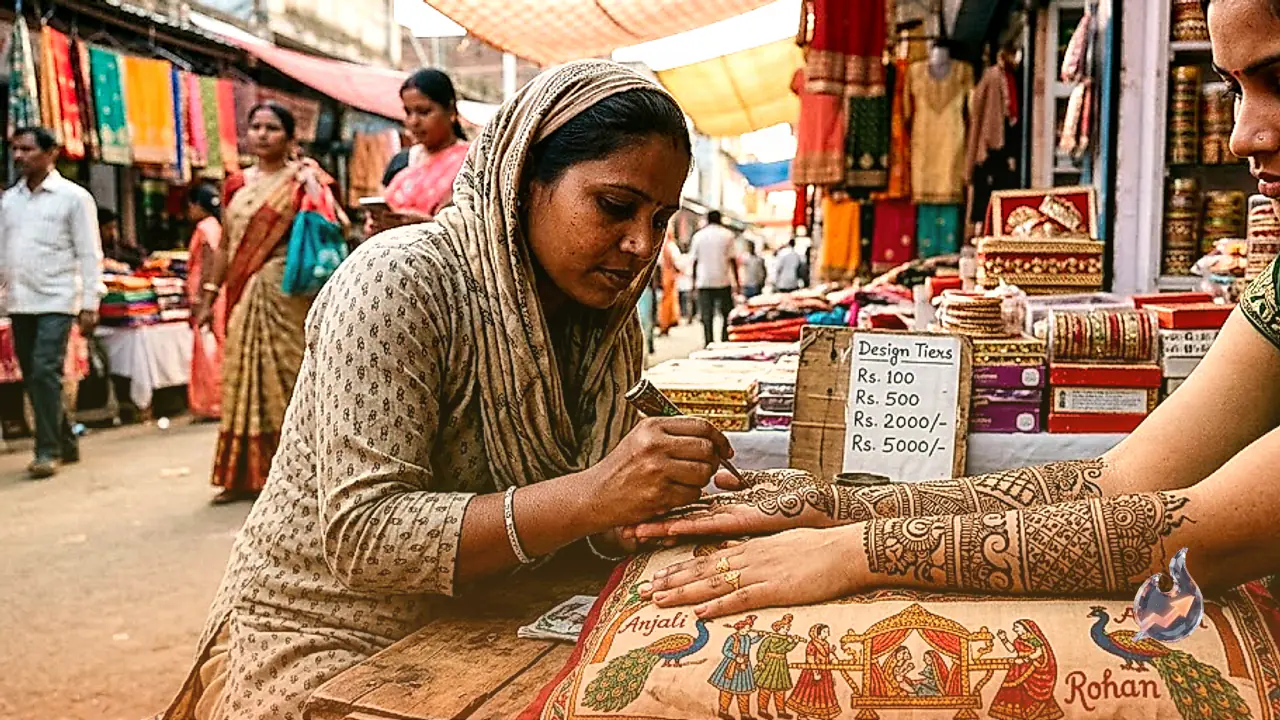

Wedding preparations across Jharkhand's Palamu district have gained strong momentum as the local market readies for the ongoing marriage season. Alongside bridal attire and personal styling, henna application remains an indispensable part of traditional bridal adornment. Henna artists across the district are witnessing a surge in advance bookings, with brides increasingly opting for bespoke storytelling patterns rather than relying solely on conventional motifs.
Evolution of personal taste and custom patterns
Neha Gupta, an artist based in Chainpur who has been practicing the craft professionally for the past 6 years, explains that client preferences have evolved substantially over time. Bridal henna is widely regarded as a sacred symbol of marriage, which encourages brides to select striking and meaningful designs for their special occasion. Most clients today insist on personalized patterns that mirror their unique journey or commemorate the wedding festivities.
Demand for Rajwadi, Marathi, and regional heritage styles
In the ongoing bridal season, design patterns influenced by Rajwadi, Gujarati, Marathi, and Bengali aesthetics are seeing particularly high demand. These intricate styles frequently incorporate ceremonial emblems such as elephants, peacocks, ceremonial drums, nagadas, and dancing figures. Artists also sketch detailed vignettes of the bride and groom, the sacred fire, and the wedding rounds across the hands. Additionally, several brides specifically request portraitures showing them receiving blessings from their parents or featuring memorable moments from their wedding events.
Application time and detailing requirements
Crafting intricate henna patterns demands intense precision and steady handwork. Applying a standard single design typically requires anywhere from 30 to 60 minutes. When it comes to full coverage across a bride's hands and feet featuring bespoke narrative artwork, the process takes considerably longer. The degree of fine detailing and customized scene composition directly dictates the hours an artist must invest in completing the work.
Pricing structure and service rates
Service charges in the district vary based on the surface coverage and design intricacy. Routine decorative henna applications begin at approximately Rs 100 and can escalate to Rs 4,000 or Rs 5,000 for highly detailed artwork. For standard bridal services, charges generally fluctuate between Rs 2,000 and Rs 4,000. Any additional coverage on the arms or feet, combined with complex bespoke scenes, can adjust the final fee accordingly.
Client outreach through digital platforms
Artists are increasingly relying on digital networks to showcase their recent design portfolios to prospective clients. In Palamu, customers can directly connect with artists via the Niharika Mehendi Artist Instagram page. Furthermore, inquiries and bookings for both henna and broader wedding beauty packages are being coordinated through Riddhima Makeover, reflecting how digital exposure continues to popularize personalized wedding styling throughout the region.