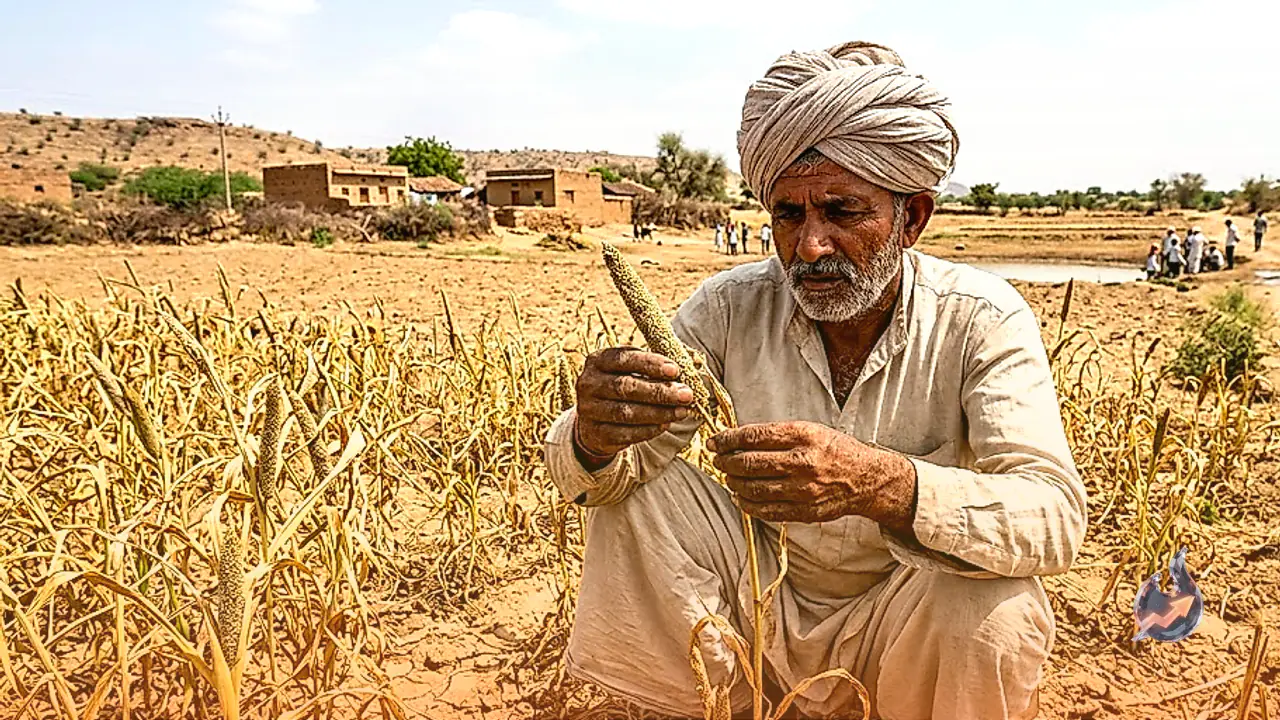

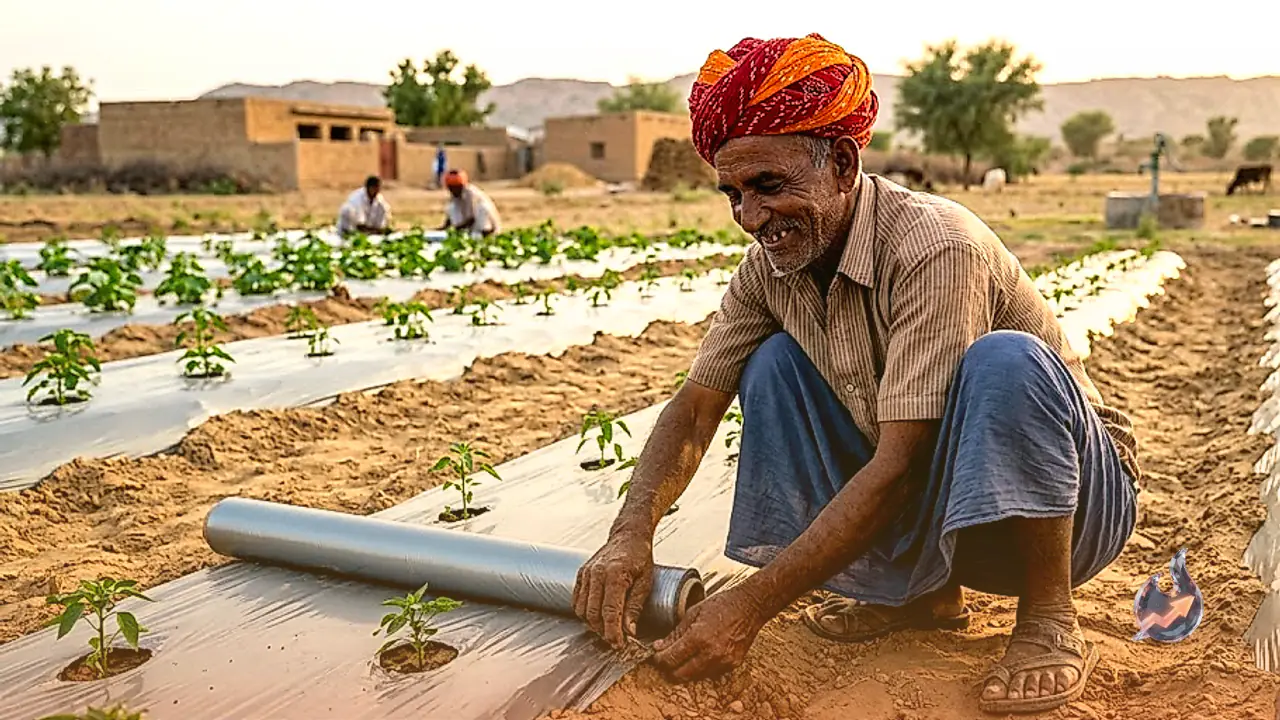


















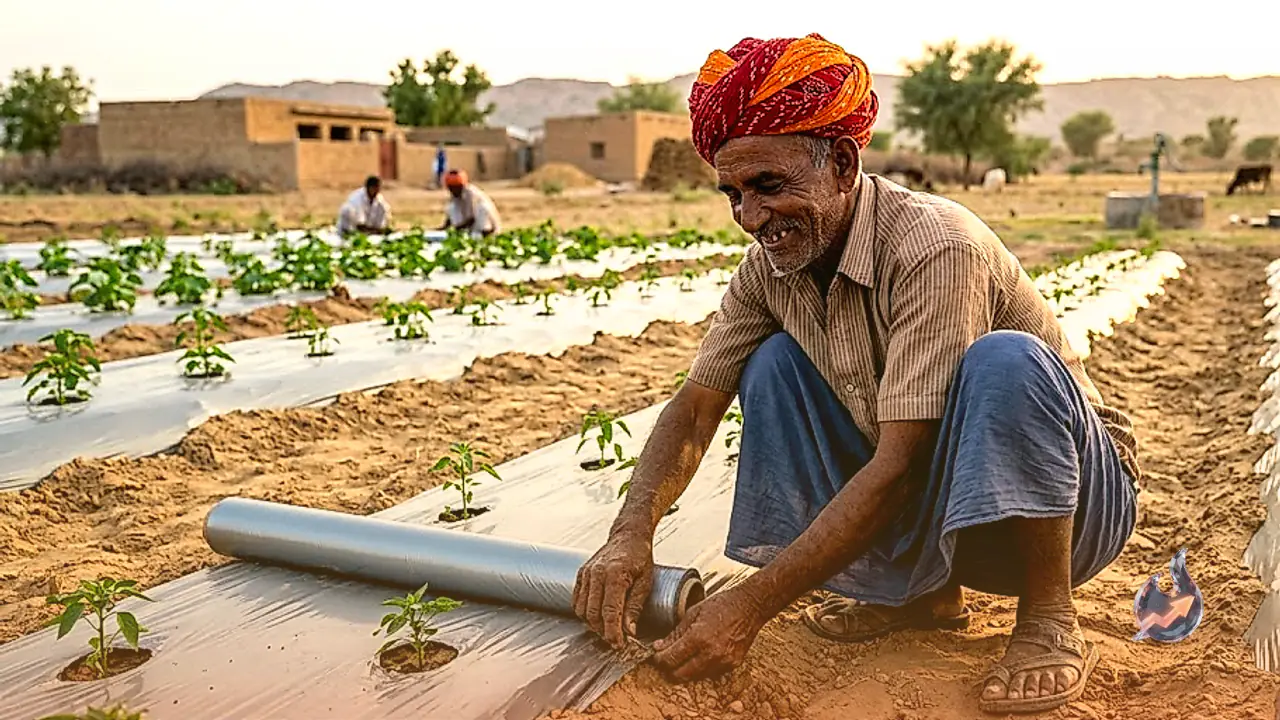

A targeted initiative to accelerate protected cultivation and modern agricultural practices has been rolled out for farmers in Rajasthan's Bikaner district. Under this assistance framework, horticulture growers adopting plastic mulching across their fields will receive a financial subsidy covering up to 50 percent of the total cost. The primary objective behind encouraging this practice is to suppress invasive weed growth, optimize the utilization of irrigation water, and elevate the harvest quality and yield of horticultural produce. The horticulture department has earmarked a comprehensive district-wide target of bringing 70 hectares of farmland under plastic mulching coverage.
Financial Parameters Under the National Horticulture Mission
Mukesh Gahlot, Assistant Director of the horticulture department, outlined that the adoption of plastic mulching is being actively incentivized to expand protected farming under the National Horticulture Mission. Under the prevailing guidelines, beneficiaries are entitled to financial assistance covering 50 percent of the mulch sheet cost, capped at an upper ceiling of 20,000 rupees per hectare. Individual farmers can avail themselves of this assistance for a maximum landholding area of up to 2 hectares on a pro-rata basis, allowing both medium and larger growers to integrate protective ground covers into their regular cultivation cycles.
Procurement Norms Through Contracted Vendors and Cost Benchmarks
To qualify for the subsidy payout, participating growers must procure their plastic mulch sheets exclusively from commercial firms contracted and empanelled by the horticulture department. The financial subsidy calculation will be pegged at 50 percent of either the benchmark expenditure limit of 40,000 rupees per hectare or the contracted firm's approved rate, whichever turns out to be lower. Furthermore, to address varying terrain and logistics across designated scheduled areas, an additional leeway of 15 percent has been established on the unit cost benchmark of the mulch sheets, enabling growers in these locations to receive equitable financial coverage.
Category Allocations Across Bikaner's 70-Hectare Target
Premaram, Deputy Director at Horticulture Research ATC, detailed that the aggregate 70-hectare distribution target across Bikaner district has been systematically apportioned to ensure inclusive outreach. Out of the total area, 50 hectares are allocated to general category cultivators, while the remaining 20 hectares are explicitly reserved for farmers belonging to the Scheduled Caste category. Ground-level deployment of plastic mulch films plays a pivotal role in retaining soil moisture over prolonged durations, drastically curbing the volume of irrigation water needed in arid conditions. Concurrently, reducing weed competition allows plants to develop unimpeded, thereby boosting commercial crop appearance and grade.
Priority Guidelines and Exclusion Criteria for Beneficiaries
To broaden the reach of public funding, the administration has placed specific restrictions regarding beneficiary selection. Mukesh Gahlot explained that first preference in sanctioning subsidies will be accorded to farmers who have never previously availed themselves of benefits under this scheme. Conversely, agriculturalists who have already drawn subsidies under this program during the 2025-26 operational year will not be eligible to participate in the present distribution phase. This structural filter is designed to onboard fresh cultivators and expand technological adoption across unserved farming communities throughout the district.
Online Application Flow via the Raj Kisan Portal
Eligible cultivators seeking to take advantage of the subsidized mulch sheets can submit their formal dossiers online through the official Raj Kisan portal. The department has transitioned the application intake entirely into digital records to ensure smooth administrative clearance. Applicants are strongly advised to thoroughly review the documentation prerequisites, land records, and eligibility criteria before final dispatch. For localized technical clarity or assistance with submission, farmers can consult their nearest Assistant Agriculture Officer or the local Agriculture Supervisor (Horticulture) operating in their respective administrative jurisdictions.