

















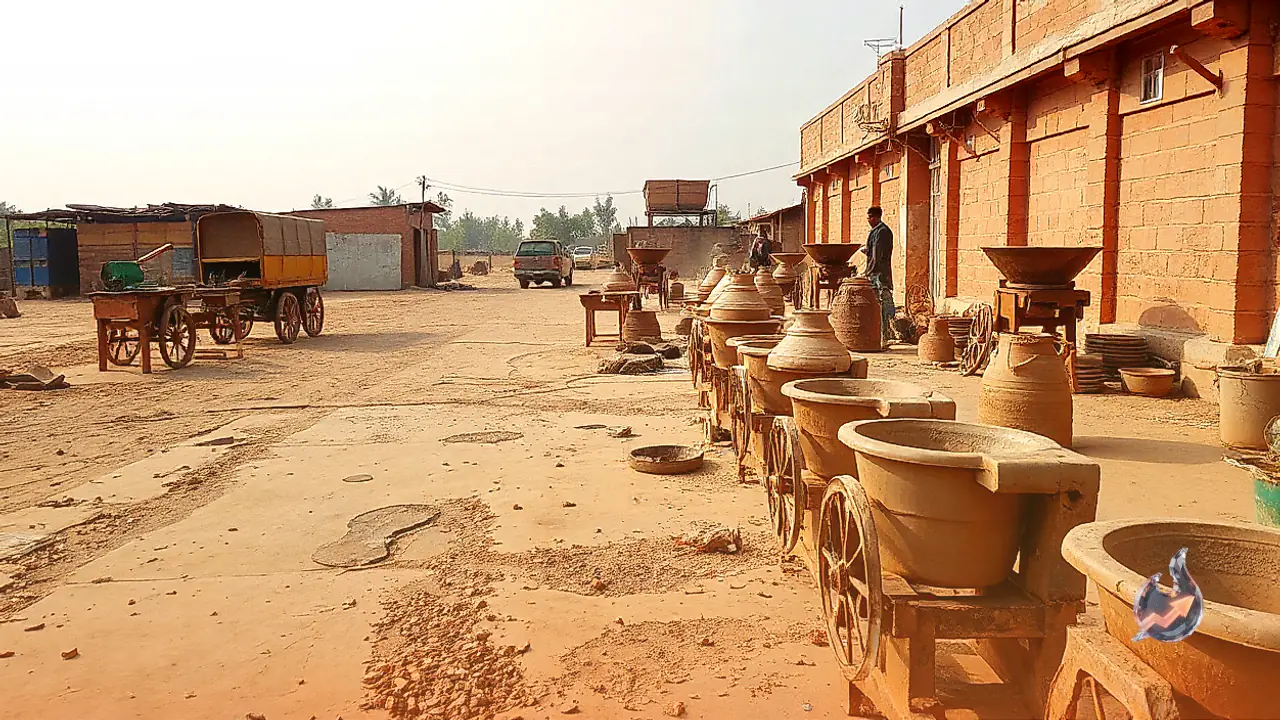

In the rural stretches of Palamu district, traditional clay artisans are experiencing a major operational transformation driven by modern equipment support. Initiatives organized under the Mati Kala Board are equipping village potters with motorized machinery, drastically reducing physical exertion while significantly expanding daily manufacturing capacities. As the festive rush of Deepawali creates peak regional demand for earthen lamps, the integration of motorized pottery wheels and mechanized clay preparation has allowed local craftsmen to meet substantial market orders across both rural and urban commercial centres.
The Shift From Manual Wooden Wheels to Motorized Efficiency
In the Lesliganj locality of Palamu, artisan Krishna Prajapati has been crafting clay lamps, pitchers, and ornamental earthen goods for approximately six years. During the initial five years of his trade, production was constrained by traditional, physically exhausting methods. Shaping vessels required spinning a heavy wooden wheel with a handheld stick. The manual wheel rotated at limited speeds and required continuous physical labor to keep spinning, yielding merely 10 to 12 pieces per spin cycle. Managing the entire sequence manually from spinning the wheel to shaping each unit consumed excessive hours and restricted output to small volumes.
State Board Provides Equipment at a 90 Percent Subsidy
A turning point arrived approximately one year ago when Krishna Prajapati accessed assistance under the Mati Kala Board scheme. Under this program, artisans receive motorized pottery wheels and specialized clay mixing machines known as pug mills at a 90 percent government subsidy. The arrival of these tools restructured his daily operations. Previously, preparing and kneading clay required rigorous manual labor using hands and feet, which was both time-consuming and inconsistent. The pug mill now blends raw clay into a smooth, ready-to-use consistency within minutes, while the motorized pottery wheel maintains steady rotation, enabling rapid shaping of multiple items without physical strain.
Drying, Kiln Firing, and Distribution to Medininagar Markets
While mechanization has accelerated initial forming, subsequent stages continue to follow time-tested curing practices. After items are shaped on the motorized wheel, the damp lamps and pots undergo sun drying for one to two full days. Once moisture levels drop, the artisan stacks the items inside traditional wood-fired kilns for thorough baking. The inclusion of motorized shaping and mechanized clay mixing has minimized product deformities and elevated overall consistency. At present, Krishna Prajapati sells earthen lamps at the rate of 100 rupees for 100 pieces. His wares are distributed throughout local neighbourhood markets as well as the bustling trading hubs of Medininagar, also known as Daltonganj.
Monthly Earnings Reach 30,000 to 40,000 Rupees
The operational upgrade has translated directly into higher financial returns. Krishna Prajapati generates an estimated monthly income between 30,000 and 40,000 rupees from his craft. Festival periods such as Deepawali provide a major commercial boost as retail and wholesale orders for traditional earthen diyas surge. The deployment of mechanized equipment demonstrates how practical technology inputs can protect traditional earthen arts while converting rural artisan trades into viable, profitable small enterprises.