























Cultivating strawberries is rapidly becoming a lucrative commercial venture for growers seeking substantial returns within a short agricultural timeframe, particularly across regions like Palamu in Jharkhand. Moving beyond traditional farming methods, growers in these areas can meaningfully raise their farm incomes by introducing this high-value crop. However, securing superior yields alongside market-grade berry quality demands the strict implementation of modern scientific agricultural practices. Success relies on balancing several operational stages, ranging from selecting certified cultivars and maintaining disciplined spacing to managing irrigation schedules, soil nutrition, and protective bed covers. Agricultural expert Dr. Pramod Kumar emphasizes that applying water-soluble fertilizers remains the most reliable technique for strawberry crops, as it enables root systems to absorb vital nutrients rapidly and without losses.
Balanced Crop Nutrition Through 19:19:19 NPK Fertilizer
Proper plant nutrition throughout the growth cycle governs fruit development and overall plant vigour. Dr. Pramod Kumar notes that water-soluble formulations deliver immediate results, with the balanced 19:19:19 NPK blend proving especially beneficial for strawberry plants. This specific formulation supplies nitrogen, phosphorus, and potassium in equal proportions to meet diverse physiological needs. The nitrogen fraction supports vegetative canopy expansion and healthy leaf growth, while phosphorus drives deeper, more resilient root network development. Concurrently, potassium enhances fruit firmness, coloration, sweetness, and overall plant endurance against environmental stressors. Because this fertilizer dissolves completely in water, farmers can effortlessly introduce it through drip irrigation networks. Delivering nutrients directly to the root zone avoids mineral wastage and ensures plants absorb their food efficiently.
Field Geometry and Optimal Spacing Guidelines
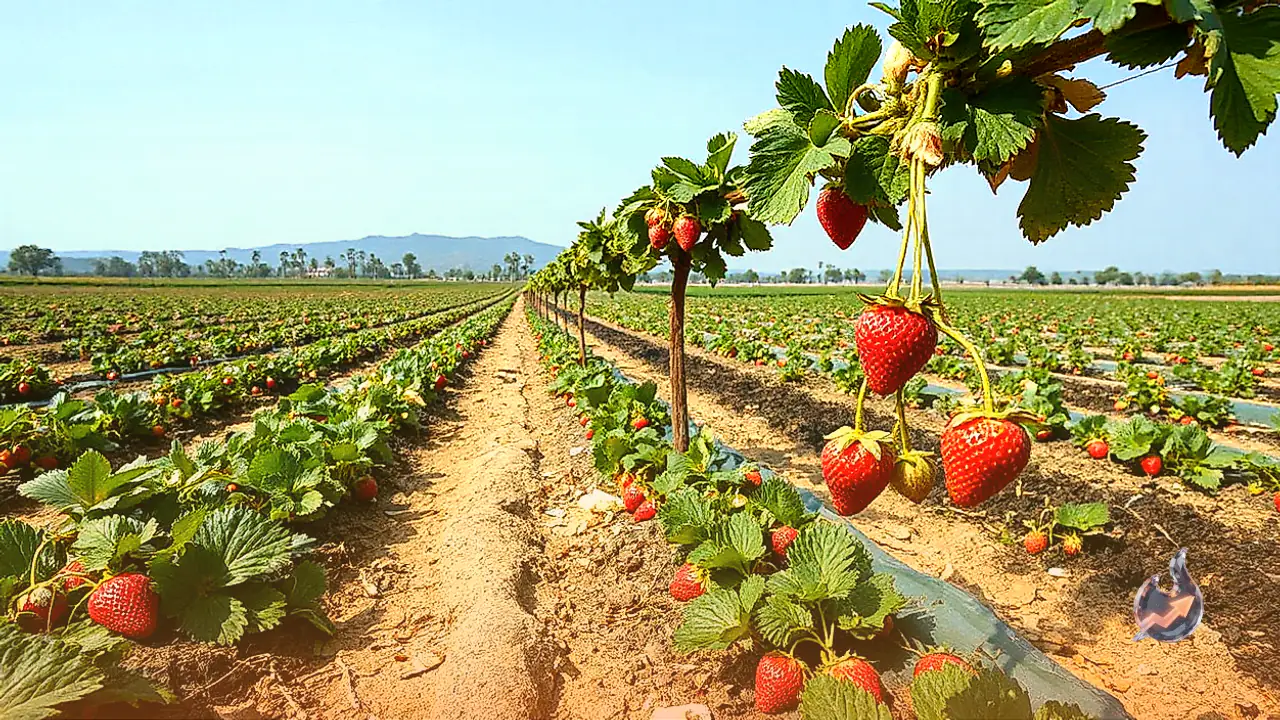
Strategic field arrangement directly dictates sunlight exposure, aeration, and operational ease across the plantation. Field rows must be spaced between 80 and 100 centimetres apart, with individual plants placed at intervals of 20 to 25 centimetres along the row. Maintaining this precise spacing provides every plant ample room to expand its canopy and receive uniform sunlight. Furthermore, this deliberate layout simplifies routine agricultural tasks, including weeding, intercultural hoeing, drip lateral adjustments, and delicate fruit picking. Regarding variety selection, Dr. Kumar suggests reliable cultivars such as Chandler and Pusa Early, alongside other regionally adapted options. Farmers should finalize their cultivar choices by carefully assessing regional climate conditions, soil compatibility, and prevailing consumer preferences in nearby markets.
Fruiting Timeline and Continuous Crop Monitoring
A notable advantage of commercial strawberry farming is its exceptionally brief gestation period, with plants beginning to yield marketable berries within 50 to 60 days following field transplantation. Because the transition to reproductive growth happens quickly, supplying uninterrupted nutrition throughout this active window is paramount. Adhering to balanced fertigation schedules alongside calibrated watering ensures berries grow to an appealing size and retain optimum texture. Under diligent management, farmers can reliably continue harvest cycles until the month of March. Sustaining high productivity across this multi-month harvesting window requires continuous surveillance of plant health, soil moisture levels, and emerging pest threats.
The Role of Plastic Mulching and Ventilated Packaging
Protective bed management using plastic mulching is critical to safeguard harvestable fruit from field decay. Covering raised plantation beds with plastic mulch sheets prevents hanging berries from contacting wet soil directly, drastically cutting down incidences of fungal rot and physical blemishes. Mulch layers also suppress weed growth naturally and prevent soil moisture from evaporating under harsh sunlight, resulting in substantial water savings. Post-harvest handling demands equal diligence due to the delicate, perishable nature of strawberry skin and pulp. Harvested berries should be packed in appropriately sized, well-ventilated containers rather than tight cartons. Sturdy, aerated boxes prevent bruising and crushing during transport, ensuring the produce reaches urban distribution centers in fresh, marketable condition.