




















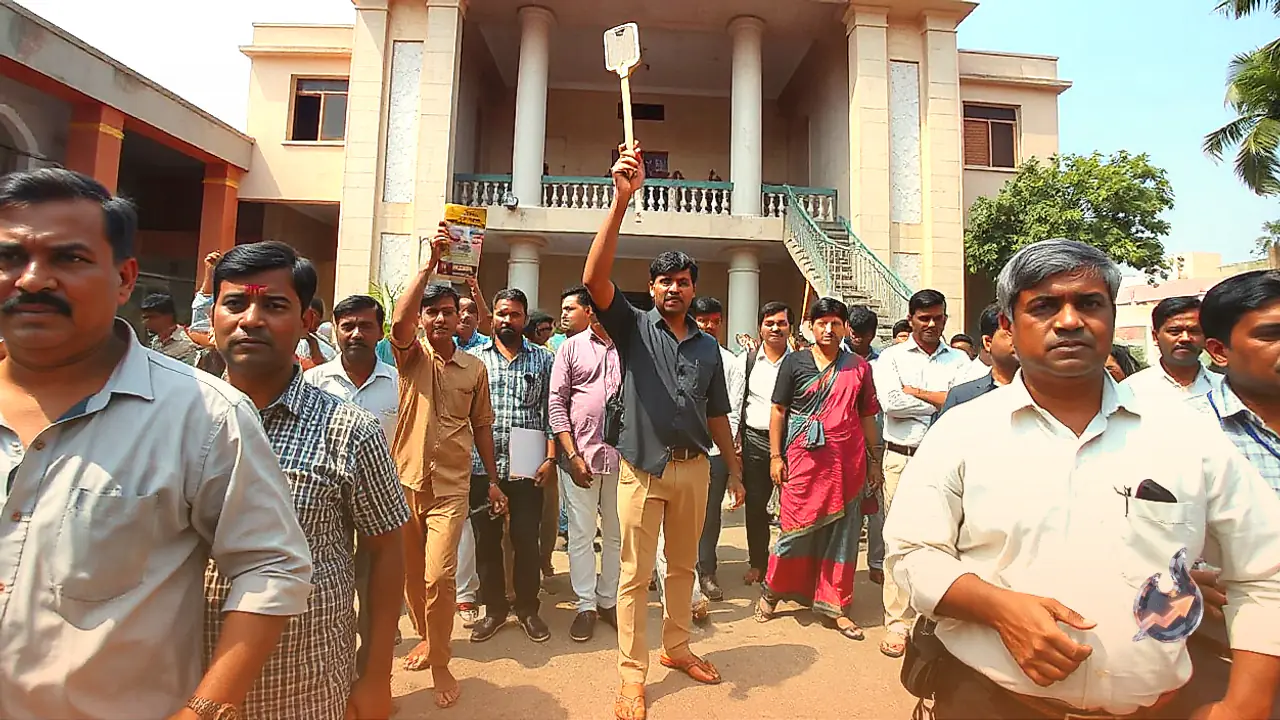

The Kerala High Court has taken an exceptionally firm stance on student demonstrations, hunger strikes, and campus politics within higher education institutions. The court underscored that colleges and universities exist strictly to impart education to students rather than serving as grounds for active political agendas. Reaffirming campus disciplinary protocols, the judiciary clarified that students taking part in sit-ins, dharnas, hunger strikes, or satyagraha within educational premises can rightfully face severe penalties, including suspension, expulsion, or rustication.
Preserving Academic Ambience in a Constitutional Democracy
Expressing deep concern over disruptive agitational culture on campuses, the court emphasized that such disruptive political pursuits hold no legitimate place in a constitutional democracy, and certainly not within academic spaces. The judicial bench reiterated that the atmosphere of learning centers must remain peaceful and conducive to intellectual growth. Institutions cannot be dragged into turmoil by aggressive demonstrations that disrupt the normal flow of scholastic pursuits and campus discipline.
Reliance on Historical Legal Precedents and Past Verdicts
To substantiate its determination, the court drew directly upon historical legal precedents, notably citing the 2017 ruling in the matter of Dr Antony Thomas versus VM Mohammed Rafeeq and Others. Recalling this past judgement, the bench reiterated that political outfits cannot be permitted to hijack educational establishments or hold universities hostage to further their broader political ambitions. The primary responsibility of any institution remains focused on nurturing students rather than functioning as political platforms.
Overturning the Single Bench Order Involving Sanskrit University
This authoritative ruling was delivered while setting aside an earlier directive from a single-judge bench, which had granted relief to suspended students of Sree Sankaracharya Sanskrit University by allowing them to write their semester examinations. By revoking that interim dispensation, the division bench firmly reinforced institutional authority. The court declared that student agitators who breach university discipline must not be extended undue concessions that undermine regulatory decorum.
Protecting the Rights of Law-Abiding Students
Safeguarding the welfare of the vast majority of non-participating learners, the court pointed out that the educational rights of peaceful, well-behaved students cannot be compromised due to agitation by political factions. The court remarked that regular classes, examinations, and the broader academic schedule must remain entirely uninterrupted by campus demonstrations. A disciplined atmosphere remains indispensable to ensure that genuine students are not deprived of the peaceful educational environment they are entitled to.