























In Uttar Pradesh's Lakhimpur Kheri district, paddy cultivation serves as a primary source of livelihood for local farmers. When the yield turns out strong, this staple crop brings dependable earnings that substantially strengthen rural household finances. With the arrival of October, harvesting operations across agricultural fields gather rapid momentum. At this crucial juncture, some growers choose to dispose of their freshly reaped produce immediately to fulfill urgent domestic expenses. Meanwhile, others prefer to hold on to their harvest for a few weeks or months, anticipating a future rise in market rates that could deliver much better profitability. However, holding back produce pays dividends only when post-harvest handling and storage are managed with technical care and discipline.
It is an all-too-common misstep for farmers to rush their newly harvested grains straight into gunny bags, closed rooms, or metallic containers without ensuring thorough drying. In the initial days, the produce might look entirely sound on the surface, but latent moisture quickly begins taking its toll. As internal humidity remains trapped, mould sets in, foul odours develop, and the kernels begin deteriorating in texture and colour. Such spoilage translates into severe economic setbacks for the grower. To prevent such avoidable losses, paying meticulous attention to drying conditions and moisture levels prior to final storage becomes an indispensable requirement.
Why Complete Drying Is Critical Before Bagging Grains
Agricultural scientist Dr. SK Vishwakarma emphasizes that verifying the complete dryness of paddy is the foremost prerequisite before transferring it to any storage structure. Storing grains that retain elevated levels of moisture makes prolonged preservation nearly impossible. Trapped dampness creates fertile ground for fungal growth, damages the grain's natural coloration and milling quality, and sharply raises the risk of severe insect infestations.
Dr. Vishwakarma points out that the harvest must receive adequate exposure to direct sunlight over several days before packing. Rushing damp or semi-dry grains directly into storage containers remains a costly error that farmers must consciously avoid. The recommended procedure is to spread the grain evenly across open threshing floors to allow moisture to evaporate fully, and only then proceed to transfer it to a secure environment.
The 10 to 12 Percent Moisture Rule and Effective Sun-Drying
The single most decisive parameter in preserving harvested paddy is its internal moisture content. According to the agricultural scientist, maintaining a moisture level around 10 to 12 percent represents the optimal threshold for long-term grain safety. Allowing moisture to hover above this narrow band when packing grains into enclosed spaces drastically escalates the likelihood of rapid fungal infection and kernel decay.
Growers should never rely solely on superficial appearance when assessing whether grain is ready for storage. A lot of times, grains look deceptively crisp and dry on the outer husk under hot sun, while substantial dampness remains locked inside the core. When packed away in that condition, internal heat builds up rapidly within the pile, creating ideal conditions for fungal spores to proliferate within days.
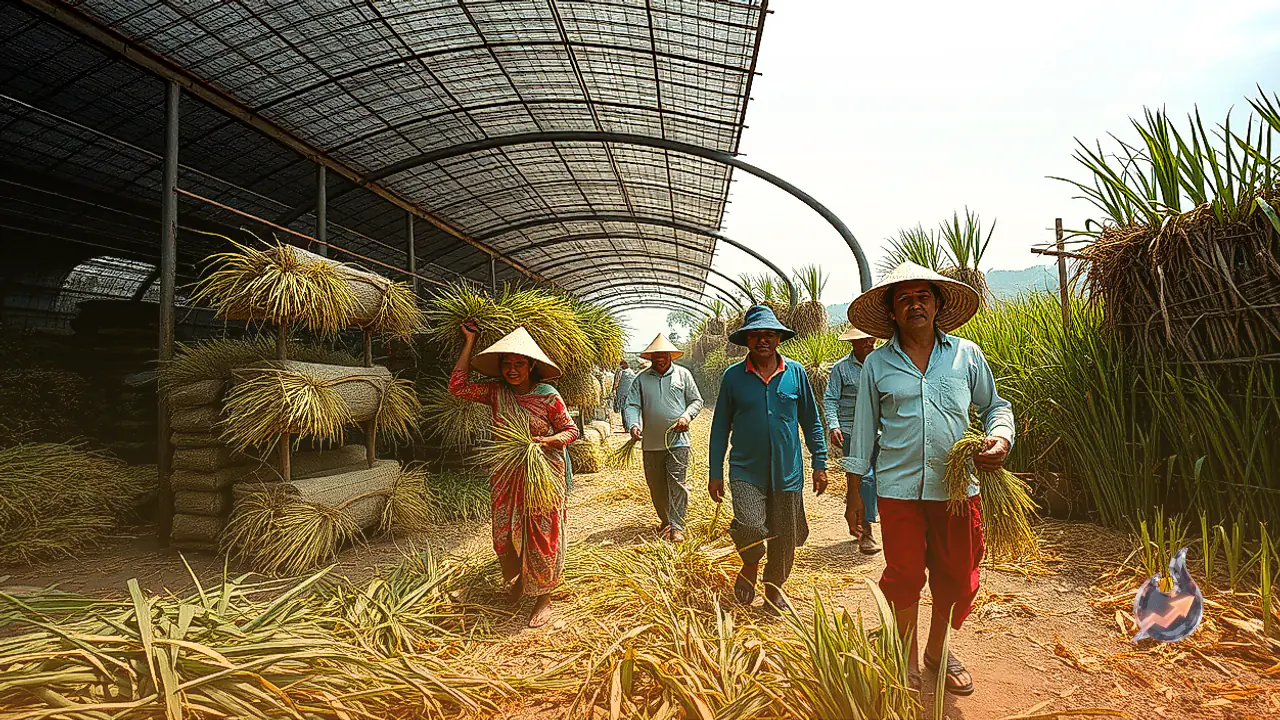
For growers aiming to maintain grain quality over an extended timeline, following a thorough sun-drying routine after harvesting is essential. Under normal climatic conditions, spreading paddy under open sunlight for approximately 4 to 5 days is typically sufficient to bring it to an acceptable state. However, the exact duration of drying can vary depending on local weather conditions, the intensity of sunlight, and the initial wetness present in the grain at the time of reaping.
While drying, farmers must avoid laying out the grain in excessively thick mounds. Spreading the crop in thin, uniform layers ensures that both sunlight and passing air reach every kernel, speeding up moisture loss. Additionally, workers should regularly stir and turn the grains throughout the day so that the entire batch dries uniformly from top to bottom.
Utilizing Tin Drums and Cleaning Storage Containers
Once the grain has dried to the recommended standard, it can be shifted into secure holding units. Utilizing tin drums represents a reliable, sturdy method for storing grains across extended periods. However, before pouring the harvest into these metallic bins, one must verify that the drums are completely clean, devoid of dampness, and entirely free of debris.
Old drums often retain lingering traces of moisture, fine dust, cobwebs, surviving insect pests, or dormant fungal residue from earlier seasons. Storing freshly dried grain in uncleaned receptacles risks contaminating the new harvest right away. Consequently, washing, scrubbing, and thoroughly drying the storage vessels in the sun is just as vital as drying the paddy itself.
Preparing the Storage Area and Defending Against Dampness
The physical surroundings of the storage space play an equally crucial role in preserving grain health. Paddy should always be kept in a room or shed that is completely protected from rainwater intrusion, wall seepage, and ground dampness. The area must remain spotless, hygienic, and thoroughly dry. Rather than stacking filled drums or gunny sacks directly on concrete or mud floors, placing them on wooden planks or elevated platforms is a much safer practice.
Elevating the containers off the ground prevents subterranean cold and rising floor moisture from penetrating the bags. Furthermore, the storage premises must be inspected beforehand to guarantee there are no leaks or cracks in the ceiling through which sudden rains might drip.
According to the agricultural scientist, shielding the harvest against ambient atmospheric moisture is the central safeguard throughout the storage period. At the same time, the facility should not be kept stiflingly airtight or chronically damp without any air circulation. Excessive humidity invariably degrades the grain's commercial grade, making a well-ventilated, clean, and completely dry environment the ultimate key to safeguarding farm produce.