





















Culinary traditions across regional cultures carry distinct identities, and the culinary landscape of Mithilanchal is widely celebrated for its profound affection for flattened rice with curd. In Maithil households, this pairing is not merely a meal option but a central staple of regular life. Residents routinely choose this preparation across various times of the day, relishing it for breakfast, mid-day lunch, and even evening dinner. Whenever elaborate cooking is not on the agenda, this wholesome combination serves as the go-to comfort food morning and night, holding a treasured place in the local palate.
The Dietary and Cultural Significance of Curd
Beyond being an everyday favorite among the residents of Mithila, curd holds cultural and digestive importance. Having a small portion of curd following a meal is traditionally viewed as auspicious and actively supports smooth digestion. However, home cooks frequently struggle with curds that turn out runny or separate into excessive whey. The age-old preparation methods refined in Mithilanchal resolve these consistency issues naturally, yielding a dense, rich, and firm curd without synthetic additives.
Preparing the Earthen Pot for Earthy Fragrance
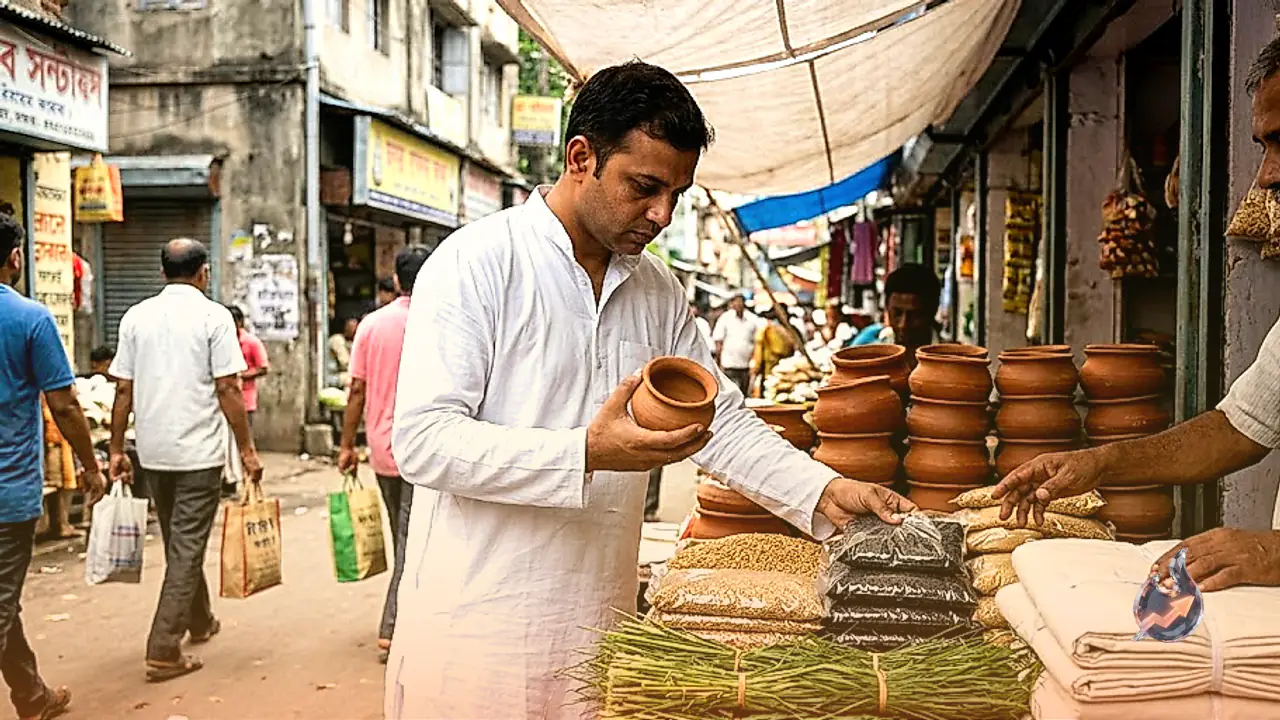
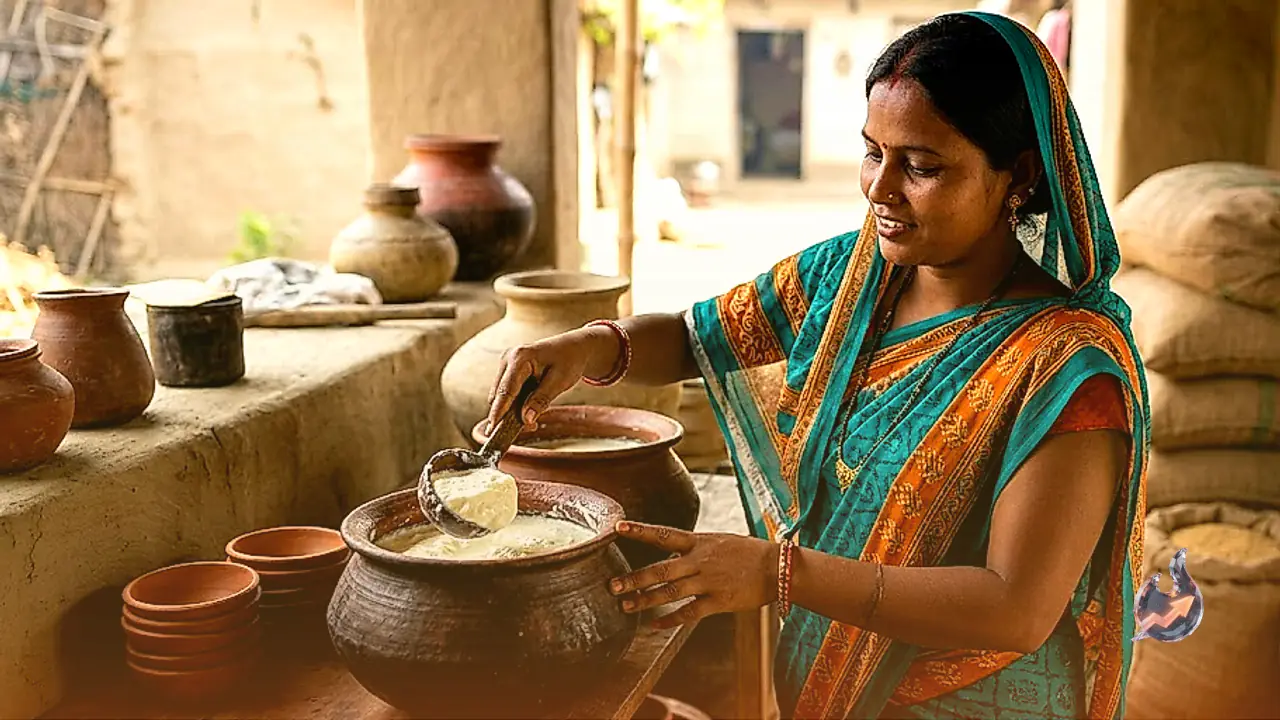
The primary secret behind this curd lies in the use of clay vessels. Before pouring in the milk, the earthenware is thoroughly washed and scrubbed. Subsequently, the pot is gently warmed over an open fire. Heating the clay container directly over the flame is a critical preparatory step, as it activates the porous mineral walls of the pot, imparting a distinctive rustic aroma and earthy flavor to the final product.
Temperature Calibration and Adding the Culture
Fresh milk is boiled thoroughly to build body and then transferred into the treated earthen container. Checking the thermal level is an essential manual process. The cooling liquid is tested intermittently with a finger to prevent premature or excessive cooling. Once the milk settles down to a warm, tolerable state where heat no longer bites the skin, roughly half a teaspoon of existing curd starter is stirred into the vessel.
Retaining Heat Inside Household Grain Bins
Maintaining a steady incubation temperature is essential for firm coagulation. In Mithilanchal, the covered earthen pot is carefully nested inside a container filled with wheat flour or placed into a bin of dry rice. Raw grains act as excellent natural insulators, shielding the pot from temperature drops and physical disturbance during fermentation. This steady, warm environment allows the curd to set evenly into thick blocks.
Alternative Methods Using Green Chillies and Sugar
Alongside standard dairy cultures, home cooks in the region also rely on alternative setting agents. In several kitchens, a whole green chilli is introduced into lukewarm milk, sometimes accompanied by a small pinch of sugar. These components aid the natural curdling action, fostering proper fermentation when traditional starter is scarce. By the following morning, the curd sets firmly with minimal whey separation, carrying the beloved rustic fragrance of roasted clay and a clean, refreshing flavor profile.