























A frequent challenge when setting curd at home is the separation of whey, which leaves the final product thin and watery rather than dense and creamy. In the cultural fabric of Mithilanchal, curd holds an irreplaceable position, featured prominently alongside flattened rice across breakfast, lunch, and dinner. Whenever an elaborate meal is absent, locals readily turn to this combination at virtually any hour of the day. Beyond its regional popularity, curd is widely consumed after meals as an auspicious tradition and an effective digestive aid. The time-tested preparation method practiced in Mithila ensures that curd sets firmly without shedding excessive liquid, creating a distinct texture and depth of flavour.
Preparing the Earthen Vessel and Regulating Milk Heat
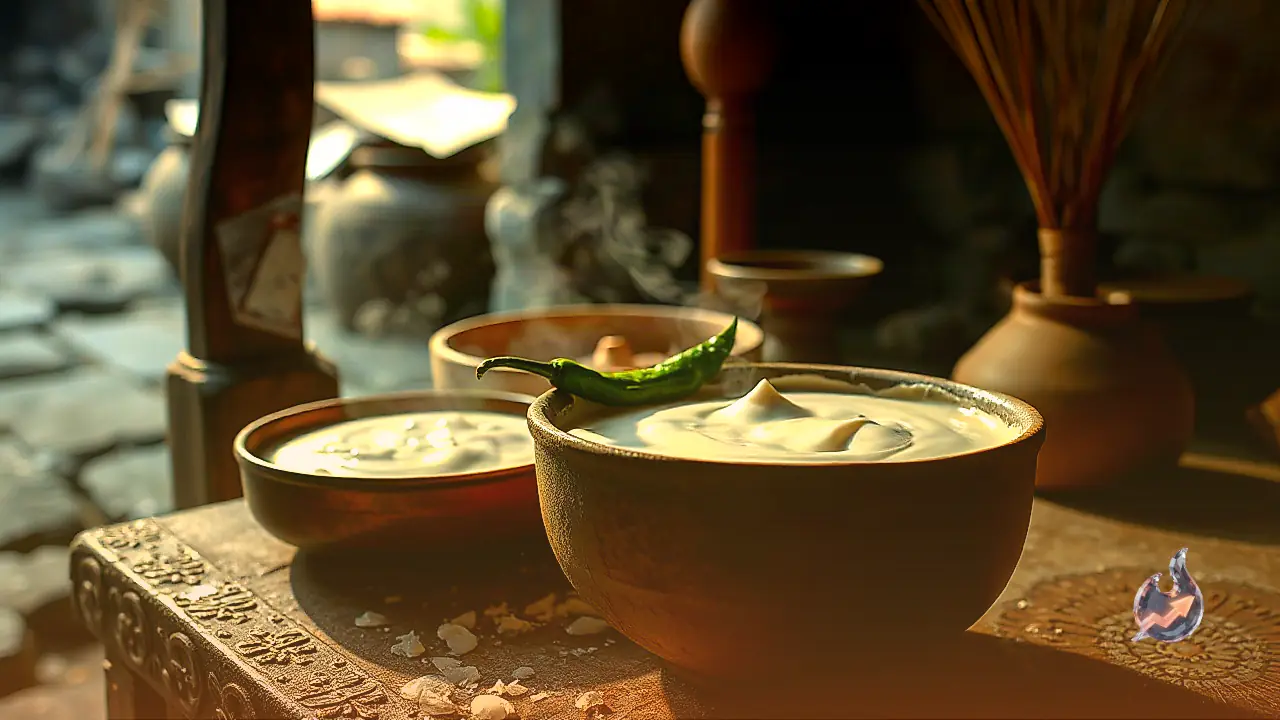
The foundation of this traditional technique lies in the exclusive use of earthenware. The clay container is first washed thoroughly to remove any impurities. Following this cleansing, the pot is gently warmed over an open flame for a brief duration. This heating step purges lingering moisture while unlocking an earthy aroma that infuses the milk as it cultures. Whole milk is brought to a thorough boil and then transferred into the treated earthenware vessel.
Achieving the correct temperature is the most critical phase of the process. The milk is periodically tested with a clean fingertip to ensure it is not excessively hot. Only when the liquid cools to a tolerable lukewarm state, comfortable to the touch, is approximately half a teaspoon of starter curd introduced. To provide an insulated, undisturbed microclimate, the vessel is placed directly inside a storage container filled with flour or uncooked rice. This stable warmth allows the culture to incubate steadily without sudden temperature drops.
The Unique Addition of Green Chilli and Sugar
An intriguing local variation in this preparation involves introducing a whole green chilli into the lukewarm milk alongside the culture. In certain households, a modest pinch of sugar is also blended in. This combination is believed to support the fermentation process, facilitating a faster and firmer set.
By the following day, the curd sets into a firm, cohesive block characterized by the pleasant earthiness of heated clay. Because the moisture is retained within the protein structure, very little liquid separates out. The resulting bowl offers a notably rich, velvety consistency that distinguishes traditional Mithila curd from modern kitchen preparations.