






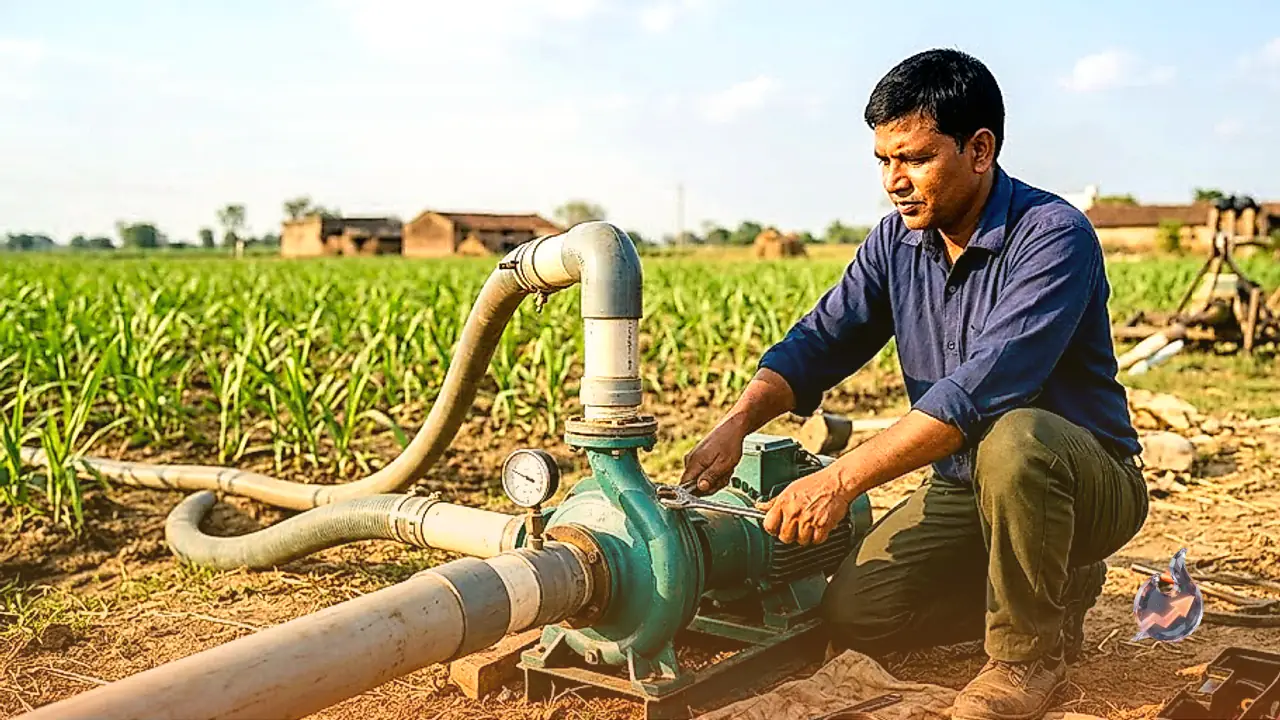
















Timely and adequate irrigation remains an essential prerequisite for healthy crop growth and achieving high agricultural yields. Farmers in rural and farming belts depend heavily on electric water pumps to transport water directly into their fields. However, continuous operation coupled with a lack of routine upkeep frequently leads to diverse mechanical malfunctions in these machines. Over prolonged usage, the discharge rate weakens or the unit begins producing harsh vibrations. Addressing these everyday field troubles, Bokaro-based water pump technician Vikas has detailed five widespread electric pump issues alongside their preventive fixes.
Remedies for Severe Vibration and Excessive Noise
Excessive shaking, mechanical vibration, and loud grinding noises in an electric water pump typically stem from inadequate water inside the pump housing or the suction pipe. When the intake line is not completely filled, air pockets disrupt internal equilibrium. To resolve this condition, both the pump casing and the suction pipe must be filled completely with water before switching the unit on.
When the suction lift is excessively high, the machine undergoes undue physical stress. Moving the pumping unit lower down, placing it as close as possible to the water reservoir or well, effectively reduces this strain. In addition, worn-out internal bearings represent another frequent cause behind intense shaking. Users should inspect the bearing assembly periodically and install a new replacement whenever excessive wear and tear is identified.
Diagnosing Low Water Pressure and Weak Output
A common operational complaint involves the pump running and discharging water, but at an unacceptably low pressure level. One underlying explanation for this drop can be a reduction in the operational rotational speed of the pump motor. Furthermore, any undetected air leak along the suction pipe joints weakens internal suction and causes the water stream pressure to collapse.
Another major culprit behind low output pressure is a damaged impeller or debris lodged inside its vanes. The impeller is the internal fan-like or wheel-shaped component responsible for propelling fluid forward under pressure. Whenever the pressure drops noticeably, operators should inspect the impeller, clear out any accumulated mud or waste, and replace the component if it exhibits physical damage or erosion.
Resolving Insufficient Water Delivery and Priming Issues
If an operational pump fails to deliver the expected volume of water, an excessively long suction lift is often the primary reason. Relocating the pumping hardware closer to the water level offers the most effective remedy in such circumstances.
Proper submergence of the foot valve is equally critical. The foot valve must remain fully immersed beneath the water surface at all times. If it sits partially exposed to air, the pump struggles to pull in liquid. Before starting the motor, the casing and suction pipe should be entirely filled with water. This priming action establishes proper suction pressure and ensures consistent water delivery. Running an electric water pump dry without internal water must be strictly avoided, as dry friction can severely ruin the internal mechanism.
Resting the Motor to Prevent Overheating
To extend the operational lifespan of an electric pump, farmers should refrain from running the equipment non-stop across extensive stretches. According to Vikas, after running the unit continuously for roughly four hours, the motor should be switched off for a resting interval of at least half an hour.
If the pump body turns excessively hot to the touch during operation or begins emitting abnormal mechanical sounds, power must be cut off immediately. The machinery should be given sufficient time to cool down back to normal operating temperature before any attempt is made to restart it.
Essential Preventive Maintenance and Routine Checks
While irrigating crops, operators must verify that the motor functions evenly without sudden jerks or stuttering. Monitoring the fluctuating water level inside the well, pond, or bore source is also necessary. The intake end of the suction pipe must stay submerged deep enough under water to maintain an uninterrupted inflow.
Carrying out routine surface cleaning, checking pipelines for air or water leakage, and periodically inspecting the condition of bearings and impellers will catch minor defects early. Addressing these minor faults promptly prevents expensive breakdowns and keeps electric pumping units running at peak performance for years.