























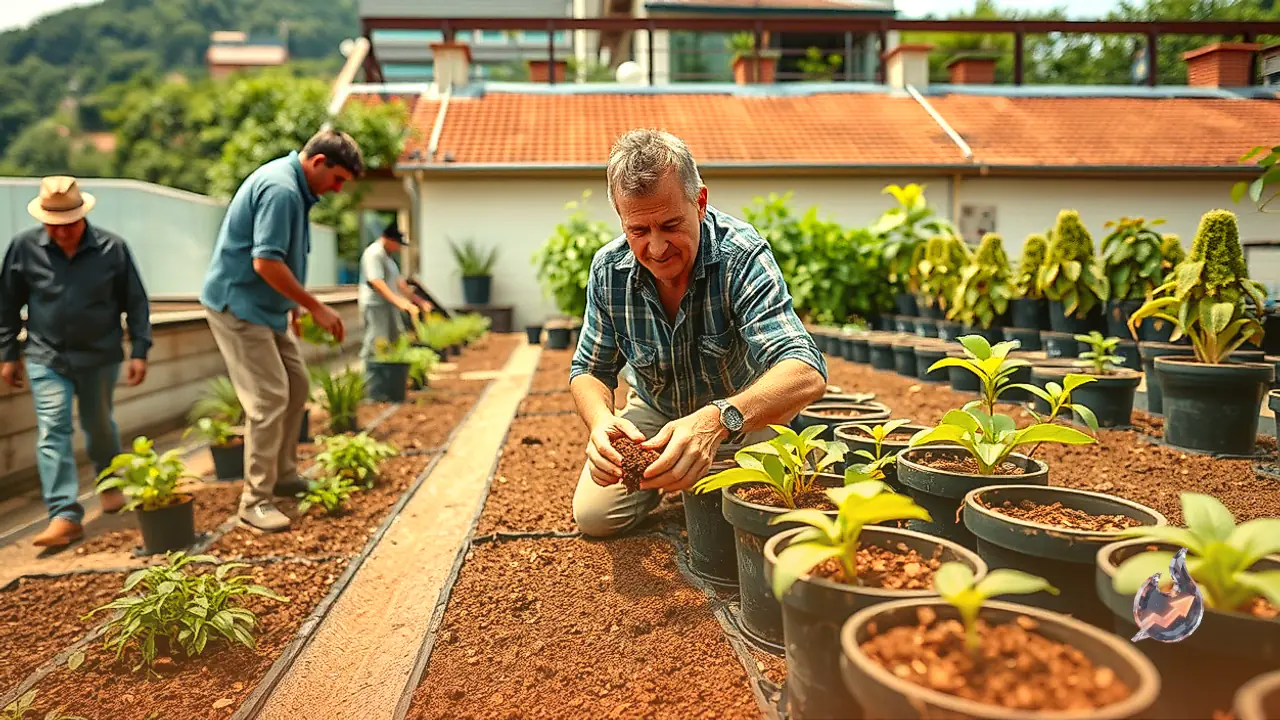

Creating a thriving rooftop garden requires careful attention not just to plant health, but also to structural safety and the cumulative load bearing down on the terrace. Enthusiastic gardeners frequently load their rooftops with large containers filled entirely with garden soil. When soaked with regular watering, this combination becomes exceptionally heavy, imposing sustained physical stress across the roof slab. Over extended periods, such excessive structural loading poses serious risks of slab deterioration, structural strain, and potential dampness. Mitigating this risk demands deliberate choices that significantly lower container and medium weight without hindering vegetative growth.
Replacing Dense Soil With Cocopeat and Organic Manure
Offering a functional approach to managing rooftop burden, nursery operator Nek Singh explained that container weight can be minimized by substituting conventional heavy earth with a lighter medium. According to him, an ideal growing mix can be prepared by combining cocopeat with organic manure and approximately one kilogram of sand. Using this tailored blend eliminates the traditional need to pack containers with dense soil. It dramatically lightens the container while providing an optimal physical foundation for steady root establishment and overall plant vigor.
Weighing the Difference: Reducing 1 Quintal to Just 25 Kilograms
Highlighting the drastic difference in physical mass, nursery operator Nek Singh pointed out that a typical 25-inch planter filled entirely with standard garden soil can easily weigh up to one quintal, especially when saturated with moisture. Accumulating several such heavy pots can exert tons of concentrated weight across a residential roof. In sharp contrast, preparing the same 25-inch planter with a specialized blend of cocopeat and organic manure limits the final mass to around 25 kilograms. This substantial reduction effectively slashes the planter's weight to a fraction of traditional methods, safeguarding the building beneath.
Root Aeration and Moisture Retention Advantages
Derived from processed coconut husks, cocopeat is widely accessible at plant nurseries and garden centers as a renewable medium. Its porous, fibrous structure gives it superior moisture retention capacity, enabling the root zone to stay evenly hydrated without becoming waterlogged. Furthermore, unlike compacted garden mud, cocopeat maintains loose channels that supply roots with adequate aeration and oxygen exchange. These distinct physical properties have driven its rapid adoption among urban terrace and home gardeners seeking healthier growth alongside reduced structural weight.
Practical Steps for a Safer Rooftop Landscape
For home gardeners planning to set up or reorganize a terrace landscape, switching to a cocopeat, organic manure, and sand formulation is an efficient safeguard. Minimizing dense earth in large pots directly curbs the downward stress exerted on residential roofs. This balanced approach protects structural durability while simultaneously supplying plants with continuous moisture, root aeration, and necessary organic nutrients for flourishing greenery.