
























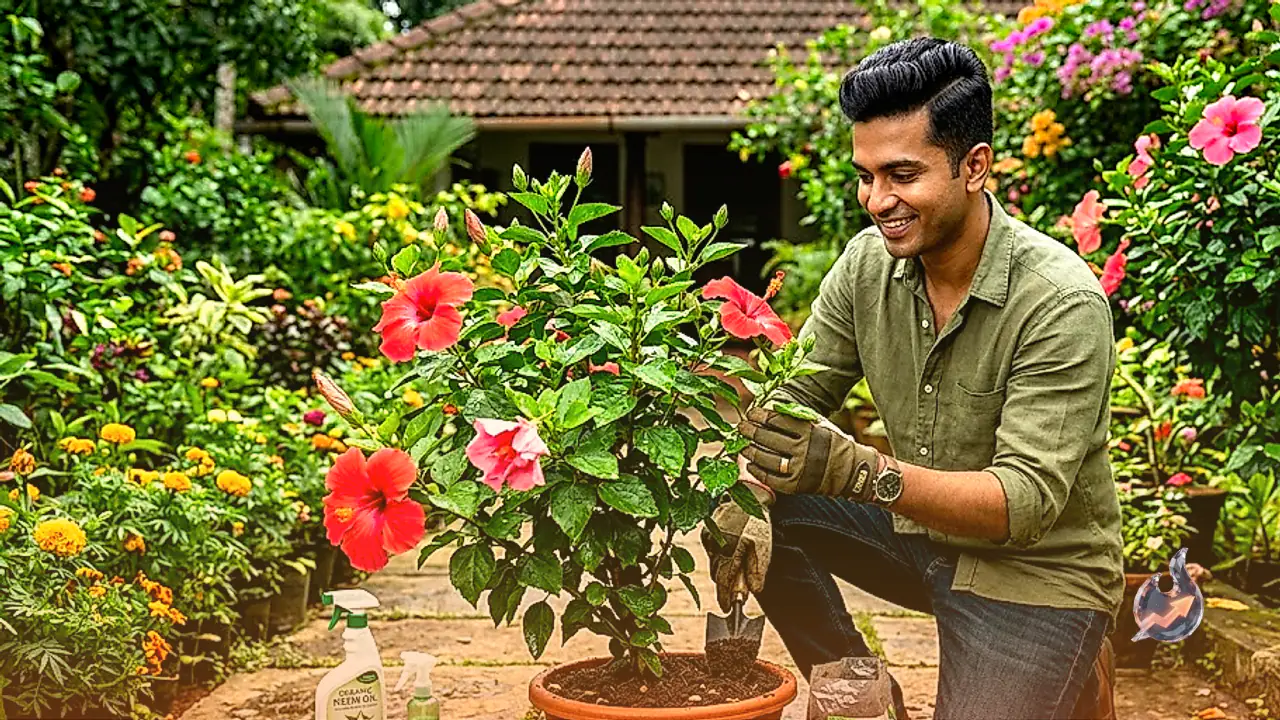

As continuous monsoon rains taper off and the sky clears, garden plants require focused post-seasonal attention to regain their vitality. Prolonged cloud cover and reduced sunshine during the rainy season often leave hibiscus plants weakened. Gardening expert Mo Alam advises that once the skies clear up after the monsoon, hibiscus plants should be positioned in a location that receives at least five to six hours of direct sunlight every day. Adequate sun exposure stimulates photosynthesis, encouraging the plant to channel energy into fresh foliage and flower buds.
Eliminate Standing Water and Clear Drainage Holes
Waterlogging inside container pots is one of the most frequent challenges during the monsoon months. If excess rainwater remains trapped inside the pot, the sensitive root system of the hibiscus plant can quickly rot. It is critical to immediately drain away any visible standing water from the container. Additionally, inspect the drainage hole located at the bottom of the pot. If it has become clogged with compacted soil or debris, clear it right away to allow free water passage and protect the roots from fungal infections.
Soil Aeration and Organic Fertilizer Application
Once the drainage is settled, allow the top layer of the potting soil to dry out slightly. After the surface turns dry, perform light soil tilling using a hand trowel. Aerating the soil allows fresh oxygen to reach the root zone, significantly enhancing nutrient absorption. Following the tilling, apply well-rotted cow dung manure or vermicompost into the soil. Rainwater frequently washes away essential soil nutrients, making this organic fertilization step crucial for replenishing plant vitality.
Protect Against Mealybugs and Fungal Infections
High moisture levels combined with warm weather post-monsoon create ideal conditions for pests and fungal diseases. White cottony pests known as mealybugs frequently infest hibiscus stems and leaf nodes, while dark spots may appear on the foliage. To safeguard the plant, prepare a diluted neem oil solution and spray it thoroughly across the entire plant once a week. Be sure to cover the undersides of leaves and young flower buds to eliminate pests effectively.
Pruning Damaged Branches and Regulating Moisture
Pruning plays an essential role in improving overall plant structure and encouraging fresh growth. Carefully trim off dried, yellowing, or damaged leaves and dead stems. Removing useless foliage redirects the plant's resources toward producing healthy new branches and lush floral buds. Within a few days of pruning and feeding, vibrant green shoots will begin to emerge. During this phase, maintain balanced moisture levels in the soil, ensuring it stays damp without turning overly soggy or completely dry.
Fortifying Plants Ahead of the Winter Season
Providing hibiscus plants with direct sunshine, balanced nutrients, and regular pest control significantly increases bud counts and flower sizes. Timely care given right before the onset of winter keeps the plant vibrant and covered in large, brilliant blossoms throughout the season. Checking the plant once a week helps spot early signs of disease or infestation before they can spread.


