















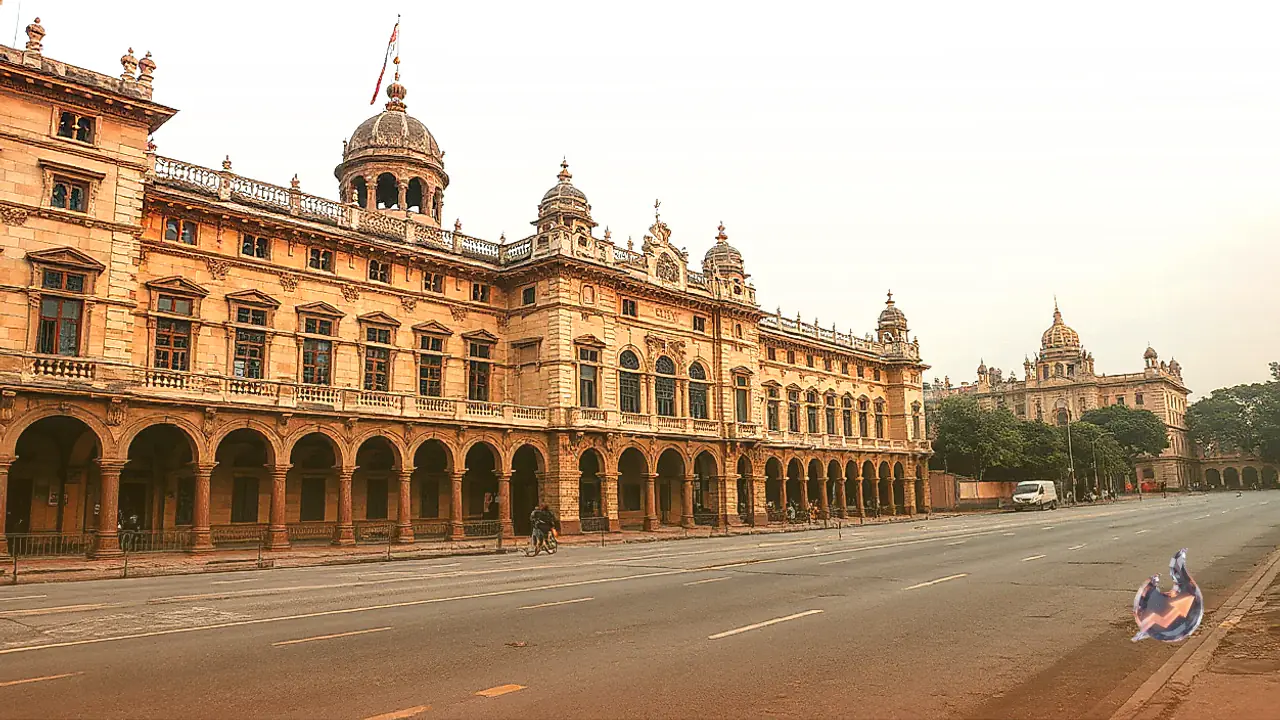

Across India, major urban centers carry distinct nicknames that reflect their culture or layout, from Jaipur being celebrated as the Pink City to Udaipur known as the City of Lakes. Among them, Kolkata, the capital of West Bengal, holds an identity that ties directly into its historical landscape. Broad boulevards, vintage brick and stone structures, heritage churches, and unmistakable colonial era design have led people to affectionately call it the London of India. Formerly known as Calcutta, the metropolis preserves its past across neighborhoods where European urban planning remains visible.
Imperial Capital for 139 Years
The city shared an extensive chapter with British governance, serving as the official capital of British India from 1772 until 1911. During this 139 year window, Kolkata functioned as the epicenter of administrative rule, mercantile trade, and contemporary academic institutions. To manage widespread state affairs and accommodate overseas officials, authorities erected grand administrative complexes, residences, and assembly halls. These buildings borrowed heavily from classical European structural styles, giving the urban center an appearance reminiscent of Thames-side London. The label London of India remains a popular cultural nickname rather than an official administrative title.
The Marble Grandeur of Victoria Memorial
No account of the city's built heritage is complete without Victoria Memorial, an imposing landmark constructed in memory of Queen Victoria. Built from polished white marble, this monument ranks among the foremost tourist draws in eastern India. Beyond its majestic dome, expansive landscaped gardens encircle the premises, while the interior museum houses an array of artifacts, documents, and portraits dating to the British period, offering visitors direct insight into that historical era.
Gothic Design at St Paul Cathedral
Situated in close proximity to Victoria Memorial, St Paul Cathedral stands as an architectural and spiritual landmark. Erected between 1839 and 1847, the church exemplifies Gothic revival architecture through its towering spire, ornate detailing, and vibrant stained-glass windows. The craftsmanship strongly mirrors traditional cathedral construction found across Britain and continental Europe during that century.
Centres of Governance: Writers Building and General Post Office
Located in the BBD Bagh sector, Writers Building is another historic installation from that period. It initially functioned as working office quarters for junior scribes and administrative clerks employed by the East India Company. In the same general area, the General Post Office draws attention with its imposing central dome, tall Corinthian columns, and vast exterior facade. These monumental structures illustrate how Kolkata once served as a primary nerve center for colonial bureaucracy.
The Riverfront: Howrah Bridge and Prinsep Ghat
A journey through Kolkata remains unfinished without visiting Howrah Bridge, the iconic cantilever structure suspended over the Hooghly River. Also designated as Rabindra Setu, the bridge serves as a defining visual marker for the city. Further down along the water, Prinsep Ghat offers a scenic public promenade. Spending an evening beside the river steps gives onlookers sweeping vantage points across the waters of the Hooghly as well as the cable-stayed Vidyasagar Setu.