























With the arrival of the auspicious month of Sawan, preparations for worshipping Lord Shiva begin in earnest across households. Demand for essential ritual items such as bel leaves, crown flower blooms, holy water, and datura spikes rises significantly during this period. Consequently, many individuals head to local markets every Monday or on special occasions to purchase datura. However, if this same plant thrives right in your home balcony, courtyard, or rooftop, preparing for prayers becomes much more convenient. The good news is that the datura plant is quite hardy and requires minimal fuss. With the right container, suitable soil, and a little bit of care, it grows rapidly. If you wish to cultivate datura at home this Sawan for worshipping Lord Shiva, here is the complete procedure and necessary precautions you need to know.
Why Choosing the Right Pot Matters for Datura
The datura plant features a strong root system, meaning it requires adequate space to expand properly. For this purpose, select a container that is at least 12 to 15 inches deep. If you have an old plastic bucket or a large drum lying around at home, it can also be utilized. Just ensure that drainage holes are present at the bottom so excess water can escape easily, preventing any root rot issues.
Preparing the Ideal Soil Mixture
Datura grows best in well-draining soil where water does not stagnate. To achieve this, mix 50 percent regular garden soil, 30 percent well-rotted cow dung manure or compost, and 20 percent sand or cocopeat together. Fill the pot thoroughly with this prepared mixture. This soil provides essential nutrition to the plant while ensuring that air reaches the roots without obstruction.
Starting from Seeds or Saplings
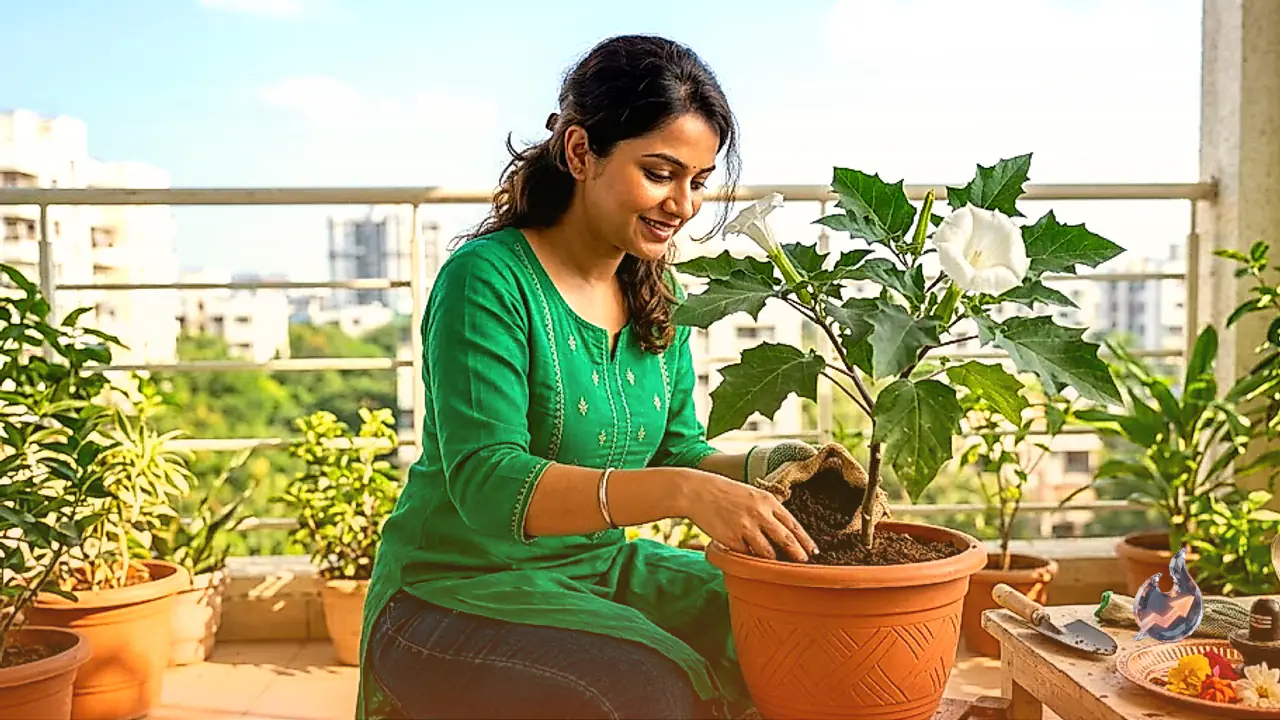
If you possess datura seeds, plant them at a depth of about 1 to 2 centimeters and sprinkle a light amount of water over them. Sprouts will begin to emerge within a few days. On the other hand, if you are bringing a small sapling from a nursery, transplant it carefully into the pot. Press the soil down gently with your hands so the plant stands firmly. Protecting it from harsh direct sunlight for the first few days helps the plant quickly adapt to its new location.
Managing Water and Sunlight Correctly
The datura plant needs approximately 5 to 6 hours of good sunlight daily. Therefore, place it in a spot where it receives adequate morning or daytime light. Water the plant only when the top layer of soil feels dry to the touch. Many people make the mistake of watering it every single day, which triggers root rot. Especially during the rainy season, check the moisture level of the soil before carrying out any irrigation.
Applying fertilizer every 20 to 25 days using vermicompost or organic manure is sufficient to keep the plant healthy and blooming with abundant flowers and fruits. Pruning away dry leaves and weak twigs periodically encourages vigorous new branches to sprout. This is precisely why experienced gardeners strongly recommend routine trimming.
For those who perform regular Shiva worship, having a datura plant at home proves quite advantageous. Dependence on the market decreases, and fresh datura flowers become readily available whenever needed. Additionally, it enhances household greenery and is considered an easy plant for gardening enthusiasts.
Important Safety Precautions When Handling Datura
Datura is considered a toxic plant. Its fruits, seeds, and other parts must never be ingested. If you have small children or pets at home, keep the container completely out of their reach. It is crucial to wash your hands thoroughly with soap after pruning or tending to the plant. If any part of the plant accidentally enters the mouth or if you experience any discomfort, seek immediate medical advice.