























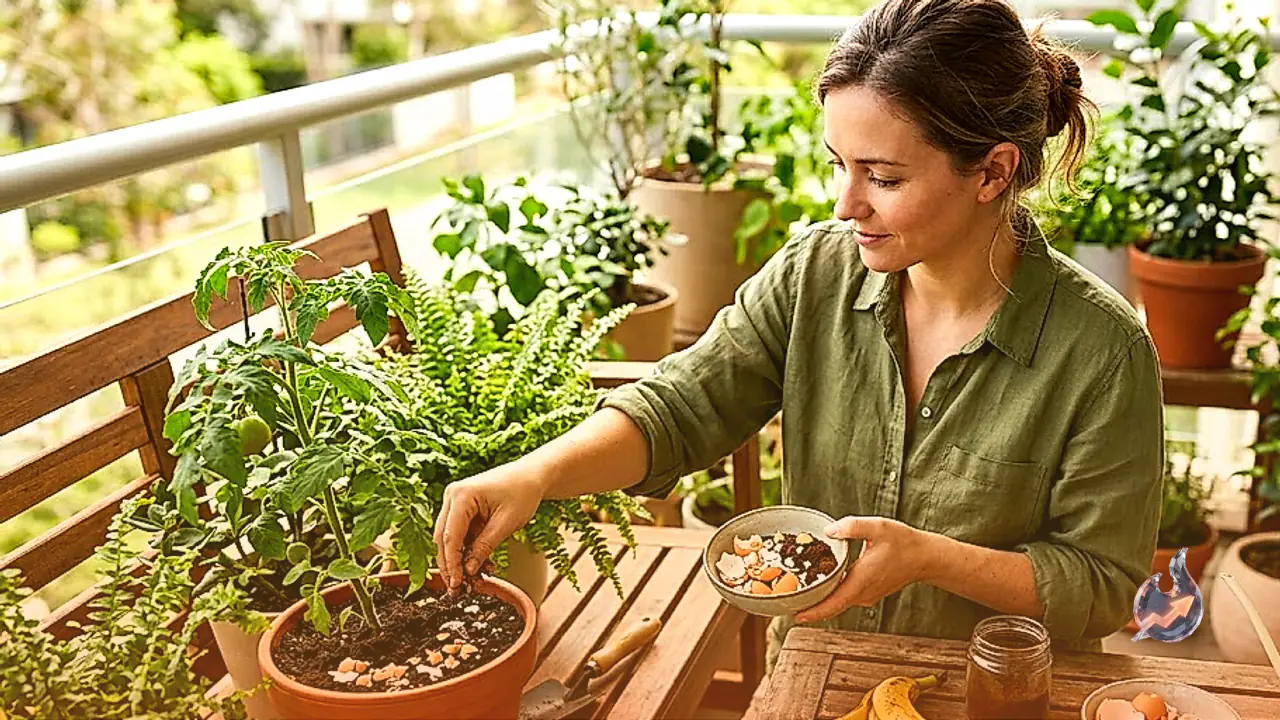

Daily food preparation routinely generates kitchen discards like vegetable trimmings, eggshells, and spent coffee residue, which are almost universally destined for the garbage bin. Yet these everyday leftovers, routinely discarded without a second thought, possess the exact biochemical properties required to rejuvenate struggling container greenery. While store-bought chemical fertilizers can produce a rapid burst of lush green growth, repeated applications gradually deteriorate soil structure and deplete long-term fertility. Opting for natural nourishment mirrors traditional home gardening methods from past eras, when household elders maintained vibrant foliage by relying strictly on culinary scraps and wood ash rather than synthetic store products.
The Advantage of Organic Feeding Over Synthetic Chemical Inputs
Commercial synthetic feeds often deposit residual salts inside small planter containers, which progressively disrupts the delicate microbial balance and damages fragile root networks. In contrast, home-brewed organic amendments condition the soil matrix, enhancing moisture retention while promoting vital root aeration. When prepared with appropriate care and applied in moderate amounts, these kitchen-derived inputs can sustain lush foliage, vibrant blooms, and healthy edible crops entirely free of steep costs. Below is a detailed breakdown of five accessible homemade fertilizers that can be assembled quickly from common household provisions.
Banana Peels as a Potassium-Rich Tonic for Blooming Stems
Beyond being a nutritious fruit for daily human diets, bananas leave behind skins packed with essential plant nutrients. The fibrous peel contains substantial amounts of potassium, accompanied by supportive traces of phosphorus, calcium, and magnesium. Potassium plays an indispensable physiological role in triggering flower bud formation, encouraging robust fruit set, and strengthening structural resilience across cellular tissues. For these reasons, banana peel preparations have long served as a traditional feeding remedy for rose bushes and varied indoor flowering varieties.
Gardeners can deploy this scrap in two distinct ways. One approach involves dicing fresh peels into small segments and burying them directly beneath the surface soil close to root zones, allowing the organic matter to decompose steadily over time. An alternative method relies on soaking the peels in water for several consecutive days to extract the soluble nutrients, producing a potassium-infused liquid solution that can be poured straight into thirsty planter soil as an organic feed.
Pulverized Eggshells for Calcium Supplementation and Soil Acidity Balance
Discarded eggshells consist of roughly 95% calcium carbonate, a compound that plays a dual role in stabilizing soil acidity and fortifying plant cell walls. A deficiency in available calcium frequently manifests in fruiting vegetables such as tomatoes through blossom end rot, a destructive condition where ripening fruit decays from the base. Controlled studies indicate that coarse eggshell shards break down far too slowly in potting soil, whereas pulverizing them into a fine, dust-like powder drastically accelerates solubility, allowing roots to take up calcium far more efficiently.
Preparing this calcium supplement requires thoroughly rinsing the empty shells to remove sticky residues and odors, followed by comprehensive drying under the sun. Once completely brittle, grind the pieces inside a standard kitchen blender until reduced to a smooth powder. This fine mineral dust can then be sprinkled across the topsoil of containers and lightly worked into the surface to supply gradual mineral nourishment.
Compost Tea to Inoculate Potting Mix With Beneficial Microorganisms
Despite its name, compost tea shares no connection with beverage tea leaves; it is an enriched liquid plant extract made from fully cured organic compost. To prepare this nourishing liquid, premium mature compost is steeped in water for a duration spanning 24 to 48 hours before being thoroughly strained. Research demonstrates that compost tea introduces a thriving population of beneficial microorganisms into container soil, revitalizing natural nutrient cycles and shielding root systems against various soil-borne pathogens and fungal infections.
Producing this low-cost tonic requires only modest supplies. Submerge a handful of well-aged compost into a full bucket of plain water, stirring the mixture thoroughly, and let it rest undisturbed for two full days. Afterward, filter out the solid residue and use the resulting amber extract to drench the root zones of struggling plants. The application delivers an immediate microbial and nutritional pick-me-up that works like a natural plant tonic.
Repurposing Used Coffee Grounds for Acid-Loving Foliage
Homes brewing regular drip or filter coffee discard spent grounds that hold remarkable value for specific gardening applications. By weight, used coffee grounds contain around 2% nitrogen alongside modest quantities of potassium and phosphorus. Operating as a slow-release natural amendment, they gradually decompose while dramatically improving overall soil texture, water conservation, and oxygen penetration around roots. Because fresh grounds retain a mild acidic quality, they provide exceptional results when introduced to acid-loving ornamental species, including azaleas, blueberries, and hydrangeas.
Prior to incorporating spent coffee into pots, it is critical to rinse and dry the grounds thoroughly in the sun to eliminate any risk of fungal mold growth. Once dry and crumbly, the organic particles should be mixed sparingly into existing container soil rather than piled in heavy, impenetrable layers over the surface.
Epsom Salt Dilutions to Restore Chlorophyll and Leaf Pigmentation
Epsom salt is the popular name for magnesium sulfate, a compound celebrated for targeted horticultural corrections. Magnesium serves as a foundational atomic component of plant chlorophyll, the pigment that drives the photosynthetic engine through which foliage manufactures energy. When a container suffers from magnesium depletion, plants such as chili peppers, tomatoes, and roses exhibit distinct interveinal yellowing across their leaves, leading to stunted blossoms and diminished harvest yields.
To correct this deficiency safely, dissolve one tablespoon of Epsom salt into a single gallon, roughly equal to 4 liters, of water to formulate a mild treatment. Applying this dilute spray to the leaf surface or drenching the root zone once per month can rapidly restore lush green pigmentation and encourage healthy blossom production. It remains crucial, however, to reserve this treatment specifically for instances where soil or tissue tests confirm an actual shortage of magnesium.
Balancing Kitchen Inputs With Comprehensive Garden Maintenance
While kitchen waste fertilizers offer an affordable and ecological way to pamper potted plants, they do not serve as a magic cure-all for every nutritional deficiency. The overall success of these natural amendments depends significantly on existing soil texture, local climate conditions, and the baseline health of individual plant species. Nevertheless, repurposing culinary scraps allows garden lovers to supply steady, safe nourishment without adding synthetic chemicals to the living environment. Exploring these practical kitchen amendments provides a fulfilling, zero-waste gardening project for the coming weekend.