






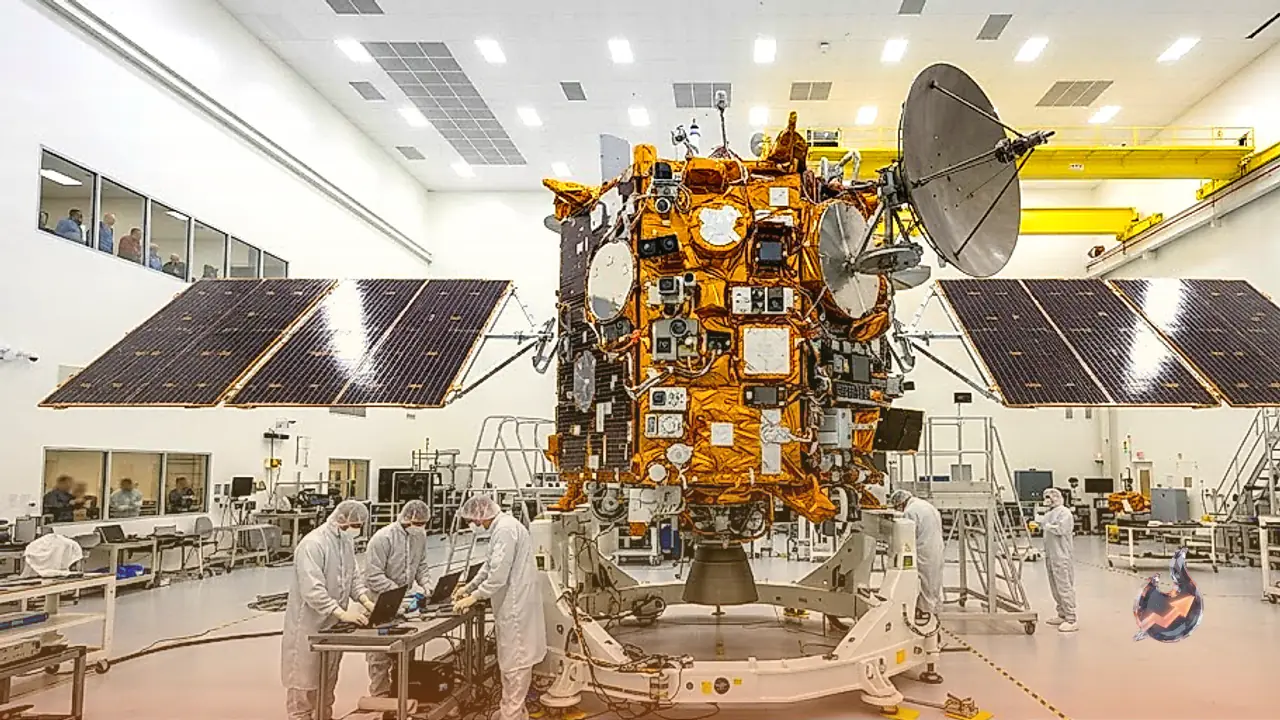















Driven by an invisible force known as dark energy, the universe expands continuously at an accelerating pace. To better understand these intergalactic phenomena, a new space telescope is preparing for launch as soon as August 30 from NASA’s Kennedy Space Center in Florida.
A Powerful New Observatory for Astrophysics
Equipped with resolution comparable to Hubble and a field of view roughly 100 times larger, the Nancy Grace Roman Space Telescope offers an unprecedented vantage point to address major astrophysical questions. Julie McEnery, NASA’s senior project scientist for the mission, notes that the observatory functions inherently as a discovery machine designed to find unexpected phenomena. Throughout its initial five-year primary mission, the telescope will chart vast cosmic regions to build a thorough chronicle of galaxies and dark matter, tracing how large-scale structures evolve over time by measuring light distortions driven by gravity.
Complementing Existing Space Observatories
Operating near Lagrange Point 2, a location nearly a million miles away from Earth, Roman will function alongside the James Webb Space Telescope. While Webb focuses on deep, narrow observations of distant cosmic targets, Roman is engineered for wide-field surveys. According to Rachel Mandelbaum, an astrophysicist at Carnegie Mellon University, Roman possesses the unique capability to observe a large expanse of the sky simultaneously.
Detecting Thousands of New Exoplanets
This wide view enables the observatory to scan hundreds of millions of stars, potentially identifying as many as 200,000 new planets. While many worlds will be spotted through standard transit methods as they cross in front of host stars, high sensitivity measurements will also allow the detection of distant bodies via stellar microlensing. Matthew Penny, an exoplanet researcher at Louisiana State University, explains that this method detects planets further from their parent stars without requiring a full orbital cycle to pass.
Mapping Galaxies and Tackling Cosmological Mysteries
Beyond planetary bodies, Roman will examine over a billion galaxies, focusing heavily on structures that formed billions of years after the Big Bang. By analyzing weak gravitational lensing, researchers will map the distribution of dark matter across the universe. These observations aim to address current tensions in modern cosmology, including debates surrounding the expansion rate of the universe and the behavior of dark energy.